

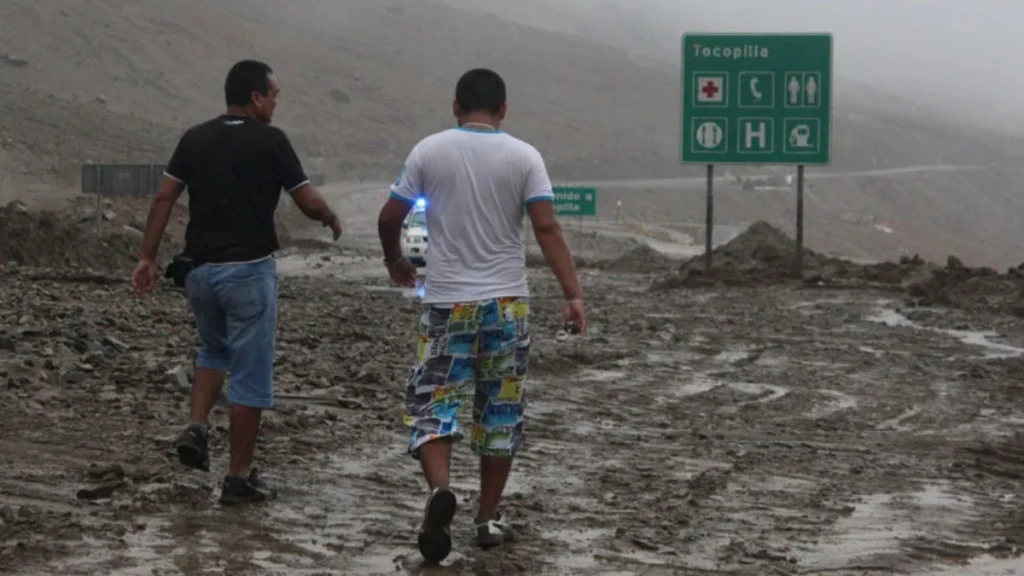
Chile’s President José Antonio Kast decreed Tuesday a constitutional state of catastrophe for the province of Tocopilla, in the Antofagasta region, after a frontal system unleashed mudflows, landslides and overflowing ravines in the area.
The Chilean head of State announced the measure this Tuesday through his account on X, with the objective to make available all human and material resources in the region.
Antofagasta Governor Ricardo Díaz described the magnitude of the material damage: 60% of homes in Tocopilla remained flooded or covered by mud. Díaz also explained that all access routes to the city remain blocked by debris, so aid will initially arrive by air while land roads are cleared.
RELATED: Chile Declares Preventive Emergency Over Severe Northern Weather Front
Tocopilla, capital of the homonymous province and a port city recognized for its electricity generation for the region, faces an unusual phenomenon in one of the most arid zones on the planet. Constant rains triggered mudflows, landslides and increased river flow, overwhelming infrastructure not designed for such weather events.
Debido a las graves afectaciones del temporal en Tocopilla, he decidido decretar estado de excepción constitucional de catástrofe para la provincia de Tocopilla y disponer de todos los recursos humanos y materiales que permitan enfrentar esta emergencia. El Subsecretario del…
— José Antonio Kast Rist (@PresidenteKast) August 18, 2026
Text reads: “Due to the severe damage caused by the storm in Tocopilla, I have decided to declare a constitutional state of emergency for the province of Tocopilla and to make available all the human and material resources needed to deal with this emergency. The Under-Secretary of the Interior, Máximo Pavez has been in the region since last night and will soon assume a Chief of National Defense who will coordinate the forces in the area.”
Nationwide Emergency Response
The decision came one day after the Meteorological Directorate of Chile (DMC, in Spanish) declared the Antofagasta region a climate prevention zone following intense rainfall in recent days. The agency maintains a climate alarm affecting the coastline and coastal mountain range between Taltal and Tocopilla.
The precipitation originated from a cold air mass detached from the main wind current, generating collapses, river flooding and inundations in local communities. The region, whose main economic engine is copper mining, registers exceptional precipitation for its coastal desert climate.
The storm left one dead and damage in ten regions. The director of the National Service for Disaster Prevention and Response (Senapred), Alicia Cebrián, confirmed the death of a driver in Antofagasta: “a person died in the Antofagasta region as a result of a traffic accident caused by rocks falling on the road.”
The vehicle transported four people, who were injured. Authorities reported approximately 2,000 evacuated people and the transfer of 540 inmates from a penitentiary facility due to the activation of ravines and landslides. Interior Minister Claudio Alvarado organized the special operation to move the prisoners and avoid greater risks in the area.
The effects of the frontal system also reached the regions of Arica and Parinacota and Coquimbo, where authorities counted seven victims and 244 people sheltered. In total, the impact of the rains extended to 10 of the country’s 15 regions, from north to south.
Local emergency teams continue clearing roads and assessing the structural integrity of buildings in Tocopilla, where recovery efforts will require sustained coordination between the national government, regional authorities and the armed forces under the constitutional exception regime.
From teleSUR English via This RSS Feed.