

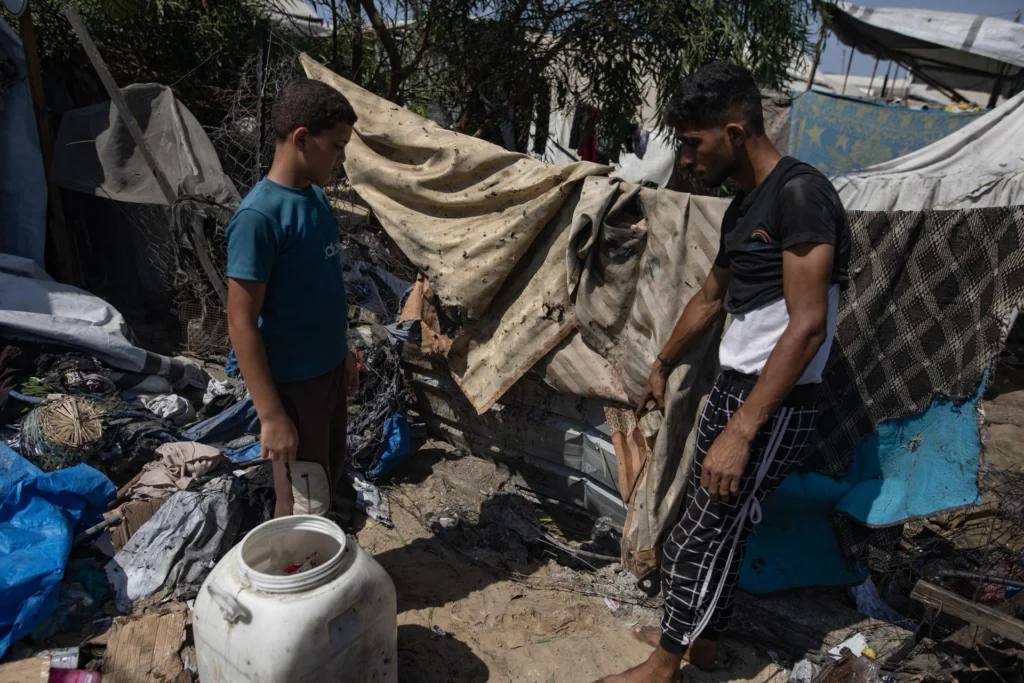
The Union of Municipalities in the Gaza Strip warned Tuesday that water and sanitation systems face imminent collapse, threatening more than two million Palestinians as Israel extends its fuel blockade into a fifth consecutive month.
The Union of Municipalities in the Gaza Strip declared during a press conference on August 18 that the humanitarian and services situation has reached a critical point, alerting about catastrophic consequences for public health and the environment amid the possible closure of wells and the overflow of untreated sewage into streets and displacement camps.
RELATED: Palestinian Girls Amputated In Gaza Arrive In Portugal For Prosthetic Care
Alaa al-Din Muhammad al-Batta, Vice-president of the Union of Municipalities and mayor of Khan Younis, explained that vital installations face paralysis because Israel prohibits the entry of fuel for a fifth consecutive month. The lack of diesel for generators, combined with the total destruction of the electricity network, left most wells out of service.
The measure interrupted the water supply to tens of thousands of families in densely populated areas. Khan Younis alone hosts approximately 900,000 residents and displaced people. Municipal capacity to provide basic services continues to degrade while humanitarian demand increases, deepening the vulnerability of a population already exhausted by more than a year of war.
Gaza’s Municipalities Union warns of an imminent collapse of the Strip’s water and sewage systems, as Israeli restrictions on fuel and essential supplies continue to cripple vital infrastructure.
The Union warns that the crisis could trigger collective thirst and a major health… pic.twitter.com/n2kPQxcEAI
— Quds News Network (@QudsNen) August 18, 2026
International Pressure Demanded
Fuel scarcity also paralyzes street cleaning, debris removal and waste management. Approximately 10 million tons of rubble accumulate along the Strip’s roads, blocking access and complicating any emergency response. The paralysis of the sewage system increases the risk of water contamination and epidemic outbreaks, while the local health system lacks the capacity to respond to a sanitary emergency of this magnitude.
The interruption of operations affects garbage collection, pipe maintenance and drainage cleaning. More than two million Palestinians remain exposed to the total loss of drinking water, a scenario that humanitarian organizations have repeatedly described as a weaponization of basic services against the civilian population.
The Union of Municipalities urged the United Nations, mediators and the international community to press for the entry of fuel, lubricants, spare parts and machinery into the territory. The body also requested guarantees of protection for technical personnel working in the field and the opening of a humanitarian corridor for the transfer of equipment and generators.
The organization directly blamed Israeli occupation forces for the deterioration of basic services and demanded immediate action to halt the environmental and sanitary catastrophe. Without urgent intervention, observers warn, the collapse of the water network could trigger outbreaks of cholera and other waterborne diseases across the enclave, adding a new layer of suffering to the already dramatic humanitarian situation in Gaza.
From teleSUR English via This RSS Feed.