

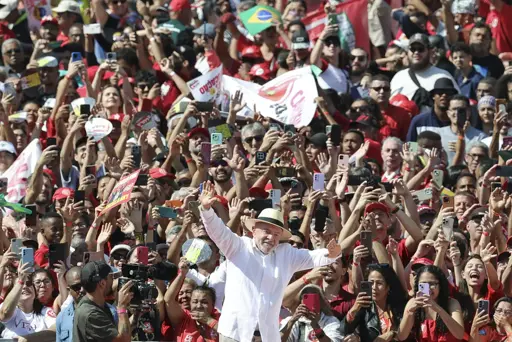
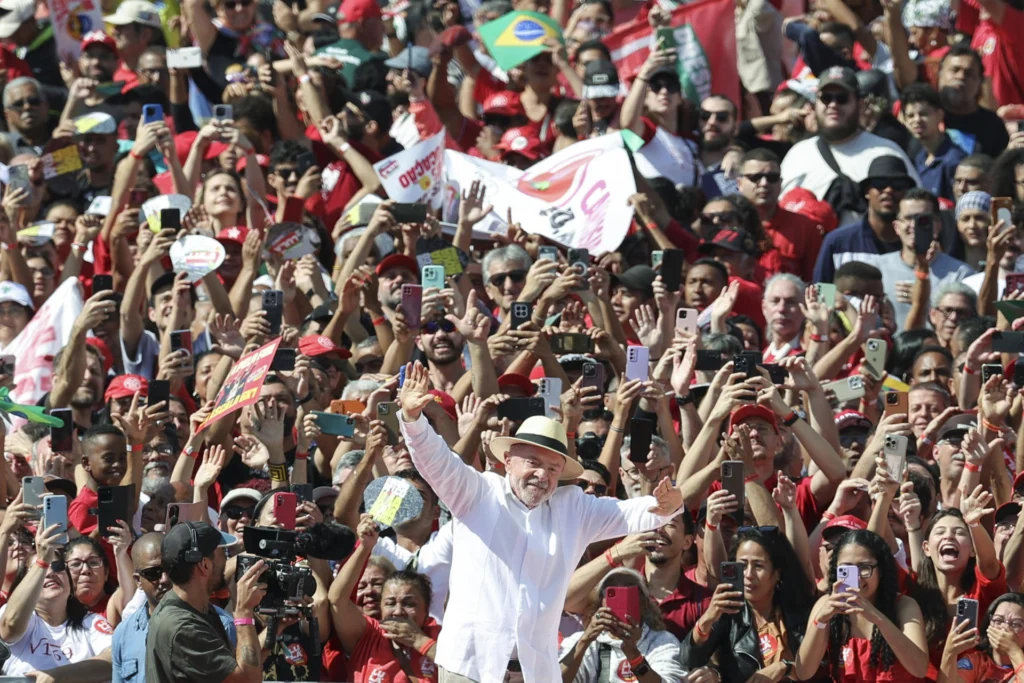
Brazil’s Workers’ Party (PT) entered the 2026 electoral race betting on Lula’s strength in the states to sustain his reelection bid and expand its presence in governorships, the Senate and the Chamber of Deputies.
With alliances spanning different ideological spectrums, the Workers’ Party (PT) bets that Lula’s popularity will translate into victories beyond the presidency, reinforcing the party’s machinery in state governments and the National Congress.
The strategy unfolds as the official campaign period begins following Lula’s formal announcement in early August.
RELATED: Lula Promises A Fourth Term Based on Security and Social Programs
Brazil holds the first presidential round on October 4, with a runoff scheduled for October 25 if no candidate secures an outright majority. Lula formally launched his reelection bid on August 2, seeking a fourth term, his second consecutive, in a campaign now officially under way.
The 2026 election will also renew two-thirds of the 81-seat Senate, all 513 seats of the Chamber of Deputies, and the governorships of Brazil’s 26 states and the Federal District, turning the vote into a decisive test for the PT’s national structure.
The national leadership of the party presented the formation of alliances as one of the main results of the convention phase. In this sense, state agreements include democratic and popular parties, as well as centrist forces such as PSD, PSB, MDB, PDT, PP and União Brasil, while PSOL also integrates one of the coalitions, which gives Lula a diversified presence in disputes over state governments.
HISTÓRICO! O retorno de Lula onde tudo começou. O operário virou presidente da República. Está lançada a campanha pelo tetra!
pic.twitter.com/wFJn5mOuL8
— PT Brasil (@ptbrasil) August 16, 2026
Text reads: “Historic! The return of Lula, where everything began. The worker became president of the Republic…”
The coalition strategy reflects a broader effort to consolidate regional bases. By securing alliances across the ideological map, the Workers’ Party aims to protect Lula’s flank in states where the opposition retains influence while maximizing the number of governors, senators and federal deputies aligned with the government. Party officials argue that a strong legislative presence would shield the presidential agenda from potential institutional deadlock.
Beyond the presidential ticket, the electoral map is a battlefield in itself. Brazil’s federal system grants governors significant political weight, and the party must defend the states it already governs while challenging opposition strongholds. The Senate renewal is equally crucial: with two-thirds of seats at stake, the composition of the upper house will shape the government’s capacity to pass legislation through the remainder of the term.
President First, Campaign Second
Lula has officially started the contest, but he will continue prioritizing his duties as head of the Brazilian Executive. Campaign schedules will be defined week by week, depending on the president’s availability and the electoral needs of each state.
The decision seeks to avoid the perception that Lula is neglecting governance while campaigning, a risk that opposition candidates have already attempted to exploit. The approach also reflects the constraints of an incumbent who must balance legislative negotiations, international commitments and crisis management with a nationwide tour.
Party strategists acknowledge the coming weeks will test whether the Workers’ Party can convert Lula’s personal appeal into a broader institutional victory. Edinho stressed that the schedule remains flexible, designed to accommodate both the president’s governmental agenda and the electoral priorities of each state as the campaign moves into its decisive phase.
Geramos mais empregos. O salário mínimo voltou a ter aumento real, depois de anos sem ganho acima da inflação. O desemprego chegou à menor taxa da série histórica. Criamos o Pé-de-Meia para ajudar milhões de jovens a permanecer na escola. E, em 2026, quem ganha até R$ 5 mil… pic.twitter.com/iCsIxLz7df
— Lula (@LulaOficial) August 18, 2026
From teleSUR English via This RSS Feed.