

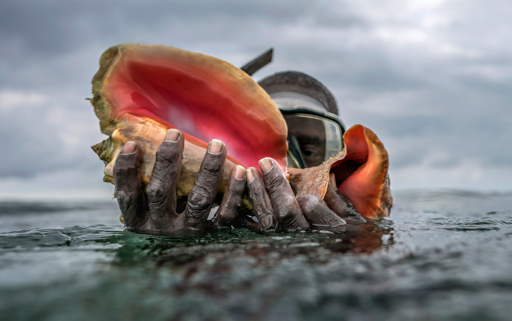
Queen conch were once so abundant that fishers in many parts of the Caribbean could wade into knee-deep waters and gather armfuls of the pink, whorled shells. Today, however, the giant marine snails are in decline across the Gulf of Mexico and the Caribbean Sea, while some populations have already collapsed. Growing demand for queen conch (Aliger gigas) meat and shells has led to overharvesting; habitat degradation, pollution and warming waters add further threats. Despite a 1992 CITES Appendix II listing to regulate their international trade, seasonal restrictions and bans by several Caribbean countries to address overfishing and juvenile harvesting, and a 2024 designation as a threatened species under the U.S. Endangered Species Act, few queen conch survive to adulthood compared to historical baselines. In a bid to slow the species’ decline by helping more conch reach reproductive age, scientists are deploying an innovative set of solar-powered mobile hatcheries to shelter them through their vulnerable early life stages. The Queen Conch Lab (QCL), affiliated with Florida Atlantic University (FAU) in the U.S., partners with local conservation organizations to deploy the hatcheries. The aim is not just to build nurseries that will nurture and protect developing conch, but to create community learning spaces where students and other visitors can gain knowledge about the species’ life cycle and participate in restoration efforts, according to Megan Davis, director of the QCL and a research professor at FAU’s Harbor Branch Oceanographic Institute. A researcher holds a juvenile queen conch. Image by Jennifer Doerr, NOAA…This article was originally published on Mongabay
From Conservation news via This RSS Feed.