

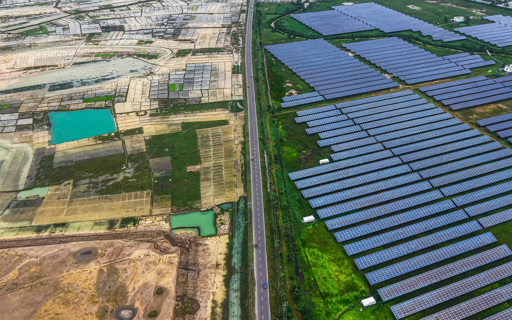
Bangladesh’s energy system is facing intense pressure from the country’s ongoing fuel crisis and rising electricity bills. Yet thousands of garment factories’ rooftops that could be fitted with solar panels remain largely unused. Renewable energy such as solar could be a potential solution to the escalating crisis, but has been overlooked for many years despite Bangladesh having sufficient amounts of sunshine. Rather, the country relies almost entirely on grid electricity, which is mostly generated from imported fossil fuels. More than two-thirds or 69% of factories have still not adopted renewable energy technologies (RET), according to a recent study funded by the International Growth Centre (IGC). “Only 31% of factories have adopted RET (predominantly rooftop solar), with very low average capacity,” the study says. “Half of all solar installations do not even contribute to production processes.” This analysis is based on a survey of 661 factories in the cities of Gazipur and Savar, located close to the capital Dhaka, conducted by Atonu Rabbani of Dhaka University and a BRAC University research team and completed in October 2025. Bangladesh’s garment sector has more than 3,320 active factories. Of these, more than are located in Savar and Gazipur. The study focuses on these two industrial hubs using the Mapped in Bangladesh (MiB) database and samples more than 650 factories out of 1,937 in the two cities. A separate study conducted by the Centre for Policy Dialogue (CPD) finds that solar adoption is mostly seen in large and environmentally certified factories (LEED-certified). Large factories…This article was originally published on Mongabay
From Conservation news via This RSS Feed.