

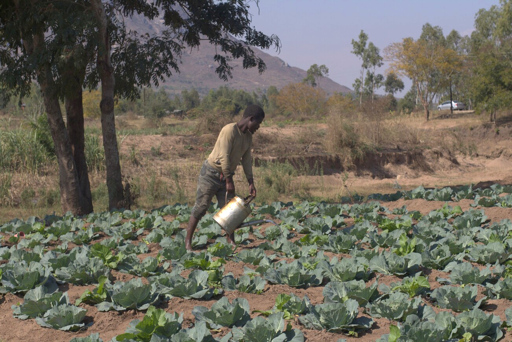
GOLIATI, Malawi — All that’s left to eat in Tapiwa Ligomeka’s one-room home is stored in a small plastic basin in one corner. Two days earlier, her husband came home with 2 kilos of maize meal, about 5 pounds — all he could afford to buy after a day hustling for casual work carrying traders’ goods at a nearby market, here in southern Malawi’s Thyolo district. On the day Mongabay visits her home, Ligomeka has just returned to her thatched-roof house in the village of Goliati, clutching a bundle of dry maize and pigeon pea stalks to make a fire later, her 8-month-old baby strapped to her back. It’s coming up to noon on a Sunday; her husband is still out watering his tomato crop near the river. “I’ll wait for him,” says Ligomeka, 18, dropping her bundle by the cold fireplace on the verandah. “This flour cannot make enough nsima for us to eat separately.” Nsima is the Chewa term for Malawi’s staple dish, a stiff porridge made from maize flour and usually eaten with vegetables, legumes, and, for those who can afford it, meat or fish. “It also means there won’t be anything for us to eat this evening,” Ligomeka says, measuring the flour with scoops of her right hand. “Sometimes, that goes on for two days.” She says the couple harvested 178 kg (392 lb) of maize from their small farm in March. They couldn’t afford fertilizer for their plot, which measures less than half an acre,…This article was originally published on Mongabay
From Conservation news via This RSS Feed.