

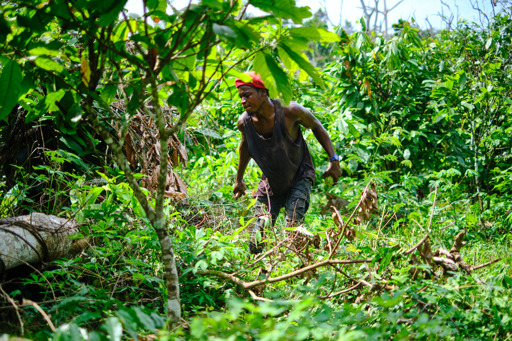
Until 2020, 99% of Liberia’s Grand Gedeh county was covered by natural forests. Since then, cacao farms have rapidly encroached on those forests, reports Mongabay’s Ashoka Mukpo. Grand Gedeh in southeastern Liberia borders Côte d’Ivoire, the world’s largest exporter of cacao beans. Much of Côte d’Ivoire’s forests have been cleared for cacao and many of its cacao plantations are now ageing and nutrient poor. That’s prompted cacao workers from Côte d’Ivoire to turn their attention to Liberia, where landowners have offered them their land in exchange for a share in cocoa earnings. Data from Global Forest Watch show that in 2025, Grand Gedeh lost more forest than any other Liberian county in a single year since 2002. “In Côte d’Ivoire there are no forests, that’s why I came to Liberia,” said Mohammed, a cacao farm worker near the town of Zleh in Grand Gedeh’s Gbarzon district. Around Zleh, roughly 82% of the community’s 6,900 hectares (17,000 acres) of customary forest land have been given over to cacao, Zleh’s town chief said. Yei Neagor, in charge of the regional headquarters of Liberia’s Forestry Development Authority (FDA) in Zwedru, Grand Gedeh’s capital, told Mongabay that Gbarzon has seen the worst forest loss in the county. “I will be honest to tell you that about 70% of the forest there is gone,” she said. Forests in southeastern Liberia are communally owned, and laws regulate how private individuals can lease them for commercial agriculture. In practice, those laws aren’t being followed, said Ashai Wulu Gaye, chair…This article was originally published on Mongabay
From Conservation news via This RSS Feed.