

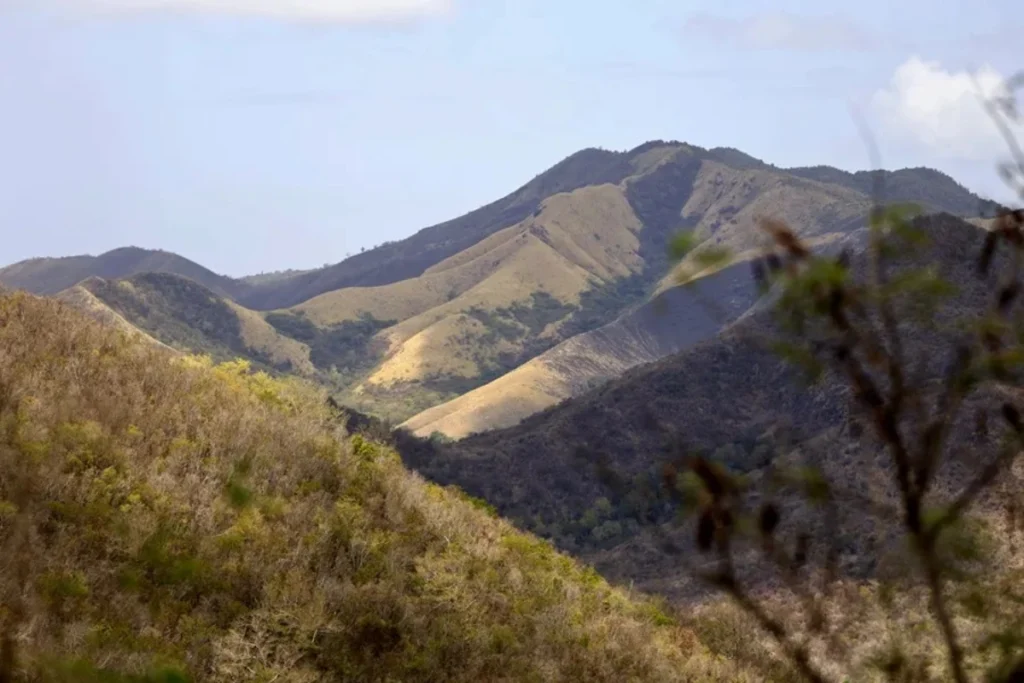
Extreme drought now covers 17.02% of Puerto Rico, almost one-fifth of the island, according to the latest United States Drought Monitor report, an increase of 7.53 percentage points from the previous assessment.
Under category D3, the classification can involve crop losses, livestock feed shortages, disruptions to daily routines, changes in school schedules, business closures, deterioration in water quality and reduced aquifer levels.
The municipalities of Santa Isabel and Guánica are entirely within the extreme drought classification, while Salinas and Coamo are almost fully covered. Portions of Cabo Rojo, Lajas, Yauco, Peñuelas, Guayanilla, Ponce, Villalba and Aibonito also remain under D3, as do sectors of Trujillo Alto, Gurabo, Juncos, Las Piedras, Naguabo, Carolina and Canóvanas.
RELATED: Puerto Rico Rations Water to 180,000 Properties Amid Drought
Severe drought, category D2, expanded from 26.14% to 36.91% of the territory. In this classification, the agricultural sector may face planting delays and hay shortages, and livestock farmers may be forced to supplement cattle feed.
Cattle farmer Carla Hernández said most livestock producers are having to bring water to their animals. “Here, right now, we have all the pastures open so the cows can eat wherever there is food, and we are also trying to supplement with hay and poultry litter so the animals have their basic feed,” she said.
Signs of stress can also be observed in trees and plants, which may lead to stricter water rationing measures. In front of a pond on a farm in Arroyo, Hernández said irrigation is being used to compensate, and that this year they have already had to call three times for the pond to be refilled because the drought is so intense.
She explained that other ranches have natural springs, known locally as manantiales, that have dried up completely, and those operations now supply water to steers with tanker trucks. The situation of wells in the south is also delicate because of the lack of rain. The United States Geological Survey monitors levels of the South Aquifer.
Puerto Rico has begun 48-hour water rationing for more than 180,000 households as severe drought depletes reservoirs. Al Jazeera’s Matthew Torres reports from San Juan, where residents are relying on water tankers and storage tanks as dry conditions persist. pic.twitter.com/nOoYW0ByHj
— Al Jazeera English (@AJEnglish) August 8, 2026
According to the analysis accompanying the USDM report, rainfall totals remained “unusually low” across much of Puerto Rico during the evaluated period. Some areas of the west and northeast received just over two inches of precipitation, while sectors of Mayagüez accumulated between four and six inches.
In most localities, less than one inch of rain was reported, while sectors of the south-central region and the western half of the south coast received only a few tenths of an inch. The USDM noted that the extreme category is concentrated in areas that received the lowest rainfall amounts during the past week, as well as some sectors of the interior northeast.
From teleSUR English via This RSS Feed.