

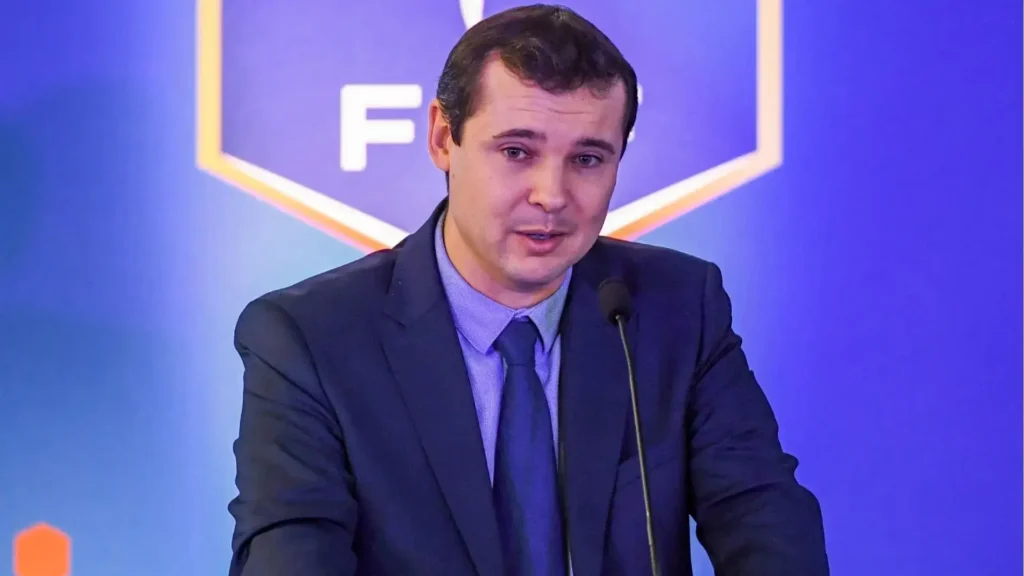
The International Federation of Association Football (FIFA) formally dismissed its operations director, Kevin Lamour, this Monday following his public opposition to President Gianni Infantino’s plan to transfer control of global tournaments to private capital.
The conflict originated from the controversial initiative called FIFA Forward Enterprise (FFE), through which plan, FIFA’s President Gianni Infantino intended to sell one fifth of the rights to competitions such as the World Cup to a U.S. investment fund linked to Joshua Kushner, from the circle of the Trump family, for $4.2 billion.
Although the proposal had to be shelved after strong rejection from various confederations, the internal fracture in the board proved irreversible.
RELATED: 5 Shocking FIFA Transparency Demands After Secret Deal Is Dropped
Before his dismissal, the former executive denounced the opacity of the management in the face of this attempt at commodification.
Lamour stated in July that the institution’s workers had been victims of a deception regarding the true scope of the project, assuring that the staff deserves better than contempt and intimidation. He also described the initiative as the plan of a single person and urged football authorities to question this management model, publicly assuming that his criticism would cost him his position.
Kevin Lamour has left his position as chief operating officer at FIFA.
Lamour’s departure comes after the FIFA executive released a statement to the Associated Press on July 31 criticising Gianni Infantino, the FIFA president, amid the fallout from the abandoned FIFA Forward… pic.twitter.com/1pV77Z3CY1
— The Athletic | Football (@TheAthleticFC) August 17, 2026
Institutional Crisis Worsens
Through a brief statement, the Switzerland-based entity confirmed the termination of Lamour’s functions and refused to offer further explanations. This dismissal deepens the instability at the top of FIFA and adds to the recent resignation of Carlos Cordeiro, principal advisor to the presidency, who also left his post in protest over attempts to hand over the heritage of world football to corporate investors.
The removal of Lamour confirms the policy of institutional opacity and aggravates the internal crisis in the management of Infantino, whose leadership has faced growing criticism from confederations, players, and organizations that defend the public character of football governance.
The FFE plan represented an unprecedented attempt to privatize part of the sporting heritage of the most popular sport on the planet. The $4.2 billion offer sought to give a U.S. investment fund direct participation in the commercial rights of tournaments, a model that critics describe as a surrender of sovereignty of football institutions to financial speculation.
Several confederations expressed their rejection of the project during the private meetings where it was presented, forcing its withdrawal. However, the silencing of dissenting voices within the organization has generated concern among workers and observers who warn about the concentration of power in the figure of Infantino.
The departure of Lamour, who occupied a key operational position, raises questions about the future direction of the organization and the balance between commercial interests and the institutional integrity that should govern world football. The lack of transparency in the dismissal process, without official explanations about the reasons, reinforces the perception of a management marked by authoritarianism and the exclusion of critical voices.
The case also highlights the growing influence of financial capital in sports governance, a phenomenon that affects not only FIFA but also other international bodies. For defenders of the popular nature of football, the battle over the FFE plan represents a warning about the risks of turning the sport into a mere commercial asset for investment funds.
The dismissal of Kevin Lamour marks a turning point in the crisis of FIFA under the mandate of Gianni Infantino. The removal of a senior executive who denounced the privatization attempt sends a clear signal about the cost of dissent within the organization. Meanwhile, the resignation of Carlos Cordeiro and the rejection of the confederations indicate that the internal opposition has not been silenced.
The future of FIFA will depend on its ability to recover transparency and respect for the collective heritage of world football, or whether it will continue down the path of corporate capture that threatens the essence of the sport loved by billions of people around the world.
From teleSUR English via This RSS Feed.