

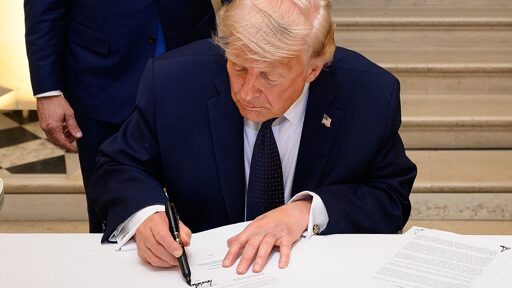

The Islamabad Memorandum of Understanding (MoU), the peace deal signed between Iran and the US to end the war expired on Monday, August 17, without achieving a single objective and both the parties accusing each other of violating it.
The MoU was signed digitally by US President Donald Trump and his Iranian counterpart Masoud Pezeshkian on June 17 after a months-long mediation process facilitated by Pakistan and Qatar.
The memorandum was expected to end the US-Israeli war on Iran, which began on February 28, and formalize the unilateral ceasefire announced by Trump on April 8.
Read more: A war that cannot be won: Israel and the United States bomb Iran
Over 3,000 people along with several of Iran’s top political and military leadership, including Supreme Leader Ayatollah Seyyed Ali Khamenei, were killed in the first 40 days of the war.
The agreement provided both the countries a 60-day window, until mutually extended, to achieve a permanent settlement of dispute over Iran’s nuclear program.
The MoU also stipulated, in the meanwhile, the Strait of Hormuz would be open for navigation by Iran in return for a ceasefire on all the fronts in the region, namely Iran, Lebanon, and Gaza. The US had also agreed to lift its naval blockade on Iran, to lift US sanctions on its oil exports, and allow it to access its frozen assets.
The final deal which was envisaged would have led to the US lifting all its sanctions on Iran, imposed since its unilateral withdrawal from the multinational Iran nuclear deal during Trump’s first term in 2018.
The US had also agreed to a $300 billion reconstruction and development package for Iran, in return for its agreement to never have a nuclear weapon.
The two countries held the first round of nuclear talks on June 22 in Switzerland.
However, within weeks after those talks in Switzerland, the US resumed its airstrikes on Iran after accusing it of attacking ships passing the Strait of Hormuz through an alternative route they created.
On July 7, Trump himself declared the MoU dead and started talking about US control over the Hormuz.
Iran called the opening of the alternative route in the strait a violation of the MoU and retaliated to a US strike by attacking its military bases in the region.
WATCH: US bases under fire: Are Gulf states turning away from Washington?
The strikes and counter strikes, which lasted for weeks, and were halted by the US only due to reported shortages of ammunition, killed dozens more people, mostly Iranians, apart from causing further physical destruction of civilian infrastructure in Iran and elsewhere.
Trump repeats threats
Trump, during a TV interview on Monday, failed to mention the fate of the MoU. He, however, repeated his threats to destroy Iran until “they put up the white flag of surrender” while also confirming that “backchannel negotiations” with its leadership are ongoing.
“The number one goal is, and always will be, that Iran cannot have, in any way, shape or form, a nuclear weapon,” Trump wrote on his social media post on the same day.
Meanwhile, Esmail Baghaei, official spokesperson of Iran’s Ministry of Foreign Affairs reiterated on Monday that, since the US violated the provisions of the MoU, the 60-day deadline for negotiations over the final deal about Iran’s nuclear question never made any sense.
Abbas Araghchi, Iran’s foreign minister, had said on Friday that the MoU was a declaration of the end of war and not merely a “ceasefire” which needed extension. Since the US violated the MoU, the war has entered a new phase and now we need to find ways to end it.
Araghchi also hinted that channels for fresh negotiations are being worked out. He also reiterated that the technical talks with Oman for the management of the strait are ongoing.
Trump, however, threatened to “bomb” Oman on Monday over these talks, asking it to stay away from any joint management of the Strait of Hormuz.
From BT News via This RSS Feed.