

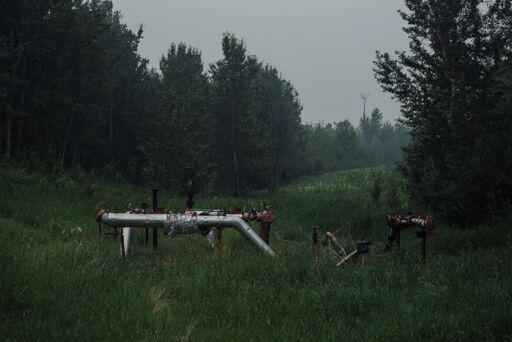
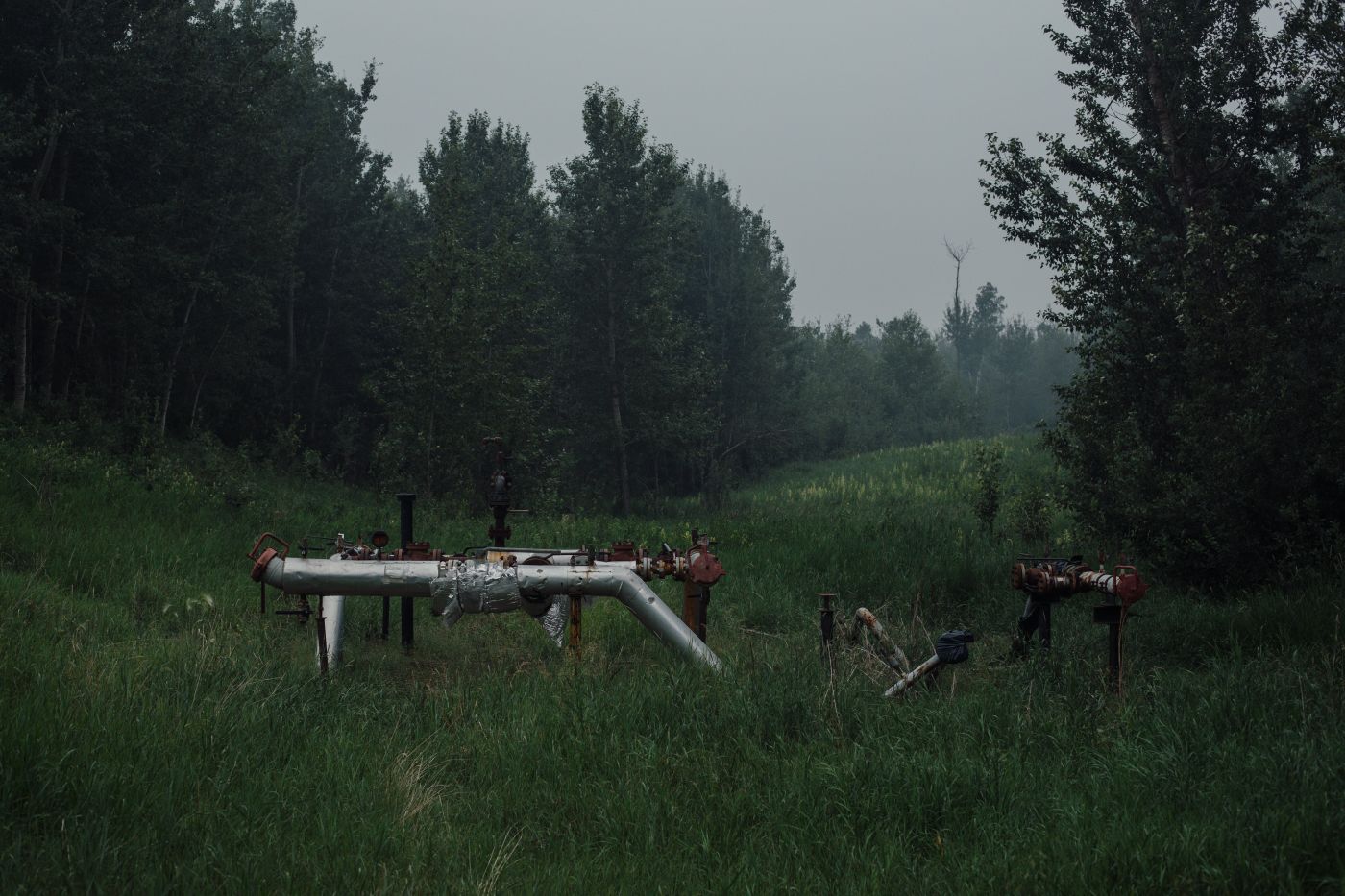
Photo: Amber Bracken / The Narwhal
The price tag to clean up orphan oil and gas wells in Alberta increased by nearly 50 per cent since last year, bringing the estimated total to $1.66 billion, according to the latest annual report from the Orphan Well Association.
The report, released last month, attributes the increase to an “influx” of orphan wells from a company called Long Run Exploration Ltd. The price tag to clean up the thousands of orphan sites left behind by the company is estimated by the association to be $500 million.
“A surge in inventory is not new for the [Orphan Well Association]. … These struggling companies are on our radar for a long time,” the annual report reads.
“We know the assets will eventually come our way, and plan in advance with the [Alberta Energy Regulator] to ensure we are ready to tackle the challenge.”
Alberta’s Orphan Well Association is a not-for-profit organization launched in 2002 that acts as a backstop when delinquent oil and gas companies leave behind inactive wells that need to be cleaned up. It was designed to be funded by industry in the form of an annual levy, but has received government grants in the past and gets an annual interest-free loan from taxpayers.
In response to questions from The Narwhal, Lars De Pauw, the president of the Orphan Well Association, said by email, “The pace of closure will depend on future orphan levies which have not yet been determined.”
All companies pay into an orphan well fund, to make a pool of money available for when companies go bankrupt, or otherwise walk away from their liabilities. Last year, the orphan well levy added up to $144.45 million. This year, after a seven per cent increase set by the Alberta Energy Regulator, it increased to $154.6 million.
Last year, the association safely sealed 721 wells, according to the annual report, and received reclamation certificates for another 850. The report says this is the equivalent of “over 15 square kilometres of land returned to Albertans, an area equivalent to 2,100 [Canadian Football League] football fields (including end zones!).”
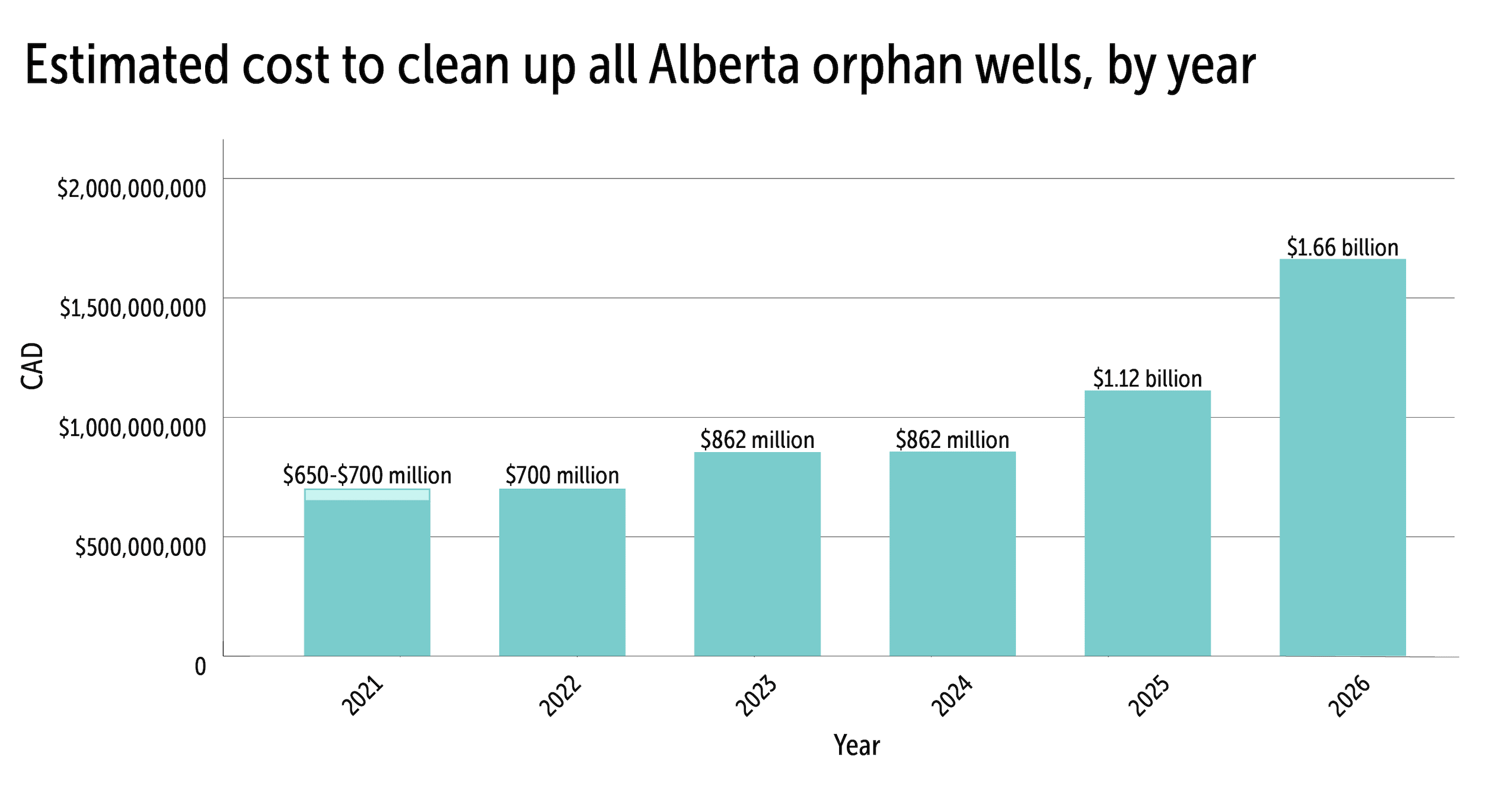
Graph: Shawn Parkinson / The Narwhal. Source: Orphan Well Association
That’s not enough to make up for the decades-long backlog of orphan wells, according to public interest lawyer Drew Yewchuk.
“The bottom line is that Alberta’s orphan problem continues to grow,” Yewchuk wrote in a University of Calgary Public Interest Law Clinic blog post about the latest annual report. “All signs point to an orphan well problem that will become too big to solve so that a large share of the costs will be socialized, with taxpayers left to pay the bill for closure work.”
Yewchuk cautions the amount taxpayers could be on the hook remains to be seen. “This is not an all or nothing question of whether costs are passed to the public. Both the federal and provincial governments have already paid some costs for the closure of oil sites, but the amounts are small compared to the total cost,” he told The Narwhal by email. “The thing to watch is how much of the cost gets passed to the public.”
Alberta’s orphan well problem grows year after year
According to the Government of Alberta, there are an estimated 466,000 oil and gas wells in the province. More than half of those are no longer producing, some of which have been properly plugged, while others are in a state of temporary suspension. And some are orphans: a well that no longer has a legal or financial owner.
The most common cause is an insolvent or bankrupt oil and gas company that has left behind a long list of wells that were never properly decommissioned or cleaned up. Those wells, pipelines or other related facilities then become “orphans.”
But they still need to be properly plugged and reclaimed, according to provincial rules. That falls to the Orphan Well Association.
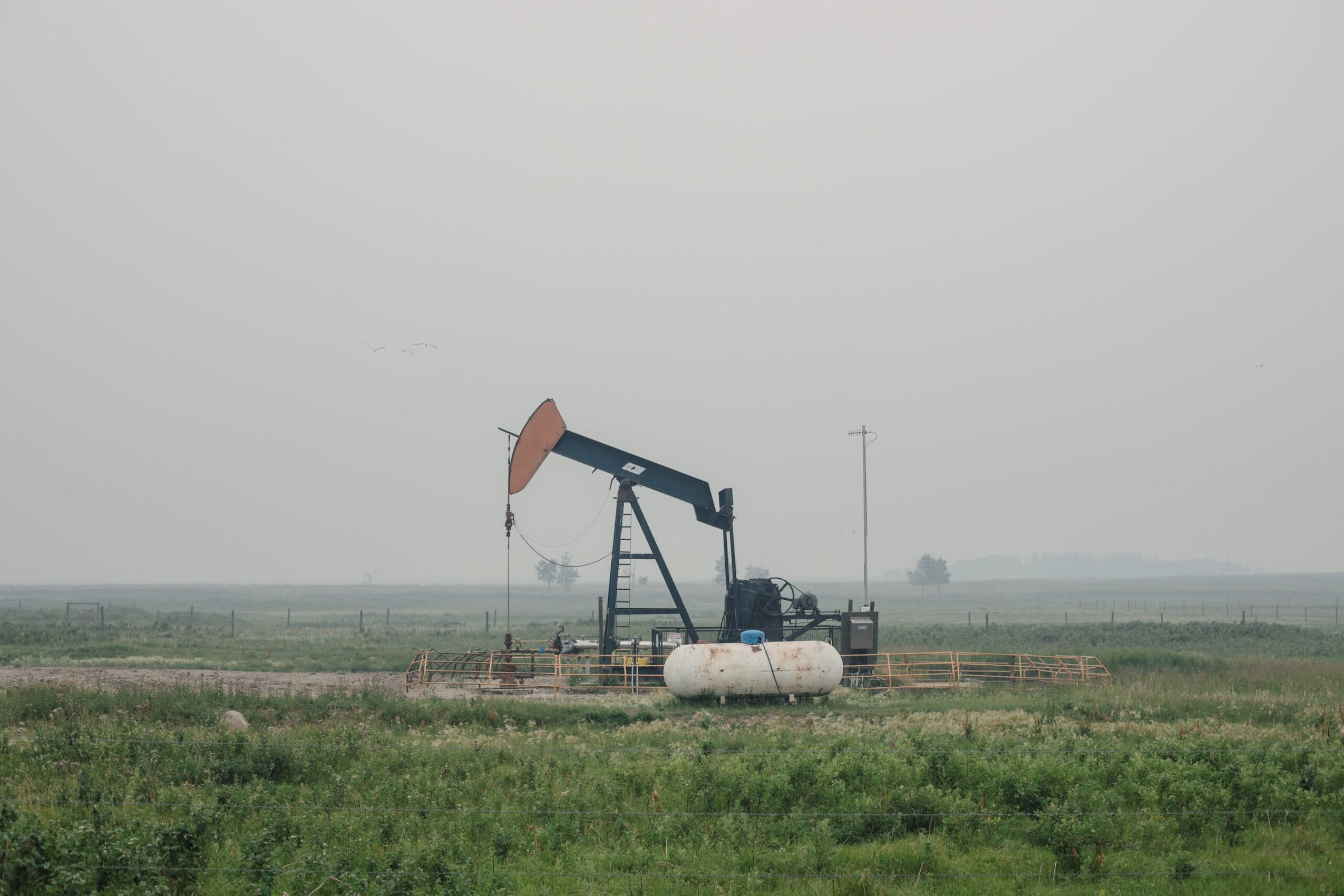
According to the Government of Alberta, there are an estimated 466,000 oil and gas wells in the province. More than half of those are no longer producing. Photo: Amber Bracken / The Narwhal
The association’s inventory currently lists 7,382 wells that need to be decommissioned — as in, safely sealed — and 9,148 sites that need to be reclaimed, which means restored to what’s known as “equivalent land capability” to get back to the ecological, agricultural or other pre-drilling state of the land.
These numbers have increased substantially. As of the end of March, the Orphan Well Association reported its inventory included 4,200 orphan wells that needed to be safely sealed and more than 8,000 sites that needed to be reclaimed.
For comparison, in 2013, the Orphan Well Association had just 387 orphans in its inventory of sites that needed to be reclaimed.
The total price tag to clean up wells the association is responsible for has also increased. According to Yewchuk’s analysis, “the total amount owed has increased for five of the last six years and has more than doubled from 2021 to July 2026.”
Thousand of wells were orphaned in April
The thousands of new wells from Long Run Exploration Ltd. that landed on the Orphan Well Association’s books this spring ended up as orphans after a 2024 deal with a Chinese company fell through. That deal would have seen all of Long Run’s shares purchased for $22 million.
In April, the Alberta Energy Regulator announced the company’s wells were officially orphans. That meant 4,031 wells, 383 facilities and 2,121 pipeline segments previously owned by Long Run Exploration Ltd. were transferred to the Orphan Well Association.
The association reported updated numbers after verifying the status of each site: 2,980 wells and associated facilities and pipelines need to be decommissioned and 938 sites have already been sealed.
The association’s annual report is optimistic the sites do not pose any extraordinary risks.
“Given the nature of the Long Run assets, we do not foresee any of the sites posing a high risk to public safety or the environment,” it said in its annual report.
De Pauw, the president of the Orphan Well Association, said by email, “We have incorporated the Long Run wells into our overall program. We don’t see them any differently as other orphan assets and will continue to prioritize sites based on risk and those on private land while ensuring efficient operations. ”
Cleaning up one orphan well involved demolishing homes
According to the association, the average cost to safely seal each well is $28,800 and the average cost to reclaim the site is $27,000, though actual costs can vary widely depending on the complexity of the cleanup.
In its annual report, the association cites an example in Bonnyville, Alta., where a 1950s-era orphan well was found to be leaking methane into a home. Two houses and a duplex were purchased and demolished, and the well was safely sealed — a complicated and expensive endeavour. “The homeowners were disappointed, of course,” Cliff Pybus, land and stakeholder coordinator at the Orphan Well Association, said in the annual report. “But also relieved that the [association] was taking charge and fixing the situation.”
In theory, the levies collected from industry should be enough money to fund orphan well cleanup in the province. But as clean-up bills have ballooned, the auditor general and other critics have warned this may not be the reality.
“In recent years, levy revenues have not been enough to keep pace with the increasing number of orphan sites being transferred to the [Orphan Well Association],” the auditor general wrote in 2023. Back then, the total price tag of cleaning up orphan wells was a little more than half what it is today.
The Narwhal’s reporters are telling environment stories you won’t read about anywhere else. Stay in the loop by signing up for our free weekly dose of independent journalism.
From The Narwhal | News on Climate Change, Environmental Issues in Canada via This RSS Feed.