

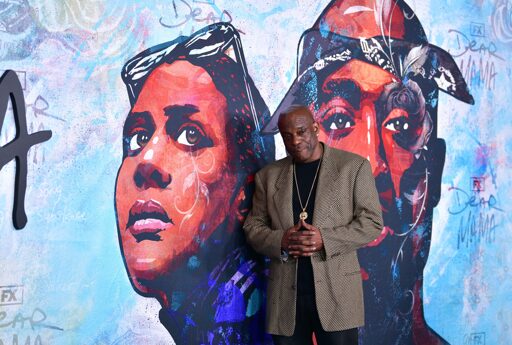
How are hip hop and Black Liberation connected? In this special Black August edition of Rattling the Bars, former political prisoner and Black Panther Mansa Musa sits down with artist, producer, and “Panther Cub” Mopreme Shakur on the rooftop of a hotel in the nation’s capital. Together, they explore Shakur’s memoir, This Thug’s Life, tracing the trajectory from the rise and fall of Black Power to the birth of hip hop through the eyes of the son of a Panther and the stepbrother of a legend.
Additional links/info:
- Mopreme Shakur, Penguin Random House, This Thug’s Life: An Unapologetically Black Story
Credits:
- Producer / Videographer / Editor: Cameron Granadino
Transcript
The following is a rushed transcript and may contain errors. It will be updated.
Mansa Musa:
Welcome to this district rather than your host Mansa Musa. Today we are joined by Mopreme Shakur, the son of the late great political prison with Tulu Shakur and the older stepbrother of the legendary rapper Tupac Shakur. Mopreme has recently published a memoir titled This Thug Life: A Poet Narrative Spanning the Rise of the Black Liberation Movement, The Birth of Hip-Hop in New York, and its expansion to the West Coast. Mopreme, thank you for joining
Mopreme Shakur:
Us. What’s happened, Kevin?
Mansa Musa:
Appreciate you though. I know they got you on Hustle and Bustle, and this is a good thing. What compelled you to write this particular memoir?
Mopreme Shakur:
Well, I am Mopreme Shakur, Thug Life Outlaw, Immortal. I am the son of Dr. Matou Shakur, stepson of Afeni Shakur, brother of Tupac Shakur, nephew of Asada Shakur. That’s my fam, as well as my sister Setua. A lot of people are familiar with the struggles and the triumphs of our family and the movement. A lot of sacrifices made, but a lot of comments is made too. And that’s often overlooked because it’s hard to ignore the struggle. My father was a political prisoner, served 37 years in federal prison. We fought hard to bring him home, but we were able to finally bring him home, but he was ill with cancer, and he passed away in 2023.
Mansa Musa:
Now you say Motulu Shakur ancestor served an astronomical amount of time, a political prisoner. But we just hold Shakur. When you say Shakul, that claim in and of itself is political in and of itself. Panther 21, organizing New York chapter, heavily organizing around goals, the aspirations, and the vision of the Black Panther Party. So let’s talk about the process of bringing this book to life. When did you first begin writing it one? Did you speak to other family members and close friends to piece together the memoir, the memories rather, or were you just drawing strictly on your own experience in growing up?
Mopreme Shakur:
I didn’t ask too many people much first because it’s my story. It ain’t their story, it’s my story. And a lot of times a lot of other people weren’t even there. But the process began after we lost pot and had me reflecting on a lot of things you did. And along with the loss of my brother, I was thinking about our accomplishments. I was locked up for a skid bid. I was doing something stupid, sitting there thinking about myself. And I also though about the rest of the family, the accomplishments we all have made, sacrifices. We all have made border movement, border family.
And so that’s when the process started, got my first 80 pages, and then life be life ain’t. Stop, start, stop, start. Eventually got my co-writer, Talia Shakur, she and I finally got a poser together because we didn’t want to self-publish. We felt like the story was important and it needed to have a farther reach. And so I wanted a book deal. So you got to have certain things in order to get that book deal. So that’s what we did. And as time went on, it became more urgent for me to get this done because I was becoming one of the last ones left Between family and crew, family and crew. It’s been painful, a lot of sacrifices. We just had the homegoing ceremony for Auntie Astata up in Harlem a few weeks ago. Pops past 2023. Been 10 years since The Lost of Fainting. Akti Falani, Baba Balao, Baba Saku.
And it’s like once they’re gone, you can’t ask them no questions no more. And I was like, oh, I started panicking on the music side too. Shaq G just passed away. Young Noble just passed away. Along with Pac, Fatal, Big Psych. Come on, man. Yeah. Come
Mansa Musa:
On, man. And you know what? And as you unpacking that, how important, and this just came about this space right here, how important is it for you to be able to control that narrative about your legacy? It is.
Mopreme Shakur:
Because
Mansa Musa:
You just outlined, okay, we hear pop. We hear a lot of things associated with the Shakur clan. We hear a lot of things associated with the movement. But then when you get in a space where you hear somebody say something that you know is misinformation, or if you not in a position to refute it, then it takes on life. So how is it important? Why do you think it’s important for you to be able to refute for safe? Because you give auticity to the information, whether a person agree with it or disagree with it, whether they like it or don’t like it, it’s coming out the baby’s mouth. It ain’t coming secondhand.
Mopreme Shakur:
Once you become a public figure, anybody could write about you. And that’s what a lot of people don’t know. Pac and I are public figures, of course, because of entertainment game, but our actual relatives are public figures because they end up in the damn news. And you got to preserve your own stories. You know what I mean? Because as Black and brown people disenfranchised poor people, what we are is rich and experience. Maybe poor and finance is what we are rich in life and life experience and pain. There’s a value to that. You got to turn pain to profit. Turn your pain to profit. And we’ve been enduring the pain and while other people here make the profit on it. You dig. So I’m out there in LA, I’m in Hollywood and all that, so I’ve learned the game. And it’s the power of the parent.
We had to get this down because I felt like my story is important because it’s at the crossroads of Black history and Black music history. Okay.
Mansa Musa:
Yeah.
Mopreme Shakur:
Black history and Black music history. We touch on both sides. And we’re disappearing. So we as my generation, the Obafamis, the Sunni Alis, our family, our connected family and the struggle and the revolution, we have the kids of it because it’s our elders that did a whole bunch of the work and sacrifice. So oh, the best we could do is preserve it and tell the story to our people because these stories are important. Members of our family and other brothers and sisters in a struggle are heroes, folk heroes, icons. But if no one knows the stories, they won’t see it that way.
Mansa Musa:
Okay. And this mark is the 60th year anniversary of the Black Panther Party and they dub most of the children of party members club. Panther
Mopreme Shakur:
Clubs.
Mansa Musa:
Panther club. So as a Panther club, and actually witnessed the struggle and see firsthand the repression that was being inflicted, seeing firsthand the torment your father went through because of his political view, seeing the fact that your aunt was forced in the exile for no reason of political views. Talk about what does the legacy mean to you? The party, your family’s legacy, but more important, how do you feel that the party made a contribution to social justice? If you can speak on that.
Mopreme Shakur:
The party made a significant impact to social justice. My father, the Black Panthers, the Young Lords, Lincoln Detox, Detoxification Clinic – A Lagun. And the Bronx. That work that they did was established patients’ rights as a human right. For that incident up in the Bronx is the reason why this country has patients’ rights to this day. You know what I’m saying? But no one will know that story unless we tell it because we’ve already been suppressed to a great degree as it is. So they want to suppress our stories. As we see what’s going on in this administration right here, you know what I’m saying? They’re messing with Harriet Tubman. Jack, what the hell Harry Tubman did to you? Why y’all leave Jackie Robinson look? You know what I’m saying? I’m like, whoa. So it is very important and significant that we try to do our best we can to preserve our stories because we help make this motherfucker too.
I don’t know. Can I curse on almost Man, you can
Mansa Musa:
Do what you do.
Mopreme Shakur:
Oh, shit. Okay. All right. I ain’t want to be rude. You know what I’m saying?
Mansa Musa:
No, no. Like I told you before, we don’t give you a voice. We turn the volume up on your voice. However you want to express your voice, we turn the volume up. Let’s talk about, because you made mention of this, and this is something I think that you can unpack as much as you want.Because you made an observation that you’re dealing with the struggle and the music. And so you dealing with two things issue. And most people, when they think of Shakur, they think of Tupac. They think of you. But now we at a crossroad where what role do this music play, hip-hop music play in raising people’s consciousness, elevating people’s perspective about struggle. But more importantly, how do you see the landscape, man?
Mopreme Shakur:
We truly cared about the people. In the midst of the entertainment was a vehicle to be able to reach the people. But people know Pac fans know he really cared about the people. Keep your head up. Brenda’s Got a Baby. Pop a song. Dear Mama. We’re addressing issues in our communities. You know what I mean? And people be feeling, they tell me all the time. They tell me all the time, man, thank you for making this song. Thank you for making that song. And because we were trying to talk about something. Us being popular in the general market helped because we were able to reach with more and more people. Being a movie star helped. We were able to reach more and more people with some of the messages that we were trying to deliver. Thug life, you know what I’m saying? That was our shit.
That was our contribution because it was actually, a lot of people got the message, a lot of people didn’t. My pops helped us by creating a thug code so it wasn’t just some ignorant shit. The hate you gave little infants fucks everyone. Because if you don’t take care of them babies, they will go into the monsters you fear today. That
Mansa Musa:
Was the acronym.
Mopreme Shakur:
The hate you gave little infants, fuck everyone. All these jackets they’d be wanting to put on us, we taking them and flipping them. We was taking them and flipping Pac’s second album stripping for my nigga. People have an issue with the word nigga. We flipped it, put an A on it. Never ignorant getting goals accomplished. Yeah,
Mansa Musa:
Yeah, yeah. You
Mopreme Shakur:
Did?
Mansa Musa:
Yeah,
Mopreme Shakur:
Man.
Mansa Musa:
Jon, you don’t hear that though, right? No, you don’t. Keep on that. And it makes sense though. And when people say. And the reason why I’m asking this is why we got the opportunity for somebody to myth bust. You know what I’m saying? About your family and the myth bust about who y’all are and what y’all thinking. Because when you come out like Latulu Shaku is a giant and an ancestor and we praise him for his contribution. We honor his work. And we know that he. Ella Baker say, “We who believe in freedom must not rest.” They not rest. They not resting in power. They’re not resting in peace. They not
Mopreme Shakur:
Resting,
Mansa Musa:
Period. Exactly.
Mopreme Shakur:
So
Mansa Musa:
That’s why it’s
Mopreme Shakur:
Important to you. Pac,
Mansa Musa:
Why you acting like this? Why are you so angry?
Mopreme Shakur:
Because we are not at rest. As long as our people still struggling, the struggle continues.
Mansa Musa:
Yeah, exactly. You know what I
Mopreme Shakur:
Mean?
Mansa Musa:
The
Mopreme Shakur:
Struggle continues.
Mansa Musa:
Talk about the underground railroad and third. Okay, the artistic foundation clearly influenced your musical career.
Mopreme Shakur:
We came from community organizers. You know what I’m saying? And we were trying to present our version for our generation. We started with the underground railroad because Pac was already with Digital Underground. And it made sense. Our crew be the underground railroad. We come from the underground, and for so many reasons it made sense for our ideology, it made sense. And then that morphed into 50 niggas. One good nigga, 50 representing the states, one good nigga in every state. We could accomplish anything
Mansa Musa:
And
Mopreme Shakur:
Stick together. Yeah, right there.
Mansa Musa:
You
Mopreme Shakur:
Did. That’s what Pac had too. We was real about it. And that morphed into Thug Life.
Mansa Musa:
Okay. You know
Mopreme Shakur:
What I mean? So
Mansa Musa:
It really had a political undertone.
Mopreme Shakur:
Exactly. That’s why we pulled my father in with it. He was a part. He made Thug Cole, which is we were getting some help from a sister Erica Ford up in New York. We had brothers behind the wall, comrades behind the wall pushing it, trying to explain it. But some of the people got the message and some of the people did. But then you
Mansa Musa:
Had like, well dude, you got opposition because you got the state. Exactly. You got the government. The last thing the government want is somebody that has that kind of influence to be able to speak truth to power and be able to galvanize people, galvanize people around. Because everybody was into hip hop. So this is why you have, just my belief, this is why you have the push on corporate America to create an image of gangster rap. But the more important part of the image, the more important part of the image is that it’s the image.
Mopreme Shakur:
It’s that whoever’s a leader. Whoever’s a leader in whatever kind of way, because they did it to Martin. They did it to Malcolm. They weren’t rappers. You know what I’m saying? Whoever’s a leader. Oh, they did it to Fred. They were trying to take out all our leaders using COINTELPRO. CONTELPRO, you know what I’m saying? They was doing that. They didn’t necessarily get rid of those methods as time went on. They just refined them. They’re
Mansa Musa:
Fine. Yeah, I agree.
Mopreme Shakur:
Dr. Robin DG Kelly, a historian, told me that, “Man, your father is one of the top five civil rights leaders in the country. Top five. Put him in the top five.” And that important, they wanted stifled. They wanted stifled. They didn’t want him to have the impact, so they locked him up. We were pleased. Actually, oddly enough, we were pleased when he got captured because we was hearing that he was saying he wasn’t going to be taken alive. So when he was captured, at least he was alive.
Mansa Musa:
And
Mopreme Shakur:
We could communicate through them years at Lompoc, that’s where he helped us put the thug code together. You
Mansa Musa:
Write about specific songs you and Tupac performed at concerts, but never officially released. Can you tell us about that and how your music resonated with incarcerated people?
Mopreme Shakur:
One of them that did get out is Papa Song. We got to do Papa Song because that was really about Matul. It was all a lack of a father in the household. So that’s what that was about. But there was many others that were supposed to be on the Thug Life album. Thug Life Project was a project that Pac recorded, spent the most time on almost three years recording Thug Life album. But they wouldn’t let certain songs through. They thought it was too hard at the time. They was killing crooked cops, you know what I mean? And so it almost didn’t come out. I had to tamper down the album in order for it to even come out.
Mansa Musa:
And I guess that’s the price. If you ain’t independent, that’s the price you have. If you trying to get your information out and be conversated. And
Mopreme Shakur:
It was a time where censorship was a big thing because they were doing it to live cool. They were doing it to ice tea. They were doing it to things face, facing them, doing it to us.
Mansa Musa:
Engage the public.
Mopreme Shakur:
They didn’t want that reality because we was calling it reality rap. They call it gangst rap. We call it reality rap. We the niggas that lived around that shit for real. We know somebody that happened to if it didnt happen to you. So the truth hurts. But give me one more, Musa. It’s getting hot out here, baby. No,
Mansa Musa:
This is the last one right here. What you want to tell our audience about your project, about the book, and how they can become more involved with your work.
Mopreme Shakur:
Well, thank you for that one. I’m here in lovely DC at the lovely Vice Royal Hotel. I hope you dig it. I think you will. It also has photos in it. So never before seen pics of me, my brother, my father, the family, like 24 pics in it. I try not to cheat the people. It’s that Barnes & Nobles, Amazon, thisthuglife.com, audiobook, ebook. I’m grinding, man. I’m South Side Jamaica Queens. All the way to the west side. There
Mansa Musa:
You have it. We got Mo Pre.
Mopreme Shakur:
Best Mo you’ll ever know. Best
Mansa Musa:
Mo you’ll ever know out here in the hat, son. They’ve been stomping the ground, trying to get the word out on his book. We ask that you really look at this interview because as Mo Pree put it out there. We’re in a struggle for our life and it’s only through us telling our story. He made this quote. Might not have a lot of money, but we got a lot of story. We got a lot of experience. And here go an example of someone that’s taking that experience and using it for the goodness, the betterment of mankind and humans by educating people on the struggle. Thanks, Mopree. Appreciate you, big bro. You
Mopreme Shakur:
Too, man. Power to the people. All power. Free all political
Mansa Musa:
Free.
From The Real News Network via This RSS Feed.