

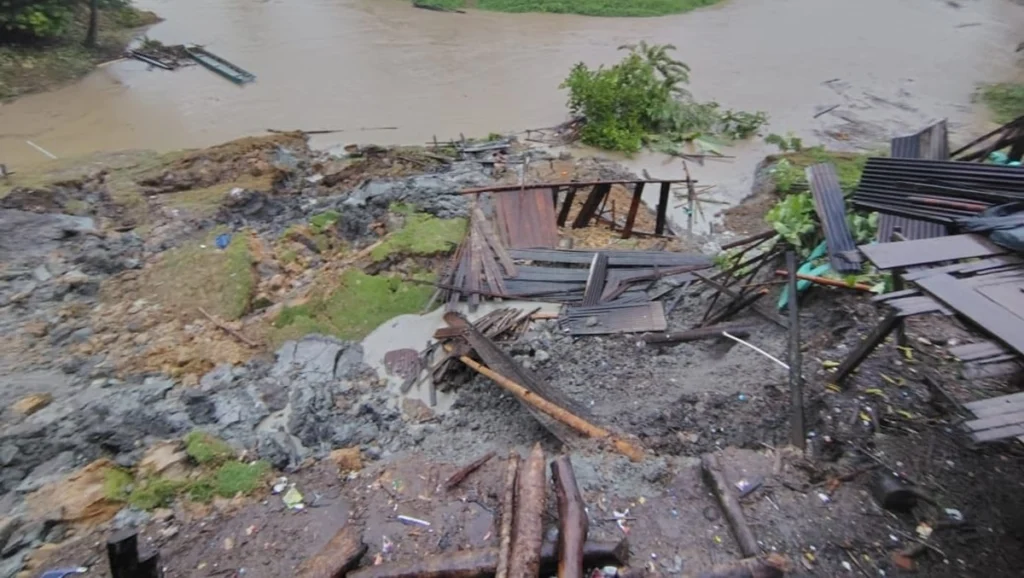
Damage to more than 3,200 schools and poor connectivity complicate the resumption of classes in affected communities.
The magnitude 7.4 earthquake that struck Colombia on Aug. 10 has left the education of tens of thousands of children in limbo, particularly in rural and less-developed areas.
RELATED:
Colombia Earthquake: 289 Dead as Devastating Rescue Operation Continues
The context of poverty, chronic infrastructure deficits and geographic isolation in many of the affected communities also makes it virtually impossible for children to attend virtual classes while their schools are being repaired, raising doubts about their educational process.
Authorities have recorded varying degrees of damage at more than 3,200 schools across the country, in addition to nearly 300 deaths, about 4,200 injuries and 143 people reported missing. Some of the poorest areas, such as the department of Choco in western Colombia, have been particularly affected.
It is precisely in that department that a rural coeducational school is located in the remote village of La Encharca, in the Medio San Juan municipality. The school can only be reached by boat along the Suruco River and has remained without electricity, potable water or connectivity since the earthquake.
Humanitarian aid, including fresh water, essential supplies, and provisions, is on its way to communities in Valle del Cauca and Choco following the recent emergency in Colombia. Grassroots solidarity networks and local volunteers gathered to organize, pack, and transport aid… pic.twitter.com/9nRbK89f4X
— teleSUR English (@telesurenglish) August 15, 2026
“What the children were able to do was approach their teachers and hug each other, with that fear, living through the situation,” said community leader John Ibarbo, who explained that some classroom walls and community halls “have cracks” following the earthquake.
The children have not had classes since then, as they await a technical inspection by regional authorities to assess the structure of the building and determine whether it is safe and what repairs it requires. “The children are waiting to see what happens,” he added.
The municipality is part of a region where the Clan del Golfo drug-trafficking group and the National Liberation Army (ELN) guerrilla group have historically operated, a reality that has shaped the lives of its residents and now also complicates the response to the emergency.
For Ibarbo, the option proposed by the administration of far-right President Abelardo de la Espriella to move classes online is impractical in La Encharca for several reasons.
“It would not benefit most of the families in our community. In our context, the truth is that it is very difficult because of signal coverage: We live in a rural area, in an area where access to social networks is very difficult. We do not have an effective signal for the children to participate in that strategy. And many families do not have equipment such as computers and cellphones,” he explained.
In Pereira, the capital of the department of Risaralda in western Colombia, the earthquake also took a heavy toll on schools.
#Colombia
Así vivieron los estudiantes de una escuela en San José del Palmar, Chocó, el fuerte terremoto registrado el pasado 10 de agosto. Afortunadamente, todos los niños se encuentran a salvo tras el movimiento telúrico de magnitud 7,4 que sacudió a Colombia.
pic.twitter.com/veb2OA71Iq
— Vanguardia (@vanguardiacom) August 11, 2026

The text reads, “This is how students at a school in San Jose del Palmar, Choco, experienced the powerful earthquake that struck on August 10. Fortunately, all the children are safe after the 7.4 magnitude earthquake that shook Colombia.”
On Saturday, Interior Minister Rodrigo Lara said that the city’s 165 schools are in critical condition and that only 15 could resume operations after urgent repairs. It is “an educational tragedy on a national scale,” he added.
As a result, more than 58,000 children have been temporarily left out of school by the earthquake in this city alone. They include students at Jesus Maria Ormaza School, who were beginning their second class period when everything began shaking violently at their school last Monday.
“The earthquake left the facility quite badly damaged: walls, roofs … The roof of the teachers’ room collapsed … There are many damaged walls,” said the school’s principal, Luis Caicedo.
“The first thing we are doing is activating a relief and collection point for food, medicines and clothing. And we are already beginning to coordinate and plan how we are going to assist our children. We have experience with virtual learning, but the children are also at home without computers now and without power in many areas,” he explained.
Caicedo also said that up to 120 of the school’s 800 students have lost their homes — the school is located in one of the neighborhoods hardest hit by the earthquake — and are temporarily staying in shelters.
Despite the difficulties, the principal said teachers and administrative staff are willing to do anything. “You find strength where you have none to respond to this community,” he added.
teleSUR/ JF
Source: EFE
From teleSUR English via This RSS Feed.