

Photo: L. Manuel Baechlin / The Narwhal
Canada’s large oil companies are raking in record profits during an energy crisis.
We’ve been here before — but unlike last time, Ottawa isn’t prodding the industry to use more of the money to clean up its act. In some ways, it’s even volunteering to pick up the tab.
The last time was just four years ago, when Russia’s invasion of Ukraine led to Western sanctions on Russian oil and fears about global energy supply. The price of oil shot skyward, and large Canadian oil companies reaped the benefits, taking in billions of dollars in windfall profits.
The oil and gas industry is the largest source of Canada’s greenhouse gas emissions, which cause climate change that scientists say has been driving major heat waves and wildfires across the country this summer, destroying communities and upending lives.
Yet instead of using its windfall during the Russian invasion to invest heavily in non-emitting energy sources, or to widely deploy technology to decarbonize its operations, the industry began funnelling a larger proportion of its revenues to shareholders, while a group of oilsands companies went to governments asking them to cover much of the cost of their proposed emissions projects.
The federal environment and climate change minister at the time, Steven Guilbeault, pushed back, suggesting oil companies needed to put their money where their mouth is when it came to their own publicly stated environmental goals.
“As Canadians see those profits, we need to see reinvestment into cleaner energy instead of share buybacks,” Guilbeault said in a video posted online in October 2022.
Share buybacks are when companies use cash to buy their own shares back from investors. It’s a different way of giving money to them than dividends, which distribute earnings to shareholders.

The U.S.-Israel-Iran war has driven large profits for Canada’s oil and gas industry, which has reignited calls for a windfall profits tax on the industry. Photo: Daniel Torok / U.S. Government
The Iran war, that began this February, is again leading to big profits for Canada’s oil industry, which are again being directed in part to shareholders.
The conversation has reignited calls for a windfall profits tax on the oil and gas industry, something more than 60 unions and civil society organizations have been calling for.
In a survey this May by Liaison Strategies, 66 per cent of a random sample of 1,526 Canadians reached by landline and cell phone also supported a tax on oil and gas excess profits, with the revenues going to help lower energy bills.
Elbows Up For Climate, which represents almost 300 mayors, councillors and local officials from across Canada advocating for national environmental projects, is one of the groups calling for a windfall tax.
Former Toronto mayor David Miller is the co-chair of Elbows Up For Climate alongside former Montreal mayor Valérie Plante. Miller told The Narwhal such a tax makes sense given the global fossil fuel industry spent decades obscuring the truth about climate change and lobbying governments to roll back climate action, and so is “in many ways responsible” for delaying the economy’s transition to clean energy.
“We are in a frightening summer from wildfire smoke. The damage yet again will be in the billions, and the question is, who should pay for that? Should it be the general public?” Miller, now managing director of a global network of mayors called the C40 Centre, said. “Or should it be the people, the entities, that are causing the problem?”
“The entities that are causing the problem — which is climate change, that’s what’s making the wildfires so bad — are the fossil fuel companies, and they should pay for the damage. It’s a user-pay kind of principle, and because of the profits they’re making as a result of the U.S.-Israel attack on Iran, it’s a very appropriate moment.”
Oil companies argue they already pay significant taxes as well as royalties, which are separate payments that companies make to the province that owns the resources. In 2024-25, Alberta took in $17.2 billion in royalties from the oilsands.
But the Vancouver-based Centre for Future Work has argued that royalties collect “only a small fraction” of the increased revenues from higher oil prices. In 2022, they found, oil and gas profits jumped almost three times as much as the increase in royalties.
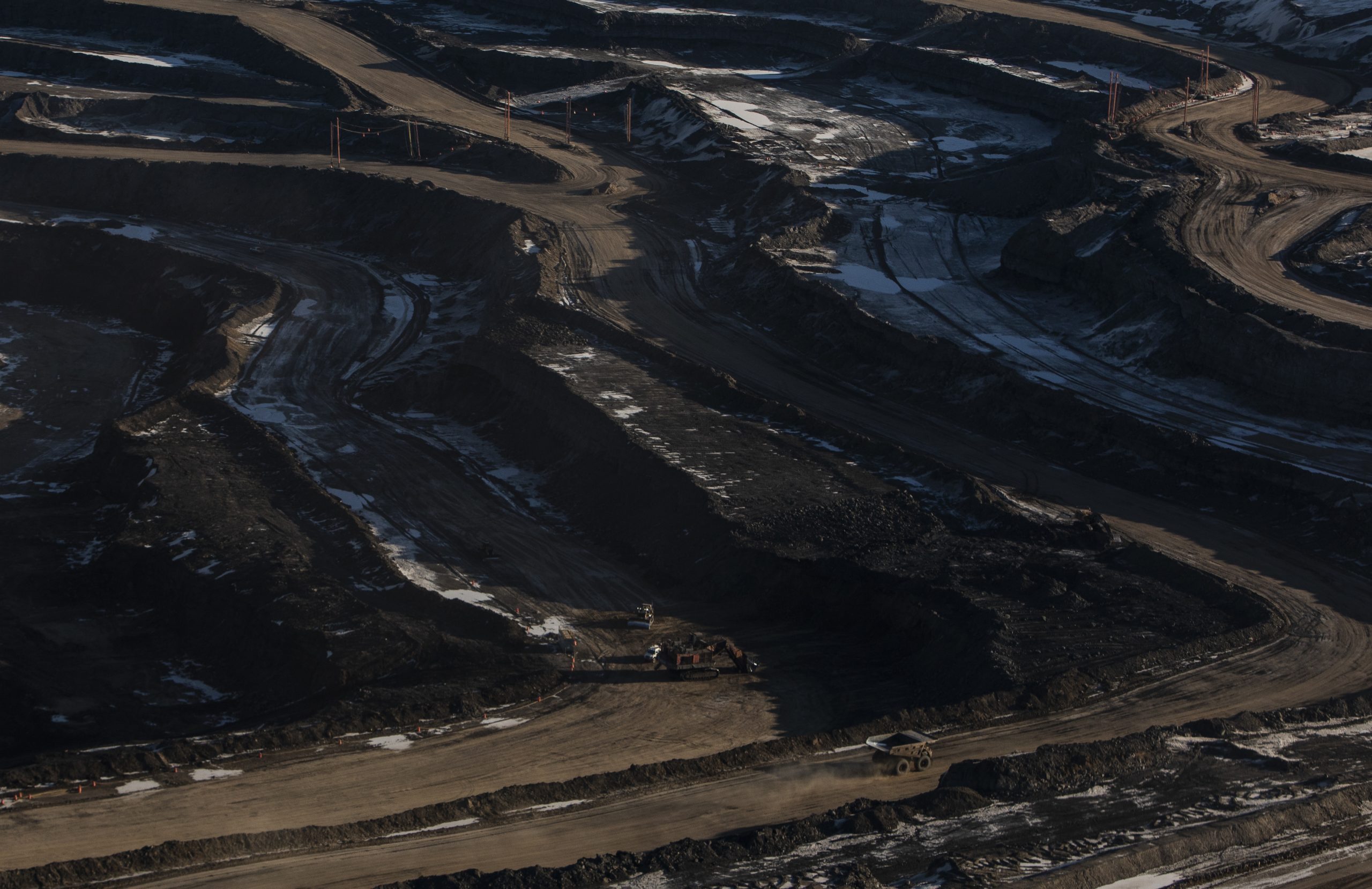
Oil and gas companies have argued they already pay significant taxes in Canada, as well as royalties to the provinces that own the resources they’re using. According to the Canadian Centre for Policy Alternatives, applying a new windfall tax could generate between $18 billion and $46 billion for Canada over the next year, depending on taxation rate and application. Photo: Amber Bracken / The Narwhal
Applying a new windfall tax on oil profits today could generate between $18 billion and $46 billion over the next year, depending on the tax rate and how much of a company’s profits it applies to, according to the Canadian Centre for Policy Alternatives.
The Narwhal asked Environment and Climate Change Minister Julie Dabrusin’s office whether she believes, like Guilbeault did, that oil companies should be spending more on emissions reductions, and what she thought of a windfall profits tax.
“Oil and gas companies have an important role to play in driving down Canada’s emissions,” Dabrusin’s director of communications Chris Zhou responded in an emailed statement.
Zhou said the government was focused on “durable, unifying solutions that will deliver sustained emissions reductions over the long term,” including restrictions on methane, a greenhouse gas, in the oil and gas sector, as well as the industrial carbon pricing system.
Oil companies bringing in record-breaking profits amidst Iran war
The Iran war has led to the intermittent closure of the Strait of Hormuz, the chokepoint between the Persian Gulf and Arabian Sea that one-fifth of the world’s oil is shipped through.
It created the “largest supply disruption in history,” according to the International Energy Agency, and sent oil prices higher again. The higher price translated to big profits for the world’s largest oil companies, and those in Canada have been no exception.
Earlier this month, Canadian Natural Resources Limited, one of the country’s largest oil and gas companies, reported $4.5 billion in profit in the second quarter, which covers April to June. That result was “the strongest in the history of the company,” Chief Financial Officer Victor Clinton Darel said.
The company returned $2.4 billion to shareholders in the form of dividends and share repurchases. This year, he added, was the 26th consecutive year of dividend increases.
The record results followed a report from Cenovus, one of Canada’s large oilsands companies, of a $2.9-billion profit in the second quarter, its “best quarterly financial result ever,” president and CEO Jon McKenzie said. Cenovus plans to increase shareholder returns, and sent $1.4 billion to them in the second quarter.
Graph: Shawn Parkinson / The Narwhal. Source: Canada Energy Regulator
“We would never apologize nor take credit for a higher commodity price environment, but the key is to run well while it lasts and capitalize on the opportunity,” McKenzie said.
A third oilsands firm, Suncor, recently posted a $3.7-billion profit, and returned $1.7 billion to shareholders — it too said it plans to spend more money giving cash to investors in return for their shares.
Imperial Oil, a Canadian firm majority-owned by one of the world’s largest oil companies, ExxonMobil, posted a quarterly profit of $2.2 billion. John Whelan, the chairman, president and CEO, said Imperial has grown its annual dividend for 31 years.
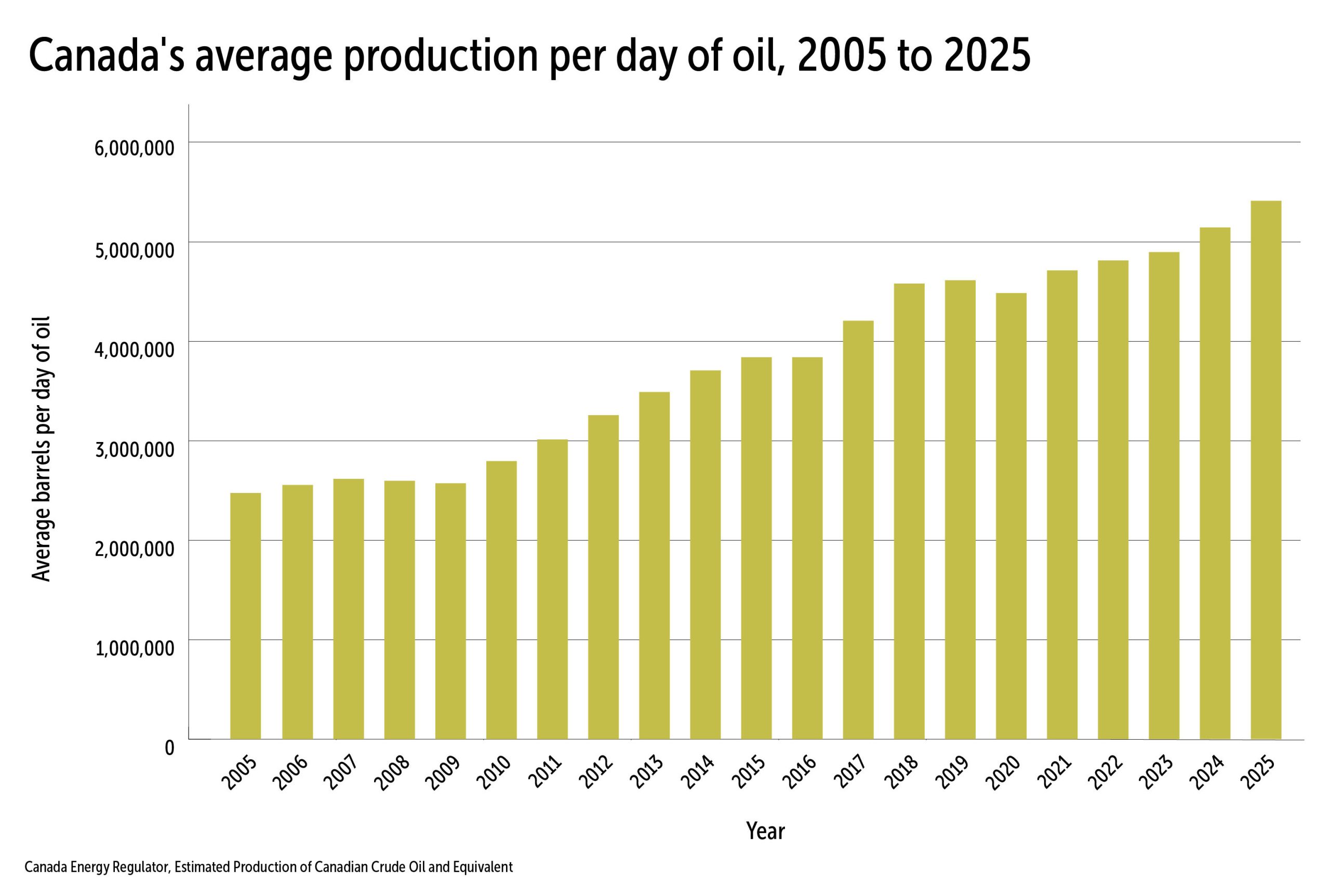
In addition to reaping rewards from the higher price of oil, Canadian companies have also been creating more of it. Oil production hit a new record last year in Canada, and crude oil production hit the highest volume this May since comparable records began in 2016, according to Statistics Canada.
This year, Cenovus expects to join the club of companies worldwide that can produce, on their own, the equivalent of a million barrels of oil per day, on average. Only one other Canadian company can do that, Canadian Natural, which also said it had hit a new quarterly production record.
Oil execs praise Alberta deal that taxpayers could be on the hook for
During their earnings calls this summer, executives praised Prime Minister Mark Carney’s deal with Alberta Premier Danielle Smith — in which the federal government has hinted it’s prepared to spend significant public dollars.
Canadian Natural, Cenovus, Suncor and Imperial Oil are four of the five members of the Oil Sands Alliance, formerly known as the Pathways Alliance, which signed a trilateral memorandum of understanding with the federal and Alberta governments that envisions a new oil pipeline to the West Coast, to be filled with increased levels of oil production, as well as a new emissions reduction project in the oilsands called Pathways, which will rely in part on carbon capture technology.
Ottawa says two government-owned corporations will own most of the oil pipeline and one of them will develop and run it. The only private-sector involvement announced so far is a pipeline company signing a non-binding agreement to take a 10 per cent interest during construction, with possibly another 10 per cent interest when the pipeline begins operating.
Pressed by CBC News to reveal how much federal money would be involved in building the new pipeline, Natural Resources Minister Tim Hodgson said that while he didn’t have “the numbers in front of me right now,” the cost to build an earlier oil pipeline — the Trans Mountain expansion project, which cost between $30 and $40 billion — was a “reasonable thing to look at.”
The government’s deal with Alberta also includes a commitment from Ottawa to “offer financing or support mechanisms” supporting the operating costs of carbon capture and storage projects.
It’s hard to precisely tally up how much this financing and support might cost Canadians, but the government has already committed billions of dollars in the form of carbon capture tax credits, funding for carbon contracts and other related research and development efforts.
At the same time, it’s unclear how much of their own money oil companies are willing to spend on the industry’s infrastructure — whether that’s to move more oil, or to lower their emissions.
Companies tight-lipped about environmental progress, vocal on environmental regulations
Many major oil companies have cited Trudeau-era changes to the federal Competition Act as a reason why they cannot publish information on their environmental performance on their website or in corporate disclosure reports.
The changes introduced an anti-greenwashing requirement for businesses, ensuring they backed up claims about protecting the environment or tackling climate change with evidence. (While the Carney government removed a rule that required this evidence to conform to internationally recognized standards, it left the broader requirement in place.)
Suncor’s 2025 report on sustainability says the company aims to “reduce the greenhouse gas emissions intensity of our base business,” but notes the report intentionally does not contain any “environmental content or data” due to the law. Cenovus says it does not publish any information on its website regarding its environmental performance or targets, for the same reason.
Imperial Oil’s website says it does not publish “an active representation” of its environmental performance although it mentions efforts in “lower-emission fuels,” renewable diesel, lithium and carbon capture technology. Canadian Natural’s website points to reclamation projects, like tree planting, at its oilsands sites.
The four companies, as well as the Oil Sands Alliance, did not respond to requests from The Narwhal for how much money they have spent over the last year on emissions reductions projects, or their opinion of a windfall profits tax.
They have been outspoken, however, about how environmental policy is affecting their bottom lines.
McKenzie, at Cenovus, said in June that a new oil pipeline to the West Coast could not be financed by the private sector because of Canada’s industrial carbon pricing system. “Industry has been clear that the industrial carbon tax is insidious and it should be revoked,” he said.
On the July earnings call, after announcing record profits, McKenzie again described the industrial carbon pricing system as an “uncompetitive carbon tax that uniquely burdens Canadian industry.”
But he praised the Canada-Alberta deal, saying it “creates a framework for governments and industry to work together on production growth, emissions reduction and expanded market access.”
Similarly, Scott Stauth, president of Canadian Natural, said the agreement was a “positive first step” and said it would “benefit all of Canada by providing more jobs, combined with social and economic benefits to our country.”
“It’s a very different mood and tenure today than it has been in the past. We’re encouraged by that,” Suncor president and CEO Rich Kruger said about the Alberta deal, although he also said there was still “a lot of work to do.”
Oil Sands Alliance President Kendall Dilling said in a statement posted July 13 that the trilateral deal was a “framework that is positive for the oilsands industry and provides a step forward to help enable production growth and to advance the Pathways project.”
“It helps meet our shared vision to grow Canadian oil production and benefit Canadians across the country,” he said.
Windfall profits tax could help offset affordability crisis, advocates say
For his part, Carney posted a video online in June suggesting the world needed more of Canada’s fossil fuels, as a result of the Iran War.
“The hard truth is that we don’t control the price of oil, so what we’re doing is helping Canadians through tough times in the short term,” the prime minister explained.
The government suspended the federal gas tax for the summer as an affordability measure, Carney said. But he also argued that addressing global “energy security” means ensuring Canada supplies the world with as much oil and gas “as possible.”
While he acknowledged this “will mean that our emissions will be higher in the next few years than they were projected to be under the previous government’s plan,” he said Canada “can’t afford to restrain the growth of an important part of our energy mix, oil and gas, to meet a short term goal.”
Carney also claimed Canada’s oil would be “produced responsibly and with a clear focus on lowering emissions over time.”
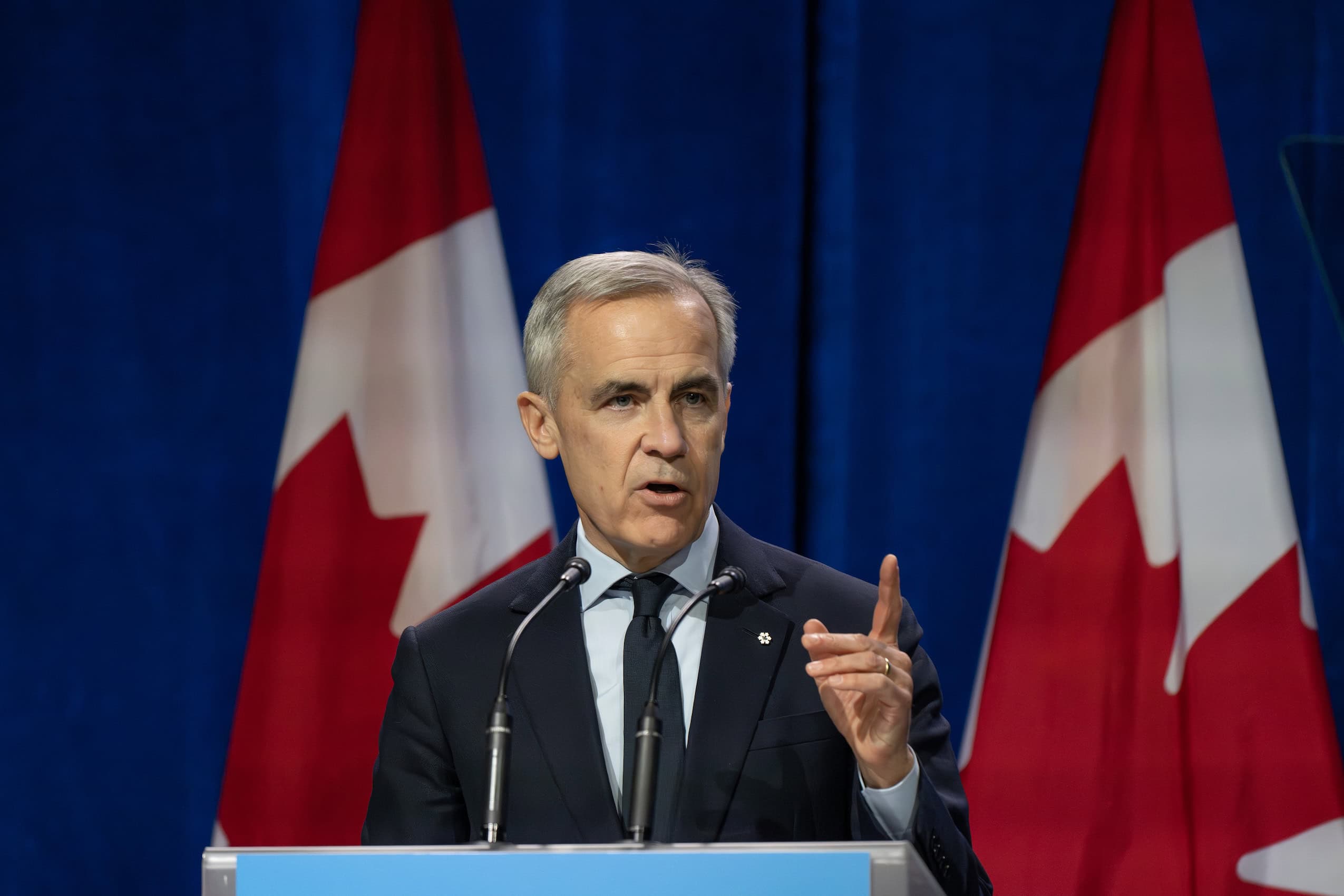
Prime Minister Mark Carney has said the world needs more of Canada’s fossil fuels as a result of the Iran war. While this may mean an increase in the country’s emissions, he has argued that Canada can’t afford to restrain oil and gas production at this critical time. Photo: Gavin John / The Narwhal
For Elbows Up For Climate, though, the fact remains that carbon pollution from fossil fuels is directly and indirectly the cause of tens of billions of dollars in damages from climate-driven extreme weather, Miller said.
Annual insured losses reached $37 billion between 2016 and 2025, according to the Insurance Bureau of Canada.
“It’s quite remarkable and eye-opening when you look at [insurance] statistics, and those are happening because of the exploitation of fossil fuels,” Miller said.
“Expanding oil and gas production puts more Canadians at risk of extreme weather, extreme heat and other climate-related disasters. We actually can’t afford those disasters.”
Several groups like the Green Budget Coalition, Canadians for Tax Fairness, Seniors For Climate Action Now, For Our Kids and 350.org have also submitted budgetary recommendations to the House of Commons finance committee that endorse a windfall profits tax on oil and gas companies.
Thomas Green, senior manager of climate solutions at the David Suzuki Foundation, part of the Green Budget Coalition, pointed out that the United Kingdom has its own windfall tax.
Between 2022 and 2025, the UK’s Energy Profits Levy raised 9.1 billion pound sterling, or $17 billion at today’s exchange rate.
The coalition wants to see a new levy on oil and gas companies linked to when oil prices exceed certain thresholds — indexed to inflation and periodically reviewed — and for the money to be allocated toward affordability and climate action measures.
“These profits come at the expense of affordability for everyday Canadians,” Green told The Narwhal.
“A windfall profits tax would at least rectify some of the injustice that we see right now.”
The Narwhal’s reporters are telling environment stories you won’t read about anywhere else. Stay in the loop by signing up for our free weekly dose of independent journalism.
From The Narwhal | News on Climate Change, Environmental Issues in Canada via This RSS Feed.
The oil companies should have all their assets expropriated, their production facilities shut down and cleaned up, and any remaining money after the assets are sold used to build public transportation that doesn’t run on fossil fuels.
