

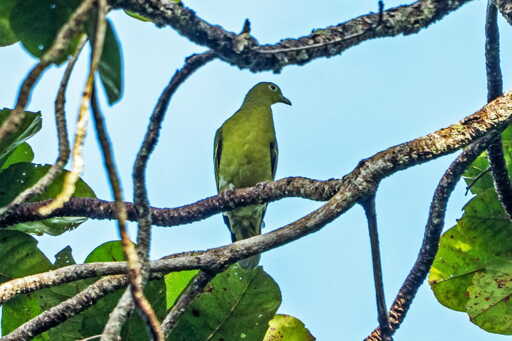
Founder’s Briefs: An occasional series where Mongabay founder Rhett Ayers Butler shares analysis, perspectives and story summaries. On April 20, on the south coast of Timor-Leste, Jafet Potenzo Lopes saw three green pigeons. He had not seen the species for years. The birds were Timor green pigeons, and the site, in Manatuto municipality, had no previous record of them. With the species nearing extinction, finding three birds in a new place was encouraging. The latest estimates suggest how few remain. A study published this year in Oryx, drawing on more than 1,400 days of field surveys between 2002 and 2025, estimates the global population at 100-500 birds across eight sites. The true number may be near the lower end of that range. Only Nino Konis Santana National Park in eastern Timor-Leste is thought to hold more than 50 birds. The researchers recommend changing the status of the Timor green pigeon (Treron psittaceus) on the IUCN Red List from endangered to critically endangered, reports contributor Timothy Mihocik for Mongabay. In Indonesia, where many older records came from West Timor and nearby islands, the pigeon may already be functionally extinct. Most of the remaining birds are in Timor-Leste, where hunting continues even in protected areas. Timor green pigeons gather at fruiting trees and are unusually vulnerable: After one bird is shot, others may stay in the canopy. Forest conversion has also reduced their habitat. More than 80% of known records come from protected areas, yet researchers say those areas lack the funding…This article was originally published on Mongabay
From Conservation news via This RSS Feed.