

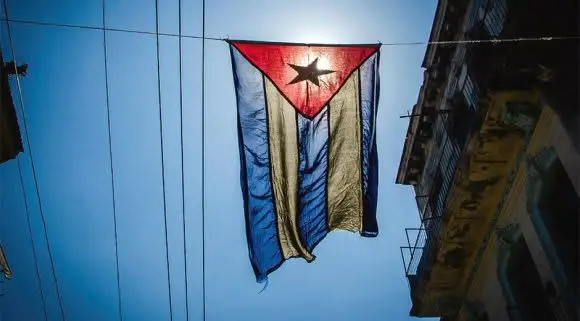
Cuban diaspora meeting in France will gather emigrants from Europe on October 23–24 to discuss economic reforms, culture and ties with Cuba.
Related: Cuba Thanks China New Donation of 15,000 Tons of Rice
Cuban Diaspora Meeting Set for France in October
The Cuban diaspora meeting will bring together Cubans residing across Europe on October 23 and 24 in France, according to an announcement by the Coordinating Committee of Cubans Residing in France.
The 18th Meeting of Cubans Residing in Europe, known by its Spanish acronym ECRE, will take place in the Île-de-France region, which includes Paris and the eight departments that make up the wider Paris metropolitan area.
The event is expected to bring together representatives of Cuban communities from several European countries to discuss relations with the island, economic participation, cultural identity and the role of younger generations.
The meeting will be especially significant because it will mark 20 years since Paris hosted the first ECRE.
Organizers said the event will be inspired by the ideas of Cuban national hero José Martí and directed toward defending Cuba’s sovereignty and national interests.
The gathering will also be held during celebrations marking the centenary of the birth of Fidel Castro, the historic leader of the Cuban Revolution.
The call for participation highlights Fidel Castro’s political thought, ethics and leadership as references for the principles promoted by the meeting’s organizers.
“By reviewing the 20 years since the first ECRE held in Paris, we will reaffirm our commitment to unite our efforts and continue working for Cuba,” the French coordinating committee said.
The event will follow the 17th Meeting of Cubans Residing in Europe, held in Rome, Italy, on October 24 and 25 of the previous year.
The ECRE meetings have become a regular space for Cuban residents abroad to discuss their relationship with the island and coordinate cultural, political and social initiatives.
The gatherings are supported by Cuban diplomatic institutions and community organizations, although participants come from different professional, political and social backgrounds.
The organizers say the meeting is intended to encourage dialogue and strengthen links between Cuba and its emigrant communities.
Cuban Diaspora Meeting to Debate Economic Reforms
Cuban National Assembly | Cuban Ministry of Foreign Affairs
The Cuban diaspora meeting will focus on regulations affecting Cubans living abroad and their participation in the country’s economic and social development.
One of the main topics will be the implementation of the 176 economic and social transformations approved by Cuba’s National Assembly in June.
The measures are grouped into 23 thematic areas and seek to decentralize economic management, expand private-sector participation and attract foreign and diaspora investment.
The reform package includes changes affecting state enterprises, private businesses, foreign trade, investment, finance, social protection and tourism.
Cuban authorities describe the measures as an effort to confront the country’s economic crisis while preserving the social achievements of the Revolution.
Among the reforms are proposals to grant state-owned companies greater autonomy, expand non-state economic activity and create new mechanisms for foreign investment.
The package also includes provisions related to private banking, currency exchange, direct imports and exports, and the possibility of investment by Cubans living abroad.
The National Assembly’s official presentation groups the transformations into 23 policy areas, including economic management, ownership, investment, social policy, subsidies and local government.[parlamentocubano.gob]
The measures could create new opportunities for Cuban emigrants who want to invest in businesses, support productive projects or establish commercial partnerships on the island.
However, the implementation will depend on regulations, licensing procedures, financial access and the ability of businesses to operate under Cuba’s economic conditions.
The meeting in France will allow participants to discuss how Cubans abroad can contribute without abandoning their social and cultural links with their communities of origin.
The organizers are also expected to examine mechanisms for diaspora participation in areas such as technology, professional services, tourism, agriculture, transportation and small business development.
The call for participation comes as Cuba faces serious economic difficulties, including shortages, inflation, energy problems and pressure from US sanctions.
The government says the reforms are intended to diversify the economy and reduce external dependence. Critics argue that the measures represent a major shift toward market mechanisms and greater private-sector activity.
Regardless of the political interpretation, the changes have created new questions for Cubans living abroad. They include how to invest legally, transfer money, participate in companies and support relatives or projects on the island.
The Cuban diaspora meeting can therefore serve as a forum for clarifying those questions and discussing the practical effects of the new rules.
It may also produce proposals for improving communication between Cuban institutions and emigrant communities.
Many Cubans living overseas have complained that they face administrative difficulties when dealing with consulates, banks and government agencies. Participants may seek simpler procedures and more accessible digital services.
The meeting’s agenda could also include migration policy, consular services, property rights and the recognition of professional qualifications obtained abroad.
These issues affect younger emigrants in particular. Many Cubans who left the island in recent years maintain family ties but have limited knowledge of current regulations and economic opportunities.
New Generations and Cuban Identity in Europe
Cuban Embassy in France | UNESCO—Cuban cultural heritage
The Cuban diaspora meeting will also address the role of younger generations in preserving and defending Cuba’s cultural and historical roots.
Organizers say young Cubans in Europe face the challenge of maintaining their identity while living in multilingual and multicultural societies.
The meeting will explore ways to transmit Cuban history, music, literature, traditions and political memory to children and grandchildren born or raised outside the island.
Cultural identity is a central concern for many diaspora organizations. They organize workshops, cultural activities, educational programs and commemorations connected to Cuba’s national history.
The participants are expected to discuss the role of social media and digital platforms in maintaining connections between communities in Europe and Cuba.
Online communication allows young Cubans to share music, artistic projects, historical research and information about community activities.
It also allows diaspora organizations to respond quickly to natural disasters, economic emergencies and requests for humanitarian assistance.
The organizers have called on Cubans throughout Europe to participate actively in the meeting and to help build what they describe as a homeland “with everyone and for the good of everyone.”
That phrase comes from José Martí, whose ideas about national unity, independence and social justice remain influential in Cuban political and cultural discourse.
The reference to Martí connects the meeting to a broader interpretation of Cuban identity that includes both people living on the island and those residing abroad.
The organizers also urged participants to raise their voices against what they describe as increased attacks and threats against Cuba’s sovereignty.
They linked the event to the broader international context, including US sanctions and pressure on the Cuban economy.
The Cuban government has long argued that the US blockade constitutes the main obstacle to the country’s economic development. Washington maintains that its measures are intended to pressure Havana over political freedoms and human rights.
The diaspora has different views on those issues. Some Cuban emigrants support the government, while others oppose it and advocate political change.
The ECRE meeting is promoted by organizations that defend Cuba and its Revolution, but its participants may still represent a range of opinions within the Cuban community in Europe.
The meeting’s political character could generate debate about the relationship between cultural solidarity, support for the Cuban government and independent diaspora participation.
Organizers say the event aims to unite different generations and strengthen common efforts rather than erase differences.
The choice of Île-de-France as the venue reflects the size and diversity of the Cuban community in France. Paris is home to Cuban professionals, students, families, artists and political activists from different migration waves.
The region also offers connections to Cubans living in Belgium, Germany, Spain, Italy and other European countries.
Geopolitical Context
The Cuban diaspora meeting takes place amid renewed political pressure on Cuba and a changing international environment.
Cuba’s relations with European countries are influenced by the US blockade, migration, trade, investment and debates over human rights.
The island is also seeking new economic partners as it confronts shortages of fuel, food and medicines. Greater participation by Cubans living abroad could provide capital, technical expertise and access to international networks.
At the same time, diaspora engagement is politically sensitive. Cuba wants emigrants to contribute to national development, but the government also seeks to prevent foreign pressure from shaping domestic politics.
For Europe, the meeting offers insight into the priorities of a Cuban community with ties to both the island and its host countries.
The gathering may also influence future cooperation in culture, education, tourism and business between Cuba and European institutions.
The 176 reforms give the event an economic dimension that previous meetings may not have had. Participants will be able to examine whether the new measures create genuine opportunities for diaspora investment and participation.
The meeting will also test the ability of Cuban organizations in Europe to mobilize across national borders and generations.
The event is expected to produce proposals and statements on economic participation, cultural preservation and solidarity with Cuba.
The 18th ECRE will therefore be both a community gathering and a political forum about Cuba’s future relationship with its citizens abroad.
From teleSUR English via This RSS Feed.