


Iran rejected fresh US threats about an indefinite naval blockade and other tactics of economic warfare over the Strait of Hormuz on Thursday, August 13, calling them a bigger miscalculation than the joint US-Israeli war launched against the country in February.
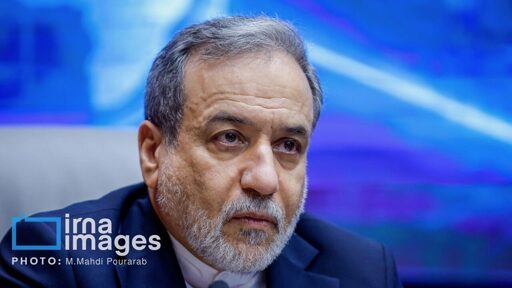
Iran’s Foreign Minister Abbas Araghchi reacted to threats made by US Defense Secretary Pete Hegseth that his country can keep the naval blockade on Iran indefinitely. He warned the Donald Trump administration against being yet again deceived by “fake intelligence.”
Iran also rejected successive claims made by Trump and his energy secretary, Chris Wright, about the control over the Strait of Hormuz and the normalization of oil exports through it.
“The US has total control over the Strait of Hormuz. I think we will keep it,” Trump had said in a social media post on Wednesday.
Wright has repeatedly claimed that energy supplies from the Persian Gulf region have almost returned to pre-war levels. He made the claims again on Thursday claiming if one combines the energy traffic through the sea with the traffic through upgraded land infrastructure the volume of oil exports from the region would reach around 15 million barrels per day.
According to various calculations, the pre-war oil export from the region was around 18.7 million barrels per day.
Iran dismissed US claims, with Ali Ozamaei, commander of the Islamic Revolutionary Guard Corps (IRGC) navy claiming on Thursday that “the strait is closed, and reality must be seen in the field, not in the statements and remarks of US officials,” Press TV reported on Friday.
Earlier, the IRGC central command had called claims of US control over the strait “nothing but fabricated lies and falsehood” and “a reflection of US army’s desperation, and helplessness.”
Various independent sources have also questioned Wright’s claims about 9 million barrels of oil leaving the region through the strait alone and the rest through new land routes, calling these claims a massive exaggeration of the reality.
Trump’s misinformation campaign
Iran has accused Trump and other US officials of “disseminating misinformation” related to the volume of oil leaving though the strait in order to stop oil prices from rising further before the US mid-term elections.
Analysts also argue that statements about the normalization of the energy trade and claims about control over the strait is part of the Trump administration’s attempts to declare victory in the war which otherwise is seen to have gone completely in the opposite direction.
According to data released by trade analytics platform Kpler, only eight ships transited through the strait on Tuesday, five on Wednesday, and nine on Thursday. This is even below August’s average of 12.
Around 130–140 ships used to transit from the Strait of Hormuz before the beginning of the US-Israeli war on Iran in late February, which supplied for around a quarter of the world’s energy needs.
Tensions are now also rising in the Bab-al-Mandab and the Red Sea, which has been used as an alternative route to export Saudi oil after the Iranian closure of the Strait of Hormuz, global oil supplies are expected to be affected yet again. This may push the prices upward.
Iran has defied US pressure, strikes, and intensified economic warfare, and refused to lift its restrictions on the traffic through the strait, claiming it would only be normalized if the war against it ends and other conditions met such as the withdrawal of sanctions, lifting of the naval blockade and release of all its frozen assets overseas.
This would remain the case irrespective of the fate of its ongoing talks with Oman to devise a common mechanism to manage the traffic through it, Iran has said.
Meanwhile, Scott Bessent, US treasury secretary, issued fresh threats of intensified economic warfare against Iran in the coming days.
“We are going to apply measures like have never been seen in the history of economic isolation on a country” Bessent said during an interview on Thursday claiming “it will be a combination of economic isolation like the world has never seen before, and the continued blockade in the Strait of Hormuz that will keep anything from going in or out of the Iranian ports.”
From BT News via This RSS Feed.