

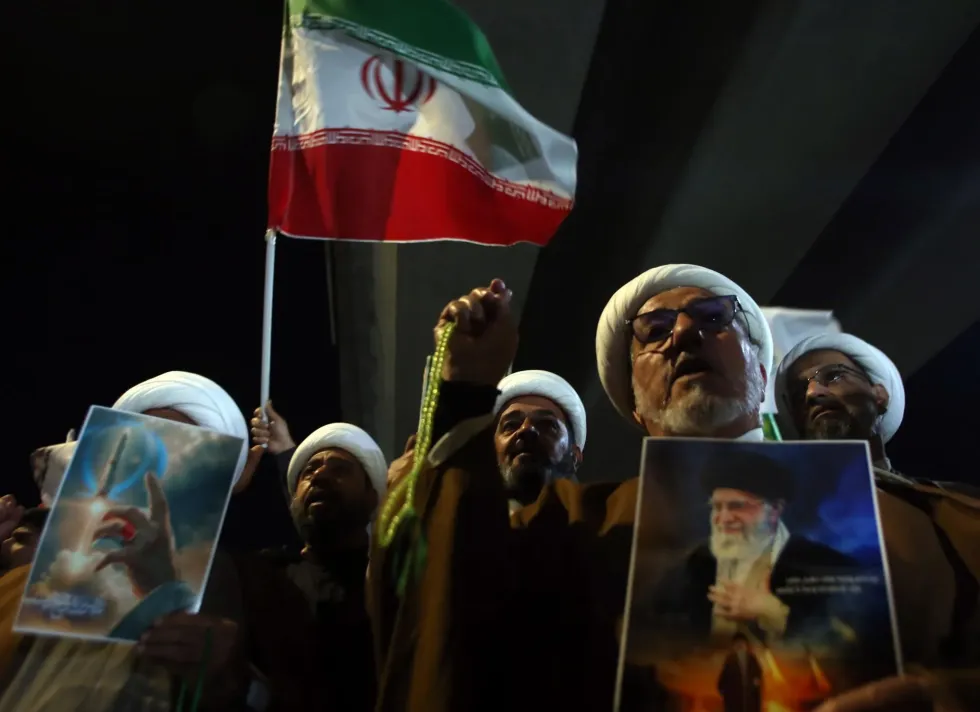
Khamenei memorials will take place in Tehran, Qom and Mashhad as Iran honors its late supreme leader and reaffirms loyalty amid regional tensions.
Related: Iranian Parliament Approves Prison Sentences for Contacting Hostile Media
Khamenei Memorials to Take Place Across Iran
The planned Khamenei memorials will take place across Iran this week as authorities commemorate the 40th day after the funeral ceremonies for Ayatollah Ali Khamenei, the country’s late supreme leader.
The office of Iran’s Supreme Leader announced that the commemorations will begin Tuesday, August 18, in the prayer hall of Imam Khomeini in Tehran.
The program will continue Wednesday, August 19, at the shrine of Lady Fatima Masumeh in the holy city of Qom. The event is scheduled to take place after the Maghrib and Isha prayers.
The commemorations will conclude Thursday, August 20, at the Razavi shrine in Mashhad, one of Iran’s most important religious sites.
The final ceremony coincides with the religious date marking the martyrdom of Imam Hassan al-Askari, the eleventh Imam in Shia Islam.
Iranian authorities have called on citizens to participate in large numbers. The government said public attendance would represent a reaffirmation of loyalty to the leadership of the Islamic Revolution and a continuation of Khamenei’s political and religious legacy.
The memorials come several weeks after Khamenei’s funeral ceremonies, which were held in several Iranian and Iraqi cities during July.
Those ceremonies drew large crowds and delegations of senior officials from across the region. They took place amid continuing tensions and military confrontation in the Middle East.
Khamenei served as Iran’s supreme leader for more than 36 years, making him one of the longest-serving political and religious leaders in the region.
He became Iran’s second Supreme Leader in 1989, following the death of Ayatollah Ruhollah Khomeini, the founder of the Islamic Republic.
During his tenure, Khamenei exercised ultimate authority over Iran’s political institutions, armed forces and major foreign-policy decisions.
He was also the country’s highest religious authority and commander in chief of the Islamic Revolutionary Guard Corps and the regular armed forces.
Khamenei was killed during US and Israeli airstrikes against Iran on February 28, according to Iranian and international reports. His death marked a major turning point in the conflict and created a transition within Iran’s political system.
His funeral ceremonies began in Tehran in early July and later continued in Qom, the Iraqi cities of Najaf and Karbala, and Mashhad.
The final burial took place at the Imam Reza shrine in Mashhad, Khamenei’s birthplace and one of the most important centers of Shia pilgrimage.[reuters][apnews]
Khamenei Memorials Reaffirm Iran’s Political Legacy
Iran’s Ministry of Foreign Affairs | UNESCO—Iran cultural and religious heritage
The Khamenei memorials are being presented by Iranian authorities as both religious commemorations and political demonstrations of continuity.
The office of the Supreme Leader said public participation would honor Khamenei’s legacy and reaffirm support for the institutions of the Islamic Republic.
Iranian state media have described the previous funeral ceremonies as among the largest public gatherings in the country’s recent history. Images showed large crowds in Tehran, Qom and Mashhad, as well as mourners in Iraq’s major Shia religious centers.
The ceremonies included religious recitations, public mourning rituals, speeches by clerics and messages from political leaders.
During the funerals, many participants carried portraits of Khamenei and banners supporting the Islamic Republic. Chants calling for revenge against the United States and Israel were also reported.
Iranian authorities said the scale of the mobilization demonstrated national unity in the face of foreign military attacks.
The government’s interpretation contrasts with that of opposition groups and critics abroad, who have argued that the ceremonies were also designed to reinforce the authority of Iran’s political establishment after the death of its most powerful leader.
Khamenei’s legacy remains deeply contested. Supporters describe him as a defender of Iran’s independence and an opponent of Western military intervention.
They also highlight his support for Palestine, his opposition to US sanctions and his efforts to strengthen Iran’s relationships with countries in the Global South.
Iran’s leadership has portrayed the country’s foreign policy as part of a broader struggle against imperialism and unilateral pressure.
The government has also credited Khamenei with preserving the Islamic Republic’s political system during periods of economic sanctions, social unrest and military confrontation.
Critics, however, associate his leadership with restrictions on political opposition, limitations on civil liberties and the state’s use of force against protesters.
The new memorials are unlikely to resolve those political divisions. Instead, they will provide the government with an opportunity to reaffirm its official interpretation of Khamenei’s rule.
The ceremonies also serve a religious purpose. In Shia Islam, the 40th day after a person’s death is an important moment of remembrance, reflection and communal mourning.
Iranian authorities have combined that religious tradition with national commemoration. The result is a program that links faith, political identity and state institutions.
The three cities chosen for the events carry particular significance.
Tehran is the country’s political capital and the center of government institutions. Qom is the heart of Iran’s religious establishment and a major center of Shia scholarship.
Mashhad is home to the shrine of Imam Reza and receives millions of pilgrims every year. Holding the final ceremony there gives the commemoration a strong religious and national dimension.
The government has not announced whether Iran’s new Supreme Leader, Mojtaba Khamenei, will deliver speeches at all three events. He was selected to succeed his father after Ali Khamenei’s death and has since assumed the country’s highest political and religious position.
His presence would signal continuity within the leadership. At the same time, the scale of the memorials could demonstrate whether the new leadership can command the same level of public mobilization.
Más de 30 países solicitan participar en ceremonias de despedida del Líder mártir de Irán
Irán se prepara para las ceremonias fúnebres del ayatolá Seyed Ali Jamenei, con la confirmación de que más de 30 países han solicitado participar con delegaciones de alto nivel.… pic.twitter.com/KHI0qbyrne
— teleSUR TV (@teleSURtv) July 1, 2026
Iran’s New Leadership Faces Regional Pressure
United Nations Security Council | International Crisis Group—Middle East
The Khamenei memorials are taking place as Iran faces major military, economic and diplomatic challenges.
The country remains involved in a conflict with the United States and Israel, while indirect contacts have continued through regional intermediaries.
Iranian authorities have accused Washington and Tel Aviv of attempting to weaken the Islamic Republic through military attacks, economic sanctions and covert operations.
The government has presented the funeral and memorial ceremonies as evidence that those efforts have failed to break the country’s internal cohesion.
During the previous funeral processions, Iranian officials repeatedly called for national unity and resistance. They said the death of the former Supreme Leader would not change Iran’s strategic direction.
The government has also emphasized that the armed forces remain operational and that Iran’s foreign-policy priorities have not been altered by the leadership transition.
The new Supreme Leader faces the challenge of preserving that continuity while responding to demands for economic relief and political stability.
Iran’s economy has been affected by sanctions, restrictions on oil exports, damage to infrastructure and disruption to trade. The conflict has also increased pressure on food, fuel and medicine supplies.
A prolonged military confrontation could deepen those difficulties and increase public dissatisfaction.
The leadership must therefore balance calls for resistance with the need to prevent further escalation. It must also maintain relations with regional partners and preserve channels for diplomacy.
The memorials will be closely monitored for indications of the new leadership’s political strength. The attendance of senior military officers, clerics and foreign delegations could reveal the degree of institutional support behind Mojtaba Khamenei.
The ceremonies may also provide a platform for messages concerning the war, national sovereignty and relations with the United States.
Iranian state institutions are expected to emphasize that the Islamic Republic remains stable despite the loss of its former leader.
The ceremonies will likely include statements defending Iran’s right to resist foreign pressure and supporting the Palestinian cause.
Khamenei was known for his anti-imperialist rhetoric and opposition to Israeli policies. His speeches frequently presented Palestine as a central issue in Iran’s foreign policy.
Iranian officials have said that his commitment to Palestine and the Global South will remain part of the country’s strategic orientation.
Geopolitical Context
The Khamenei memorials have significance beyond Iran because they take place during a major transition in the Middle East.
Khamenei’s death removed the central figure who had shaped Iran’s relations with the United States, Israel, Iraq, Lebanon, Syria and other regional actors for more than three decades.
The new leadership must manage relations with Iran’s regional allies while avoiding a wider war. Its decisions could affect maritime security, energy markets and conflicts involving groups aligned with Tehran.
The memorials may also influence perceptions of political stability. Large crowds would allow Iran to demonstrate resilience, while a smaller public presence could be interpreted by opponents as evidence of declining support.
International governments will pay close attention to speeches delivered during the ceremonies, particularly any reference to negotiations, retaliation or Iran’s nuclear program.
The events could also influence diplomatic contacts mediated by Qatar, Pakistan, Oman and other regional governments.
For now, Iranian authorities are using the memorials to link religious mourning with political continuity. The ceremonies will honor Khamenei’s memory while also testing the legitimacy of the leadership that succeeded him.
Millones de iraníes salieron a las calles para conmemorar los 40 días del martirio del ayatolá Alí Jameneí. Esto ocurre mientras #Irán y #EstadosUnidos han acordado el cese de las hostilidades durante dos semanas. pic.twitter.com/eeZMLGCQuC
— teleSUR TV (@teleSURtv) April 10, 2026
From teleSUR English via This RSS Feed.