

Israel-Colombia relations enter a dramatic new phase after Bogotá recognizes Israeli control of the Golan Heights and plans an embassy in Jerusalem.
Related: Colombia’s President Seeks U.S. Tariff Relief After Quake
Israel-Colombia Relations Enter a New Diplomatic Phase
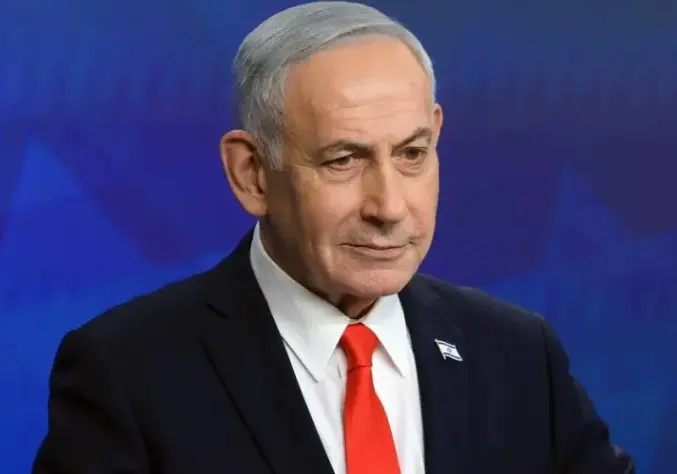
Israel-Colombia relations have entered a new phase after Israeli Prime Minister Benjamin Netanyahu held a telephone conversation with Colombian President Abelardo de la Espriella.
Netanyahu described the discussion as the beginning of a “new chapter” in bilateral ties, marking a sharp change from the foreign-policy position adopted by Colombia’s previous administration.
“I celebrate this new chapter in our relations with Colombia. The best is yet to come. Long live Colombia, long live Israel!” Netanyahu wrote in a message circulated by his office on social media.
The Israeli prime minister congratulated De la Espriella on his electoral victory in June and thanked him for Colombia’s decision to recognize Israeli sovereignty over the Golan Heights.
Netanyahu also welcomed Bogotá’s announcement that it intends to move the Colombian Embassy from Tel Aviv to Jerusalem.
The phone call came shortly after Colombia formally recognized Israel’s claim over the Golan Heights, a strategic plateau captured from Syria during the 1967 Arab-Israeli war.
Colombia’s Foreign Ministry said the decision was connected to Israel’s security concerns and the strategic importance of the territory. The move made Colombia only the second country, after the United States, to recognize Israeli sovereignty over the occupied area.[gov][aljazeera]
The announcement represents a major reversal of Colombia’s previous position under President Gustavo Petro, who broke diplomatic relations with Israel in May 2024 in response to Israel’s military campaign in Gaza.
העם
עם קולומביה
! pic.twitter.com/2eO9t1n69j
— Benjamin Netanyahu – בנימין נתניהו (@netanyahu) August 11, 2026
Petro’s government had strongly criticized Israel’s actions in Gaza and called for greater international pressure to protect Palestinian civilians.
The new administration has adopted a sharply different approach. De la Espriella, a right-wing president, has sought to restore diplomatic, security and economic ties with Israel.
The change has taken place quickly. Colombia has announced plans to relocate its embassy to Jerusalem, restore full diplomatic relations and expand cooperation with Israel.
Although the embassy move has been announced, Bogotá has not yet published a detailed timetable for the transfer. The process could involve legal, administrative and logistical decisions regarding the embassy’s facilities and diplomatic staff.
Israel has welcomed the shift as a significant diplomatic gain in Latin America. Netanyahu’s public praise signals the importance his government attaches to Colombia’s recognition of the Golan Heights.
Israel-Colombia Relations Deepen After Golan Decision
Israeli government statement on the Golan Heights | United Nations peacekeeping mission in the Golan Heights
The future of Israel-Colombia relations is now closely linked to Bogotá’s recognition of Israeli sovereignty over the Golan Heights.
The territory remains internationally recognized as Syrian land occupied by Israel since 1967. Israel effectively annexed the Golan Heights in 1981, but the United Nations Security Council rejected the move and declared it legally invalid.
Most countries continue to regard the territory as occupied Syrian territory. The United States recognized Israeli sovereignty during Donald Trump’s first administration in 2019.
Colombia’s decision breaks with the position held by most of the international community and could generate criticism from Arab governments and countries that support Syria’s territorial claims.
Bogotá justified the decision by referring to regional instability and Israel’s right to defend itself. The Colombian government also described continued Israeli control over the plateau as an essential component of Israel’s national security.
The recognition has been welcomed by Israeli officials. Foreign Minister Gideon Sa’ar described the decision as historic and said it would strengthen the relationship between the two countries.
The diplomatic agreement reportedly includes several additional measures. These include the appointment of ambassadors, the relocation of Colombia’s embassy to Jerusalem, the possible elimination of visa requirements between the countries and negotiations for a free-trade agreement.[jns]
Colombia has also indicated that it may withdraw from international legal and diplomatic initiatives involving Israel. Reports said Bogotá could leave proceedings connected to South Africa’s case against Israel at the International Court of Justice and withdraw from the Hague Group.
Those decisions would represent a significant departure from the foreign policy pursued by Petro’s administration.
The previous government supported international scrutiny of Israel’s actions in Gaza and called for accountability for alleged violations of international humanitarian law.
De la Espriella’s government has instead emphasized security cooperation, trade and diplomatic alignment with Israel.
The shift could affect Colombia’s relationships with Arab and Muslim-majority countries. Bogotá has historically maintained diplomatic ties with countries across the Middle East and supported international resolutions regarding the Israeli-Palestinian conflict.
The decision could also become a domestic political issue. Opposition groups may argue that recognizing Israeli sovereignty over occupied territory contradicts Colombia’s traditional support for international law and negotiated settlements.
Supporters of the measure say it strengthens Colombia’s security partnerships and creates economic opportunities. They also argue that Israel can provide technology, intelligence and emergency-response expertise.
The diplomatic realignment could lead to increased cooperation in cybersecurity, agriculture, water management, defense technology and border security.
However, deeper ties with Israel may also expose Colombia to political criticism over Israel’s conduct in Gaza and its policies toward the Palestinians.
Earthquake Aid Adds Humanitarian Dimension
Colombia’s National Unit for Disaster Risk Management | Colombian Ministry of Foreign Affairs
The conversation between Netanyahu and De la Espriella also addressed the devastating 7.4-magnitude earthquake that struck Colombia on August 10.
The Colombian president thanked Israel for sending technical assistance and rescue personnel to help respond to the disaster.
An Israeli team of 82 personnel arrived in Cali on Friday. The contingent includes engineers, search-and-rescue specialists, medical personnel and structural experts.
The team belongs to the Israel Defense Forces’ Civil Defense Command and specializes in operations involving collapsed buildings.
The rescuers brought equipment and software to assess unstable structures, locate survivors and help Colombian authorities make decisions during search operations.
The contingent met with Colombian emergency agencies before traveling to areas where their assistance was required. Local officials said the Israeli personnel would work alongside Colombian rescue teams rather than operate independently.[cali.gov]
The Israeli delegation includes structural engineers and technological specialists capable of using scanners, cameras and other equipment to search inside damaged buildings.
Colombia’s earthquake had killed at least 294 people, injured 3,935 and left 320 missing, according to the latest UNGRD report cited by the article.
The emergency has affected more than 115,000 people across 448 municipalities and 15 departments. The earthquake damaged or destroyed tens of thousands of homes, hospitals, schools, roads and bridges.
Israel’s assistance has provided a humanitarian dimension to the diplomatic rapprochement. The rescue mission allows both governments to emphasize cooperation during an emergency rather than focusing only on strategic and political agreements.
Israeli officials described the mission as an expression of solidarity with the Colombian people. The rescue teams have also received public attention because of their specialized experience in disaster response.
The assistance could help strengthen Colombia-Israel cooperation in civil protection and emergency management. Both countries have experience responding to earthquakes, building collapses, wildfires and other disasters.
However, the timing of the mission has also generated political debate. Some Colombian legislators have questioned what they describe as selective foreign assistance and urged the government to maintain a balanced approach when accepting international support.
The criticism does not necessarily challenge the value of the rescue teams’ work. Instead, it focuses on whether the government is using humanitarian cooperation to justify a broader political realignment with Israel.
The issue may become more prominent as the government discusses new agreements on security, trade and diplomatic coordination.
Siria condena el reconocimiento de Colombia a la “soberanía israelí” sobre los Altos del Golán, territorio ocupado desde 1967. La ONU declaró nula la anexión. #Siria #Colombia #Golán #teleSURhttps://t.co/iJ6rIwpcSs
— teleSUR TV (@teleSURtv) August 12, 2026
Geopolitical Context
The evolution of Israel-Colombia relations reflects a broader effort by Israel to strengthen diplomatic ties in Latin America.
Colombia is one of the region’s most important countries because of its population, economy, security role and influence in South American diplomacy.
A closer relationship with Bogotá could provide Israel with greater political support in international forums, particularly on issues involving Gaza, the Golan Heights and the International Criminal Court.
For Colombia, the partnership could deliver access to Israeli technology, intelligence cooperation, agricultural expertise, water-management systems and emergency-response capabilities.
The embassy move to Jerusalem would be especially significant because most countries maintain their embassies in Tel Aviv while the status of Jerusalem remains contested.
Colombia’s decision could encourage other governments to reconsider their positions, although it could also trigger diplomatic criticism from Arab countries and nations that support the Palestinian cause.
The move also reflects the growing ideological influence of right-wing governments in Latin America. De la Espriella’s administration has adopted positions that contrast sharply with those of Petro and align more closely with Washington and Tel Aviv.
The change could affect regional debates over Palestine, international law and the role of the United States in Latin America.
For now, Netanyahu has celebrated the diplomatic shift, while De la Espriella has described the conversation as warm and constructive.
The next steps will determine whether the new relationship produces concrete agreements or remains primarily symbolic. The embassy relocation, security cooperation and economic negotiations will show how far Bogotá intends to take its realignment with Israel.
¡Muchas gracias! https://t.co/RCG37L0xwp
— Benjamin Netanyahu – בנימין נתניהו (@netanyahu) August 15, 2026
From teleSUR English via This RSS Feed.