

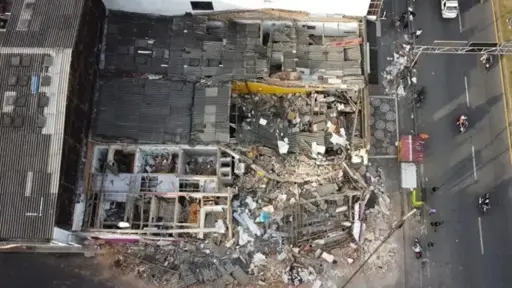
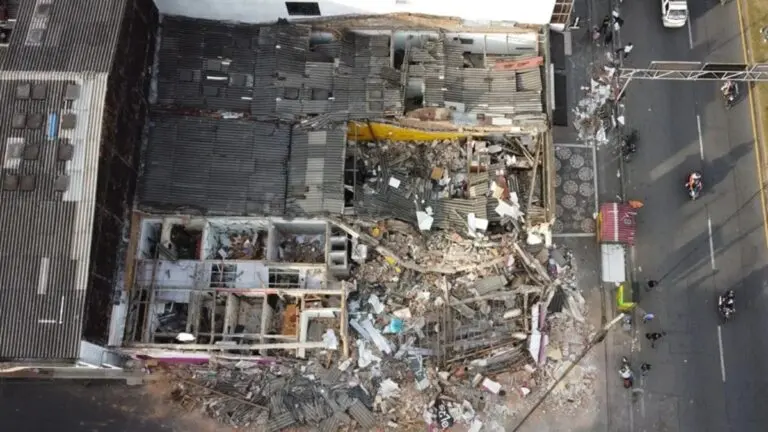
Colombia earthquake death toll reaches 289, with 3,935 injured and 320 missing as rescue teams and volunteers support affected communities.
Related: Colombia’s President Seeks U.S. Tariff Relief After Quake
Colombia Earthquake Death Toll Reaches 289
The Colombia earthquake has killed at least 298 people, injured 3,935 and left 320 missing, according to the latest report from the National Unit for Disaster Risk Management, known as UNGRD.
The 7.4-magnitude earthquake struck on August 10 at approximately 7:34 a.m. local time, with its epicenter near San José del Palmar in the department of Chocó.
The earthquake was felt across large areas of Colombia, including the western and central regions. Strong shaking affected cities and municipalities in Chocó, Valle del Cauca, Risaralda, Caldas and Quindío.
The UNGRD said the disaster had affected 115,461 people in 448 municipalities across 15 departments. More than 54,000 families were listed as victims or otherwise affected by the emergency.
The number of victims is expected to change as rescue teams reach isolated communities, search collapsed buildings and complete technical evaluations of the damage.
The official balance released on Saturday increased the death toll by six from the previous report. It also confirmed that 353 people had been rescued during the continuing search and rescue operation.[telesurenglish][english.news]
The earthquake caused extensive damage to homes and public buildings. Authorities recorded 81,506 damaged homes and 14,493 destroyed residences, while 66 buildings collapsed completely.
The destruction has displaced thousands of families and forced many communities to seek temporary shelter in schools, public buildings, sports facilities and open areas.
The crisis has also affected critical infrastructure. The UNGRD reported damage to 241 health centers, 2,612 educational institutions and 3,621 community facilities.
The damage to medical centers has complicated emergency care at a time when hospitals are receiving large numbers of injured people.
Schools have also been closed in several areas because of structural risks. Some educational facilities are being used as shelters or distribution centers for food, water and other supplies.
The transportation network suffered severe disruption. Authorities reported damage to 298 roads, 59 aqueducts, 44 vehicle bridges and five pedestrian bridges.
The destruction of roads and bridges has made it difficult to reach rural areas and deliver emergency supplies. Some communities remain isolated because landslides, collapsed structures and damaged routes have blocked access.
Five airports were also affected by the earthquake. The damage has complicated the movement of rescue personnel, medical teams, equipment and humanitarian aid.
The UNGRD has activated satellite-monitoring cooperation to improve its assessment of the affected areas. The International Charter on Space and Major Disasters provides access to satellite imagery that can help authorities identify damaged infrastructure and isolated communities.[portal.gestiondelriesgo.gov]
Colombia Earthquake Rescue Efforts Expand
Colombia’s National Unit for Disaster Risk Management | International Charter on Space and Major Disasters
The Colombia earthquake has triggered a large-scale search and rescue operation involving national and local authorities, firefighters, police officers, military personnel, medical workers and community volunteers.
Emergency teams continue searching for people believed to be trapped beneath the ruins of homes and public buildings. The operation is becoming more difficult as time passes, but authorities remain focused on locating survivors and recovering victims.
International assistance has also been approved. The UNGRD said Colombia would receive support from certified search and rescue teams from the United States, Ecuador and Israel.[global.chinadaily.com]
Specialized teams can provide equipment for detecting people beneath rubble, removing concrete and stabilizing damaged structures.
Rescuers must work carefully because buildings damaged by the earthquake may collapse without warning. Engineers inspect structures before teams enter, while emergency personnel establish safety perimeters around unstable sites.
The recovery of survivors is only one part of the response. Teams are also providing medical care, evacuating residents from dangerous areas and assessing whether homes can be safely occupied.
Authorities are conducting technical censuses to identify the extent of the destruction and determine which families require shelter, food, water, medical services and financial assistance.
The earthquake has also affected animals. Official records list 578 animals impacted, of which 188 had been rescued by Saturday.
Veterinary teams and animal-protection groups have been working alongside rescue crews to remove animals from damaged homes, provide treatment and reunite them with their owners.
The inclusion of animal rescue in the emergency response is important because many families refuse to leave damaged areas without their pets. Protecting animals can also help reduce the emotional burden on children and displaced families.
The humanitarian response has required the coordination of national institutions, municipal governments and local communities. Emergency shelters must receive food, drinking water, blankets, hygiene products and medicines.
Authorities are also monitoring sanitation conditions. Damaged aqueducts and overcrowded shelters can increase the risk of waterborne diseases, particularly among children and older people.
The loss of homes has created an urgent need for temporary housing. Families whose residences were destroyed cannot return until engineers certify that the structures are safe.
In rural areas, residents face additional challenges because emergency teams must travel long distances over damaged roads. Some communities have limited access to communication networks and may not yet have received full assistance.
The government has called on citizens to follow official instructions and avoid entering dangerous areas. It has also urged people to rely on verified information during the rescue and relief operation.
Colombia’s Popular Solidarity Network Grows
Colombian Red Cross | United Nations Office for the Coordination of Humanitarian Affairs
The Colombia earthquake has prompted a nationwide campaign of solidarity as citizens organize donations and support for families in the hardest-hit departments.
In Bogotá, at least six official collection centers are operating across the city. These centers have been joined by spontaneous initiatives, including temporary collection points established on streets, in neighborhoods and at workplaces.
One of the largest operations is taking place at El Campín stadium, where thousands of volunteers are forming human chains to receive, classify and package donations.
Water, nonperishable food, diapers, hygiene products, blankets, clothing and other essential supplies are being organized into boxes before being sent to affected communities.
Volunteers sort the goods by category to facilitate transportation and distribution. The organization of the donations is essential because emergency centers need to identify quickly which supplies are available and where they should be sent.
Aid has begun moving from different cities toward Chocó, Valle del Cauca, Risaralda, Caldas and Quindío. These departments are among the areas most affected by the earthquake.
The first shipments arrived in Quibdó, the capital of Chocó, from several parts of the country.
In cities near the disaster zone, solidarity has taken many forms. Residents have delivered water and food to rescue workers, while local businesses have shared products with firefighters, medical teams and volunteers.
Groups of friends have traveled from other cities to assist with emergency operations. Some have helped clear debris, while others have supported shelters, collection centers and food distribution.
In Pereira, the image of a 13-year-old boy named Juan Pablo became a symbol of public solidarity. The child reportedly joined debris-removal efforts on his own initiative, and photographs of his actions circulated widely on social media.
The participation of volunteers has helped authorities manage the enormous scale of the emergency. However, rescue officials have warned that donations should be coordinated through recognized institutions to avoid duplication and ensure that supplies reach the communities that need them most.
Geopolitical Context
The Colombia earthquake has regional implications because the disaster struck an area close to the Pacific coast and affected departments with difficult terrain, limited infrastructure and vulnerable communities.
The emergency has created a need for international cooperation in search and rescue, satellite mapping, medical care, temporary shelter and reconstruction.
Support from the United States, Ecuador and Israel demonstrates the role of cross-border cooperation during major natural disasters. Other countries and international organizations may also provide equipment, funding and technical assistance as the scale of the damage becomes clearer.
The earthquake is also testing Colombia’s national disaster-management system. The government has had to coordinate emergency services across 448 municipalities while maintaining transport and communication links with remote areas.
The reconstruction phase will likely require substantial public investment. Rebuilding homes, schools, health centers, bridges, roads and water systems could take months or years.
The disaster may also influence future building standards, land-use planning and seismic preparedness. Colombia’s authorities will need to determine whether some structures failed because of the earthquake’s strength, construction weaknesses or inadequate maintenance.
For now, the priority is to find those still missing, care for the injured and provide safe shelter for displaced families.
The continuing rescue operation is supported by professional responders and ordinary citizens who have created a nationwide chain of solidarity. Their combined efforts are helping Colombia confront one of its most serious recent natural disasters.
From teleSUR English via This RSS Feed.