

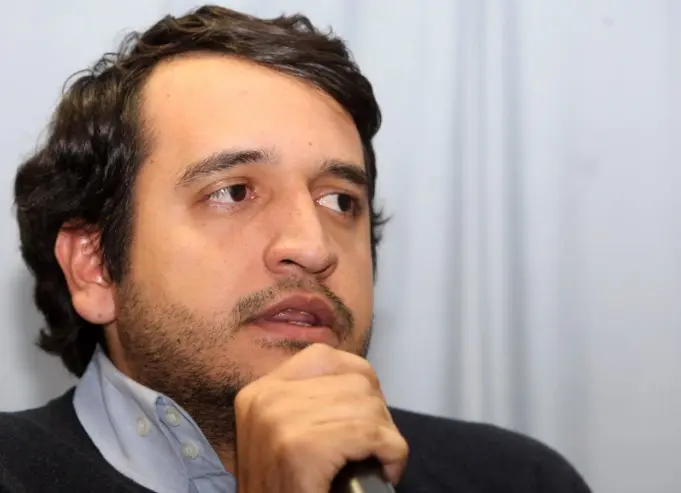
Visa cancellation López Beltrán sparks a dispute between Mexico and Washington as Morena denounces political interference and demands mutual respect.
Visa Cancellation López Beltrán Triggers Morena Rejection
The visa cancellation López Beltrán case has intensified political tensions between Mexico and the United States after Morena rejected Washington’s decision to revoke the US visa of Andrés Manuel López Beltrán, son of former Mexican President Andrés Manuel López Obrador.
López Beltrán, who previously served as Morena’s organizational secretary, announced that the United States had canceled his visa. He said the decision was politically motivated and that US authorities had provided no evidence connecting him to a crime or other wrongdoing.
Mexican President Claudia Sheinbaum described the revocation as an act of political interference and said she was unaware of any criminal investigation against López Beltrán in Mexico.
The dispute adds another point of friction to an already tense relationship between Mexico and Washington. Both countries remain closely linked through trade, migration, security cooperation and cross-border family ties.
Morena’s National Executive Committee issued a statement firmly rejecting the decision. The party called the visa revocation a “mechanism of political interference” and said the United States should not use immigration instruments to influence Mexico’s internal political debate.
The party emphasized that Mexico is a free, independent and sovereign country. It argued that only Mexican citizens, through democratic institutions, should determine the country’s political direction.
“Mexico is a free, independent and sovereign country. It is exclusively for the people of Mexico to decide, through democratic means, the political project and direction of our nation, without tutelage or external pressure,” Morena said in its statement.
The party’s position closely followed comments made by Sheinbaum during her morning press conference. The president said the cancellation of a visa does not constitute evidence that a person has committed a crime.
Sheinbaum also argued that Washington’s action had a political rather than a security-related purpose. She said the United States had not publicly provided a specific explanation for the decision.
El CEN de Morena comparte comunicado de prensa:
Ante la cancelación de la visa a Andrés Manuel López Beltrán, Morena reafirma la defensa de la soberanía nacional
México es un país libre, independiente y soberano. Corresponde exclusivamente al pueblo de México decidir,… pic.twitter.com/z0R4BhrEEf
— Morena (@PartidoMorenaMx) August 14, 2026

Visa Cancellation López Beltrán Raises Sovereignty Dispute
Mexico’s Ministry of Foreign Affairs | US Department of State—Visa Information
The visa cancellation López Beltrán decision has become a dispute over the limits of US immigration authority and the principle of national sovereignty.
The United States has broad legal authority to issue or revoke visas. Visa holders are not guaranteed entry into the country, and the State Department may restrict travel for reasons related to national security, public policy or other legal grounds.
However, US authorities have not publicly disclosed the specific reason for canceling López Beltrán’s visa. That lack of explanation has allowed the controversy to become a political confrontation between the two governments.
López Beltrán said US Secretary of State Marco Rubio and Deputy Secretary of State Christopher Landau ordered the revocation. He described the decision as politically motivated and accused Washington of attempting to discredit Morena and the political movement founded by his father.
The US government has not publicly confirmed the details of the accusation or released evidence of criminal conduct by López Beltrán.
A US State Department spokesperson said visa decisions are matters of national security but did not identify a specific reason for the cancellation.reuters+1
Morena argued that the revocation should not be treated as proof of illegal activity. The party said that canceling a visa is an administrative decision and does not replace a criminal investigation, a trial or a judicial ruling.
“The cancellation of visas for politically exposed people does not constitute proof that a crime or irregularity has been committed,” the party said.
Morena added that the decision sent a political message intended to intimidate people who defend Mexico’s sovereignty.
The statement also criticized Mexican opposition groups that seek pressure from foreign governments instead of addressing their disputes through Mexican institutions.
The party urged its supporters and the public to remain informed and avoid allowing external decisions to determine Mexico’s domestic political discussion.
The controversy has emerged amid reports that the United States has revoked visas belonging to several Mexican politicians, including figures affiliated with Morena. The reported actions have generated accusations of unequal treatment and political pressure.
Sheinbaum has said that Mexico will not launch a domestic investigation solely because Washington canceled someone’s visa. She has also insisted that any allegations of wrongdoing should be presented through appropriate legal channels.
The president’s position reflects the government’s broader foreign-policy principle of coordination without subordination. Mexico cooperates with the United States on security, migration and trade but rejects what it sees as unilateral pressure.
That approach is particularly sensitive under the administration of US President Donald Trump, whose government has adopted a more confrontational stance on migration, organized crime and trade.
Morena Accuses International Far Right
Mexican Presidency | United Nations Charter and international law
Shortly after Morena released its statement, the party’s national president, Ariadna Montiel Reyes, expressed solidarity with López Beltrán through social media.
Montiel framed the visa cancellation as part of a wider political conflict involving what she described as the international far right.
“What lies behind this is an attempt to intervene in Mexico’s political life by the most radical sectors of the international far right,” the Morena leader said.
She argued that the decision should be understood as pressure against the political project associated with López Obrador and now led by Sheinbaum.
Montiel reaffirmed Morena’s commitment to what the party describes as a humanist national project. She said the movement would continue defending its political agenda despite what she called external attacks.
The statement positioned López Beltrán within the broader history of Morena and the so-called Fourth Transformation, the political process promoted by López Obrador after he took office in 2018.
López Beltrán has held organizational responsibilities within Morena and remains a visible figure in the party, although he does not occupy a federal government position under Sheinbaum.
His family connection to the former president has made him politically prominent. It has also made the visa revocation more sensitive because it directly involves a figure associated with the movement that currently governs Mexico.
The dispute may also affect Morena’s internal politics. The party is preparing for future electoral contests while attempting to maintain unity among its different factions.
Opposition parties could use the US decision to renew allegations about Morena officials and demand greater transparency. Morena, in turn, is likely to present the case as evidence of foreign interference against Mexico’s governing movement.
The competing narratives are already shaping public debate. The government says the issue concerns sovereignty and diplomatic respect, while critics may argue that visa revocations should be examined separately from domestic politics.
The absence of a public explanation from Washington makes it difficult to independently evaluate the basis of the decision. It also leaves room for speculation and political messaging on both sides.
For Mexico, the central question is how to respond without damaging cooperation with the United States. The two countries share a long border and depend on each other economically.
Mexico is the United States’ principal trading partner in several sectors, while millions of families maintain social and economic ties across the border. Security cooperation also involves intelligence sharing, migration controls and efforts against organized crime.
Geopolitical Context
The visa cancellation López Beltrán controversy highlights the unequal relationship between Mexico and the United States, two neighbors whose economies and security systems are deeply interconnected.
Washington can use immigration measures as a form of pressure because access to the United States carries political, economic and personal importance for Mexican officials and public figures.
Mexico’s response reflects a long-standing concern about US intervention in its internal affairs. The dispute comes as Washington seeks greater cooperation on migration, fentanyl trafficking, organized crime and trade.
Any escalation could complicate negotiations in those areas. Mexico may resist US demands if it believes immigration measures are being used to influence its domestic politics.
The case also has regional implications. Other Latin American governments may interpret the visa revocation as evidence that Washington is expanding the use of sanctions and travel restrictions against political actors it opposes.
Conversely, US officials may argue that visa decisions are sovereign administrative actions and should not be interpreted as diplomatic sanctions or criminal accusations.
The controversy will test whether Mexico and the United States can preserve practical cooperation while disagreeing over political sovereignty.
Morena’s leadership has called for a bilateral relationship based on coordination and mutual respect, while rejecting any form of subordination.
For now, neither government has announced a broader diplomatic measure in response to the decision. The dispute remains centered on López Beltrán’s visa, but its political consequences could extend to the wider relationship.
The case also illustrates how immigration decisions can become symbols in domestic political conflicts. Whether the controversy fades or deepens will depend largely on whether Washington provides additional information and whether Mexico chooses to pursue a formal diplomatic response.
La presidenta de México, Claudia Sheinbaum, calificó de injerencia la revocación de la visa a López Beltrán, hijo del expresidente López Obrador, por parte de Estados Unidos. Afirmó que la medida responde a un sentido político y que la administración estadounidense no presentó… pic.twitter.com/9J4ERSx4k1
— teleSUR TV (@teleSURtv) August 15, 2026
From teleSUR English via This RSS Feed.