

Colombia’s earthquake death toll has risen to 288, with 202 people still missing and more than 145,000 affected across 15 departments.
The death toll from Colombia’s 7.4-magnitude earthquake has risen to 288, while the number of people reported missing has fallen to 202, the National Unit for Disaster Risk Management (UNGRD) said Friday.
RELATED: De la Espriella Proposes ‘Marshall Plan’ to Rebuild Choco
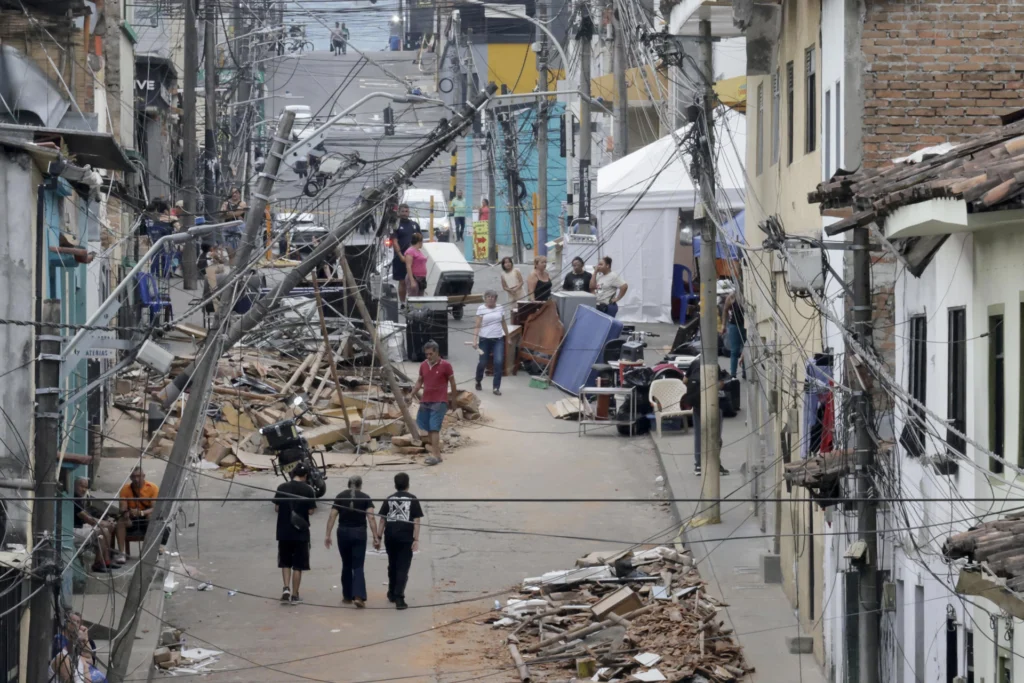
Five days after the earthquake, rescue teams continue to reach areas that have been difficult to access, revealing the scale of the destruction left by the disaster.
The UNGRD reported 4,018 people injured and 354 rescued alive from the rubble. The number of missing people fell from 379 in an earlier report, although the agency did not specify whether those cases were resolved through the recovery of bodies or by locating people who had been out of contact for several days.
Damage spreads across affected regions
The number of people affected has also risen sharply. The latest tally puts the figure at 145,601 people from 57,516 families across 448 municipalities in 15 of Colombia’s 32 departments.
The disaster has damaged or destroyed thousands of homes. The UNGRD reported 80,744 damaged houses and 12,504 destroyed, along with 66 collapsed buildings, mainly in Cali and Pereira, the capitals of Valle del Cauca and Risaralda, respectively.
Critical infrastructure has also suffered extensive damage. The UNGRD reported impacts on 2,595 educational facilities, 260 health centers, 267 roads, 87 water systems, 55 bridges and five airports.
Among the affected airports is Matecaña in Pereira, which has operated only military and humanitarian flights since Monday.
The earthquake was centered in San José del Palmar, in the Pacific department of Chocó. It also severely affected Valle del Cauca, Risaralda, Caldas and Quindío.
President Abelardo de la Espriella visited Pereira on Friday and described the situation in the city, which has about 490,000 residents, as “apocalyptic.”
The earthquake is the strongest to hit Colombia in the past 25 years, according to the UNGRD.
Rescue workers, volunteers and social organizations continue to operate in affected areas as authorities update their assessment of the disaster.
The UNGRD said it continues to coordinate response and assistance efforts in affected areas and to monitor communities dealing with the aftermath of the earthquake.
From teleSUR English via This RSS Feed.