

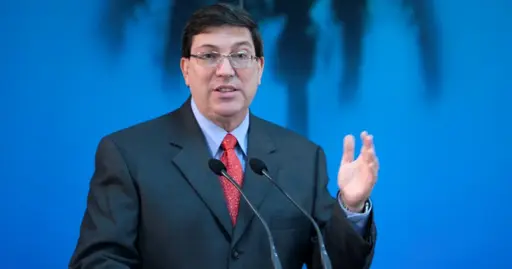
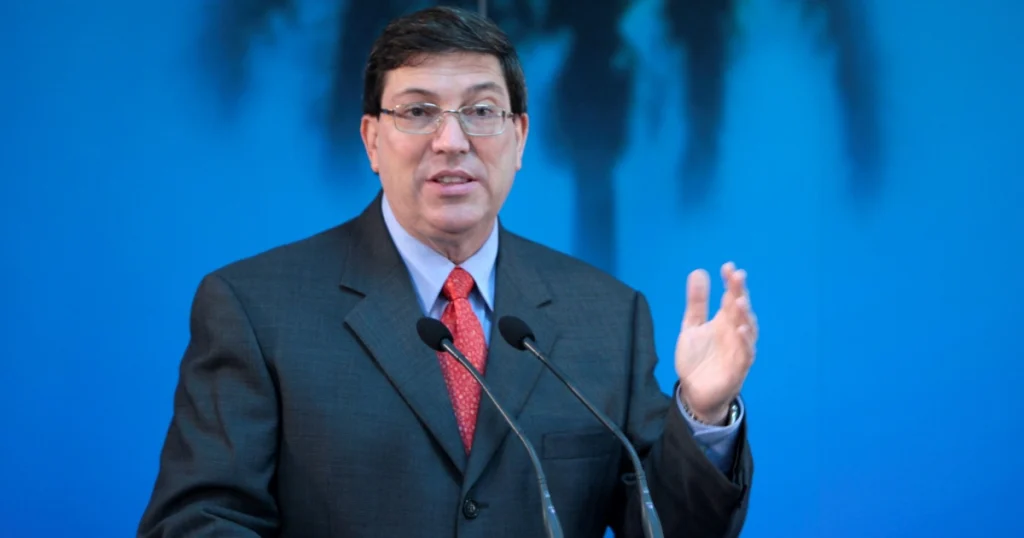
Cuban Foreign Minister Bruno Rodríguez accused Washington on Friday of maintaining a maximum pressure policy on the island aimed at reducing the Cuban government’s capacity to provide basic goods and services and thereby provoking public discontent, social unrest, and a change in the constitutional order.
RELATED:
Cuba Rejects United States Human Trafficking Accusations As Slanderous Campaign
“They identify and ruthlessly attack the main sources of external income for the Cuban economy,” the head of Cuban diplomacy stated on his social media accounts. He then listed a series of sanctions imposed by the United States on the banking and financial sector.
Rodríguez criticized the imposition by the U.S. Treasury’s Office of Foreign Assets Control (OFAC) and other agencies of 24 fines on financial, insurance, travel, technology, and logistics entities in third countries, totaling more than $4.014 billion, for alleged violations of the embargo against Cuba.
The foreign minister noted that these sanctions constitute an extension of the measures adopted since the first term of US President Donald Trump. Among them, he highlighted the prohibition on the financial institution Fincimex and the corporation American International Services (AIS) processing remittances, in effect since September 24, 2020.
Relatores y Expertos del Consejo de #DDHH emitieron hoy contundente comunicado condenando las medidas de EEUU contra #Cuba, denunciándolas como un intento ilegal de alterar el orden constitucional de un Estado soberano mediante amenazas y coacción.
Instaron a la comunidad…
— Bruno Rodríguez P (@BrunoRguezP) August 6, 2026
The text reads, “UN Human Rights Council Rapporteurs and Experts issued a strong statement today condemning the U.S. measures against #Cuba, denouncing them as an illegal attempt to alter the constitutional order of a sovereign State through threats and coercion. They urged the international community to act swiftly to prevent the establishment of a “silent Gaza” in Cuba.”
He also mentioned the sanction against the International Financial Bank, applied since January 1, 2021, and the designation of sanctions against financial institutions starting June 23, 2026. Rodríguez also denounced Cuba’s reinstatement to the spurious list of alleged state sponsors of terrorism in 2021 and 2025.
Cuba and the United States are experiencing their most tense moment in decades, framed by a serious internal crisis on the island and a policy of maximum pressure by Washington since the beginning of 2026, with an oil embargo and sanctions.
Currently, Cuba depends on assistance from strategic allies such as Mexico, Russia, and European Union nations to alleviate its most urgent needs. This external support has been fundamental for the supply of medicines, food, and solar energy equipment—essential tools for confronting the current energy crisis.
The constant power outages affecting the country prevent access to basic services such as lighting, cooking, water supply, and communications.
From teleSUR English via This RSS Feed.