

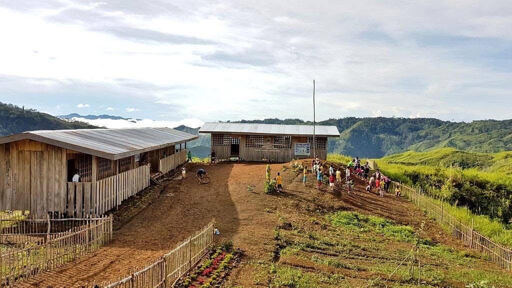
“It is not terrorism to learn. It is not terrorism to fight for our land.”
CAGAYAN DE ORO — Indigenous rights defenders criticized senator-judge Robinhood Padilla’s remarks during Vice President Sara Duterte’s impeachment trial hearing on August 12.
Padilla at the time accused the now-defunct Lumad schools in Davao of being “infiltrated by terrorism.”
Julieta Gomez of the Kalipunan ng Katutubong Mamamayan ng Pilipinas (Katribu) and former ACT Teachers Rep. France Castro debunked his claims. “These [allegations] have been constantly used by Robin Padilla,” Castro said in Filipino during the Bantay Impeachment program of the People’s Alternative Media Network (Altermidya).
In this week’s impeachment trial, Xylene Del Campo, state auditor of the Commission on Audit-Intelligence and Confidential Audit Unit (COA-ICFAU), took the witness stand. She evaluated the responses of the Office of the Vice President (OVP) and the Department of Education (DepEd) during Duterte’s stint as education secretary to the audit observation memorandums and notice of suspension issued in relation to the alleged improper liquidation of confidential funds by both agencies.
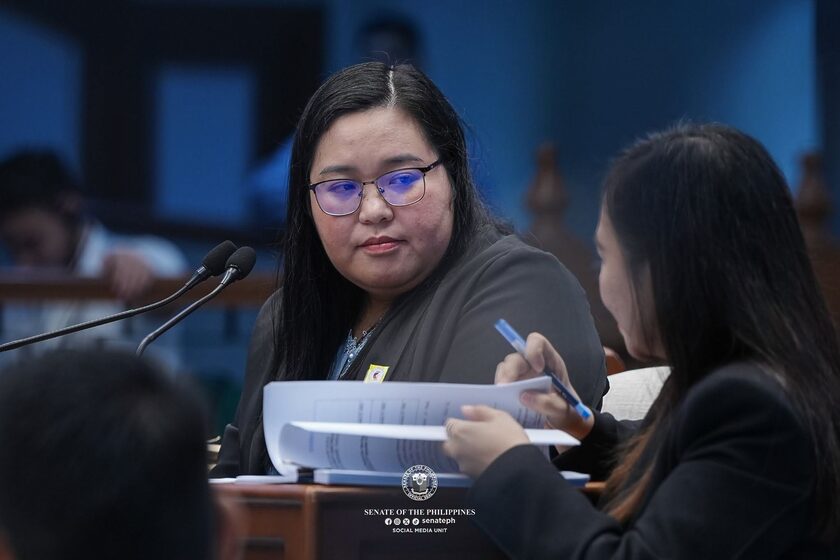
State auditor Xylene Del Campo listens to a question of defense lawyer Kristine Ferrer during Sara Duterte’s impeachment trial hearing on August 12, 2026. Photo from the Senate
Read:State surveillance in schools angers teachers
Padilla asked Del Campo—whose job ensures proper liquidation of public funds—if she was aware of the identification of more than 50 Lumad schools in Davao that were infiltrated by terrorism and the composition of New People’s Army (NPA) members, where there were alleged minors. No questions regarding liquidations were raised by the senator.
Padilla did not mention the name of the Lumad school. However, the number of schools he stated described the number of campuses under the Salugpongan Ta’ Tanu Igkanogon Community Learning Center Incorporated across the Davao region that were forcibly closed during the administration of former President Rodrigo Duterte.
Is the allegation proven?
The then DepEd-recognized Salugpongan learning center was established by the Rural Missionaries of the Philippines (RMP), a church-based organization that served marginalized sectors. It was one of the learning institutions that provided Indigenous education in Mindanao.
Through a resolution, the National Commission on Indigenous Peoples (NCIP) labeled these schools as being established by the Communist Party of the Philippines (CPP), echoing the report of the National Task Force to End Local Communist Armed Conflict (NTF-ELCAC).
The other schools were the Tribal Filipino Program of Surigao del Sur (Trifps), the Mindanao Interfaith Services Foundation Incorporated (Misfi), the Center for Lumad Advocacy and Services (Clans), and the Alternative Learning Center for Agricultural and Livelihood Development (Alcadev).
In 2015, tribal leaders in Talaingod reportedly requested the stoppage of the Salugpongan operation, citing affidavits of alleged former students who said that they were taught to hate the government and prepared to be part of the NPA.
The Commission on Human Rights (CHR) released its The Haran Report in 2019. It stemmed from two position papers submitted by the Save Our Schools (SOS) Network, an alliance of various organizations advocating for children’s right to education, and the tribal leaders in Talaingod both in 2015. The probe lasted up to the first half of 2018.
Read: CHR Haran report revisited amid calls to reverse Talaingod 13 conviction
CHR stated in its report that the allegations against the Salugpongan were alarming, saying that DepEd which regulates basic and secondary education has legal grounds to shut down the schools if proven. However, the CHR concluded in its report that DepEd, when it received the letter request from tribal leaders, had not made a “serious investigation.” Citing testimonies from DepEd representatives, the independent commission further stated that the government did not provide an opportunity to Salugpongan officials to contest the intended closure.
“It must be stressed that the IPs (Indigenous peoples), particularly children, including those living outside their communities, have a right to education in their own culture. The temporary closure of the subject facilities, no matter how brief, violated this right,” a part of the CHR report reads.
CHR’s The Haran Report probed the human rights violations against the Lumad in Mindanao during the times when many Indigenous families had sought refuge in the United Church of Christ of the Philippines (UCCP) in Haran, Davao City, due to militarization.
The report concluded that there was militarization in Talaingod and Kapalong, Davao del Norte, and members of the paramilitary Alamara were supported by the Armed Forces of the Philippines (AFP) based on their expensive firearms.
In 2019, DepEd Region 11 permanently closed more than 50 Salugpongan schools across the region which reportedly stemmed from a complaint filed by former Presidential Security Adviser Hermogenes Esperon Jr. The SOS network assailed the order, claiming that the so-called fact-finding team created by DepEd and tasked to investigate Esperon’s claims did not visit any of the Salugpongan schools.
Read:‘Permanent closure order to deprive Lumad children of education’
Duterte’s involvement
Kat Dalon of Sabokahan To Mo Lumad Kamalitanan (Unity of Lumad Women) said that Duterte’s involvement in the closure of Indigenous schools had been engraved in the Lumad struggle.
In an Inquirer report, Duterte when she was the mayor of Davao City reportedly made the request to DepEd to close 11 Davao City-based Lumad schools due to the alleged absence of the students’ individual learner’s reference number (LRN).
Overall, more than 200 schools that catered to young Indigenous individuals in Mindanao were closed during the Rodrigo Duterte presidency, according to the monitoring of SOS Network.
“It is not terrorism to learn. It is not terrorism to fight for our land,” Dalon said. (DAA)
The post Red-tagging persists even during VP Duterte’s impeachment trial appeared first on Bulatlat.
From Bulatlat via This RSS Feed.