

Millions of parcels are packed and sorted every day inside massive sorting hubs before they reach their destination. Consumers expect their items to arrive in a snap. But this is not simply because of technology – but because of the women workers’ labor inside those massive warehouses.
By Kat Catalan and Joanna Robles
MARILAO, Bulacan – Online shopping has become part of Filipinos’ everyday lives, growing especially popular during the pandemic. With just one click, a product can arrive at your doorstep in a day or two.
Recent statistics confirm that consumers heavily rely on e-commerce platforms. According to Kepios’ Digital 2026 Philippines report, 23.5 million Filipinos shopped online in 2025, with half purchasing from platforms such as Shopee, Lazada, and Temu every week. The most popular products include electronics, food, and clothing.
Studies show that Filipinos trust online shopping platforms because of their affordability, assured product quality, ease of use, and fast delivery.
But what really happens behind the parcels we receive? Whose hands do they pass through?
Behind every parcel delivery is a woman sorter working under an informal contract, with no protections and, more often than not, no guarantee of receiving her pay by the end of her shift.
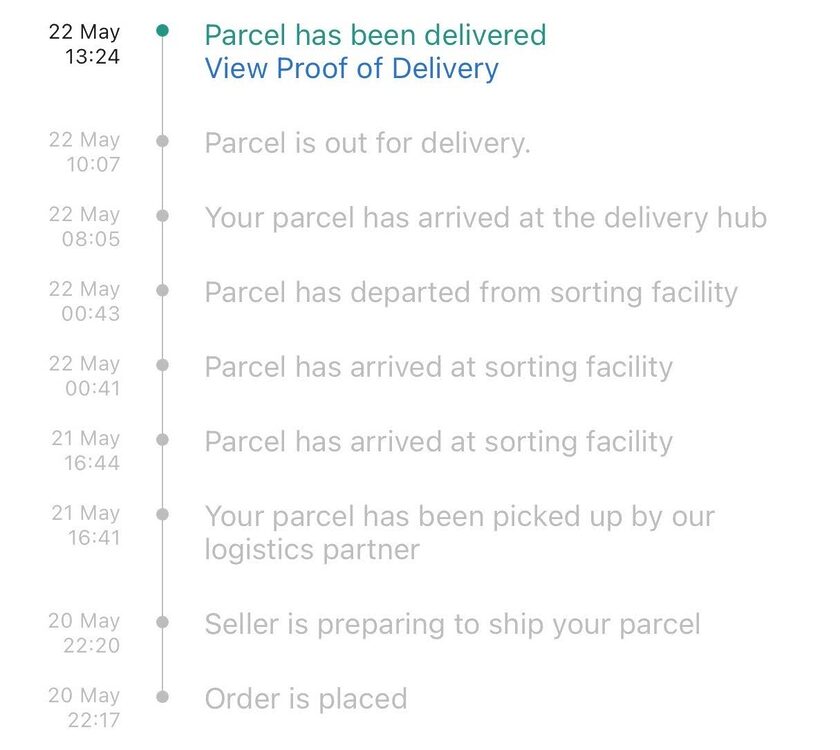
On the parcel trackers of online shopping apps, the movement of parcels from sellers’ warehouses to sorting centers can often be seen happening from midnight until the early hours of the morning.
Behind the ‘add to cart’
Joyce (not her real name) formerly worked as a backroom staff at a Shopee hub in Bulacan for six months.
She juggled caring for her six-year-old son while working night shifts inside a sorting center. Before each shift, she patiently waits for her agency to post her schedule on the group chat. Upon arrival at the hub, she lines up alongside workers from various agencies while waiting for the warehouse manager.
There is usually a set number of workers required each day. If she makes the cut, she gets to work and earns P525 for the day. If she does not, she goes home empty-handed, having also spent money on transportation.
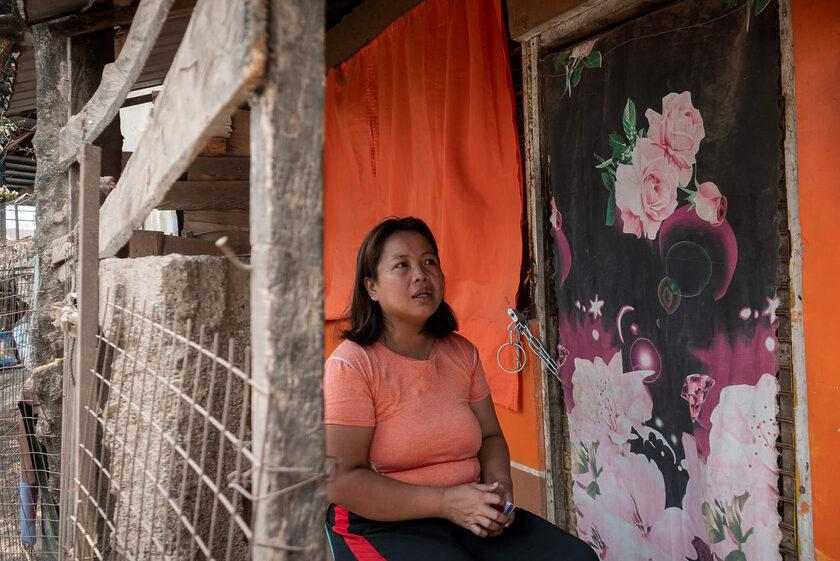
Joyce was a worker at SPX Express, the logistics arm of Shopee which is considered the largest e-commerce platform in the Philippines and one of the major companies in Southeast Asia. Kat Catalan/Pinoy Weekly
“There really is no work that isn’t difficult. But inside, you really have to push yourself because someone monitors you with a megaphone. You are not allowed to rest,” Joyce shared with Pinoy Weekly. “In an hour, you have to sort 1,000 parcels.”
Work intensifies during sale seasons, when millions of parcels are sorted by around 200 workers in 12-hour shifts. Some workers are even pressured to work overtime with minimal incentives.
Joyce endured this system for months as a solo parent trying to provide for her son. She eventually stopped showing up for work after noticing unexplained deductions in her pay.
Her agency had been cutting from her wages for “benefits,” yet no contributions were being remitted to her SSS, PhilHealth, or Pag-IBIG accounts. Her frustration peaked when she went home empty-handed after a shift and was even fined for damaged and missing parcels.
She noted that while management maintains a database of every parcel scanned by each worker, penalties are being imposed arbitrarily.
“What would I even do with those parcels — you can’t take anything out. The guards are very strict. They check everything, even inside your bra and shorts,” Joyce exclaimed.
Being informal is normal
Alex and Amy (not their real names) are sisters from Camarines Sur. Frequent typhoons and storm surges in their home province pushed them to move to Manila to earn for the family they left behind. After working in various factories over the years, they became parcel sorters in 2025 at a J&T Expresshub, a delivery partner of Shopee and other e-commerce platforms.
With their years of experience, they have seen their share of workplace abuses, but the treatment inside the hub still shocked them. They have been shouted at and cursed at by supervisors for failing to sort all parcels within eight hours.
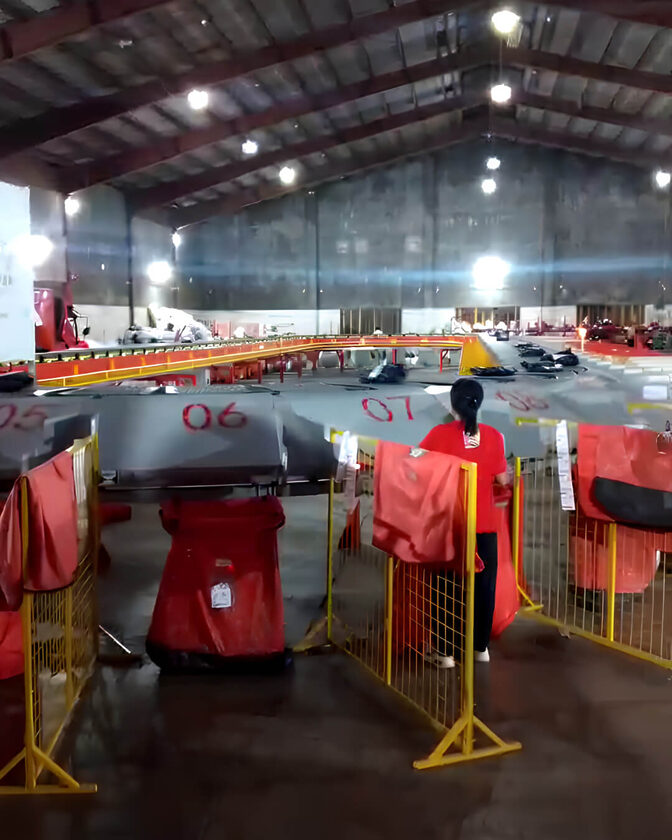
From the conveyor belt, sorters separate parcels by the city where they are to be delivered. Alex and Amy handle no fewer than 80,000 parcels in the warehouse each day. Screenshot from a contributed video
“They would shout: ‘The doors are open, you’re free to go. We don’t need you.’ Just because we need work, we’re treated like fools. They use our desperation against us,” said Amy.
Amy added: “Our work is very extensive. In any normal job, you’d get overtime pay for extra hours. Here, there’s none.”
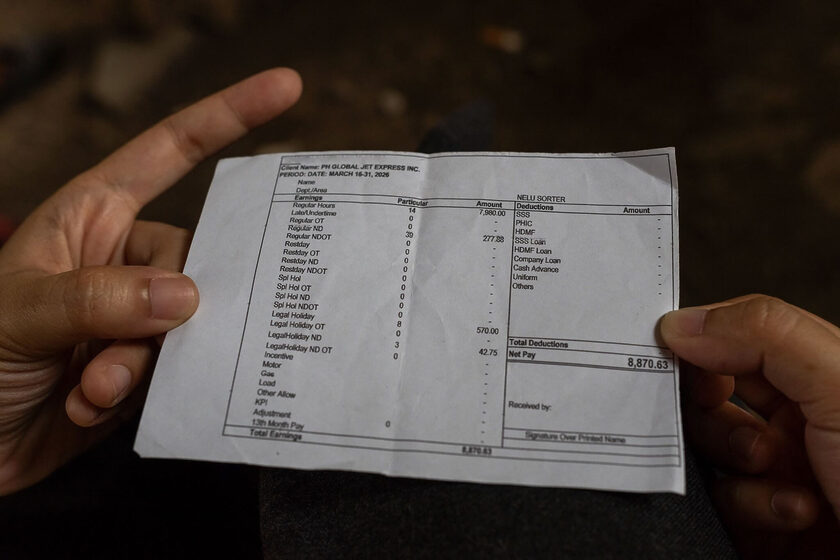
Alex shows her payslip, which lists no overtime (OT) pay and reflects insufficient night differential (ND) pay, despite the extra hours she and her co-workers put in. Joanna Robles/Pinoy Weekly
Women are especially vulnerable in this type of informal work, according to Jacq Ruiz of Kilusan ng Manggagawang Kababaihan (KMK), or the Movement of Women Workers. Because decent jobs are scarce and local industries remain underdeveloped, women are drawn to e-commerce work for its easy hiring process, even as worker protections remain absent.
“Women used to work to supplement their husbands’ income. But the situation today is different. This kind of work has become the family’s primary source of income,” Ruiz told Pinoy Weekly.
Ruiz added that big capitalists obscure the meaning of work and worker status through technical language. One example is that workers are labeled “regular”, not because they have tenure or protections, but simply because work is available on a day-to-day basis.
The 2026 Philippine Statistics Authority (PSA) data showed that there are 24.8 million workers in the private sector. The Ibon Foundation noted that of this figure, around 16.3 million work informally inside enterprises where workers have no contracts, no fixed shifts, and no guaranteed daily pay.
Despite the harsh conditions, the sisters hold on to the hope that the system can change for themselves and for the workers who will come after them.
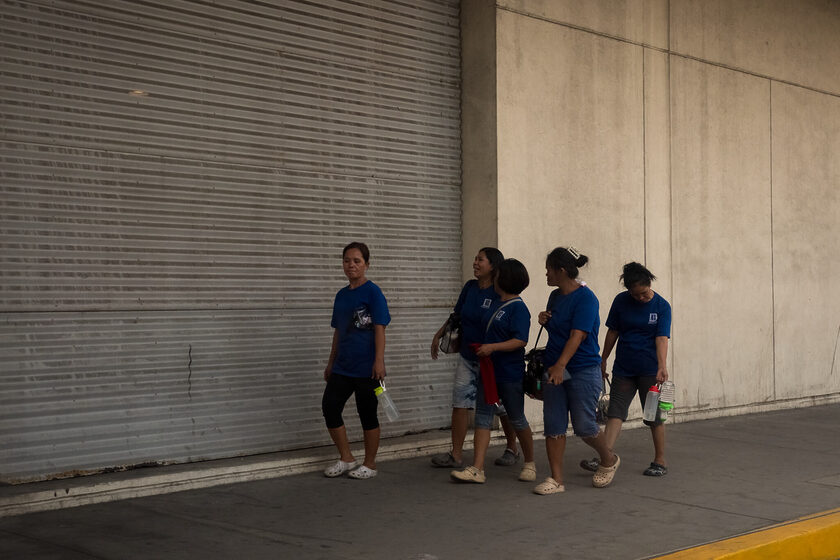
Several women parcel packers walk home after their shift at a warehouse in Bulacan. Joanna Robles/Pinoy Weekly
Future for women Filipino workers?
According to PSA, there are 7.38 million workers in the e-commerce industry in 2025. That number could double, given the sprawling network of informal, agency-operated hubs across Metro Manila, Calabarzon, and Central Luzon.
E-commerce has contributed around P880.46 billion (US$14.3 billion) to the Philippine economy and is projected to reach P3 trillion by 2030, elevated by digital infrastructure projects under the administration of Ferdinand Marcos Jr. in partnership with the World Bank.
Yet as profits in the industry balloon, workers like Joyce, Alex, and Amy — the ones who keep the system running — are consistently left behind.
Women workers remain in precarious conditions inside these massive warehouses. How digitalization directly affects their day-to-day reality is still not fully understood. But one thing is clear: profit is secured, while their rights continue to be extracted from their hard-earned labor.
“We still need to understand how capitalists exploit workers through digital means, especially those in informal work like sorters and packers. Women must not be left behind,” Ruiz emphasized. (AMU, RVO)
DISCLAIMER: This is the first part of a three-part series on the women who form the backbone of the e-commerce industry in the Philippines. This story was produced with the support of the Asia Pacific Forum on Women, Law and Development (APWLD) Media Fellowship.
The post One thousand parcels in an hour appeared first on Bulatlat.
From Bulatlat via This RSS Feed.