

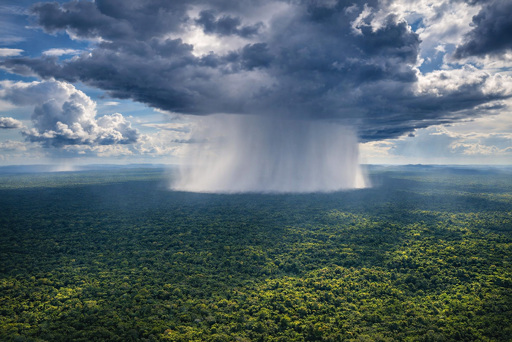
For decades, scientists have been trying to answer a key question: What would the Amazon rainforest look like if deforestation, climate change and fires continue? And, a follow-up question: When would that transformation happen? While several researchers have made progress on the answers over the years, a series of studies in 2026 sheds new light on the prognoses. The three reports published earlier this year examine the health of the rainforest from different angles. In April, a study published in Nature shows the Amazon heals faster than expected, but takes longer to fully recover its biodiversity after extreme events. A PNAS study, based on research conducted over two decades and also published in April, finds that the forest is more resilient to fires than anticipated and shows no sign of transitioning to savanna — a different outcome than has long been suspected. However, the researchers warn that the new ecosystems emerging from the forest recovery process are more vulnerable to future climate disturbances. In May, another paper published in Nature examines the impacts of deforestation, notably the increase in the frequency and intensity of droughts, finding that this increase could push the biome to a tipping point by 2040. Emergent rainforest tree in the Ecuadorian Amazon. Photo by Rhett Ayers Butler for Mongabay. But according to Luciana Gatti, senior researcher at Brazil’s space agency (INPE), climate in the Amazon has already changed sufficiently that typical rainforest trees no longer find the necessary conditions for survival: abundant water and mild temperatures.…This article was originally published on Mongabay
From Conservation news via This RSS Feed.