

What is culture’s most potent image of pointlessness? There’s Sisyphus rolling a boulder up a hill, only for it to tumble back down again. Or Escher’s staircases, ascending and descending without end. But perhaps we can now add to the lexicon ‘Farage’s byelection’ – a foregone conclusion, seeing as he was always going to win, against a novelty candidate that was intended to stall an investigation into political donations that will now simply pick up where it left off. Well, at least we all had fun along the way.
As you may recall, Nigel Farage resigned in a fit of pique, as he faced mounting scrutiny over his finances. A parliamentary standards investigation had been launched into whether he should have registered a £5m gift from crypto billionaire Christopher Harborne, alongside fresh allegations about undeclared support from George Cottrell; an illegitimate campaign cooked up by the brahminical class of Westminster elites, if you take Nigel’s word for it. A “people versus the establishment” byelection (except none of the established parties contested it).
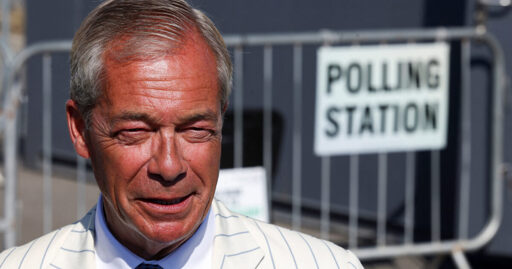
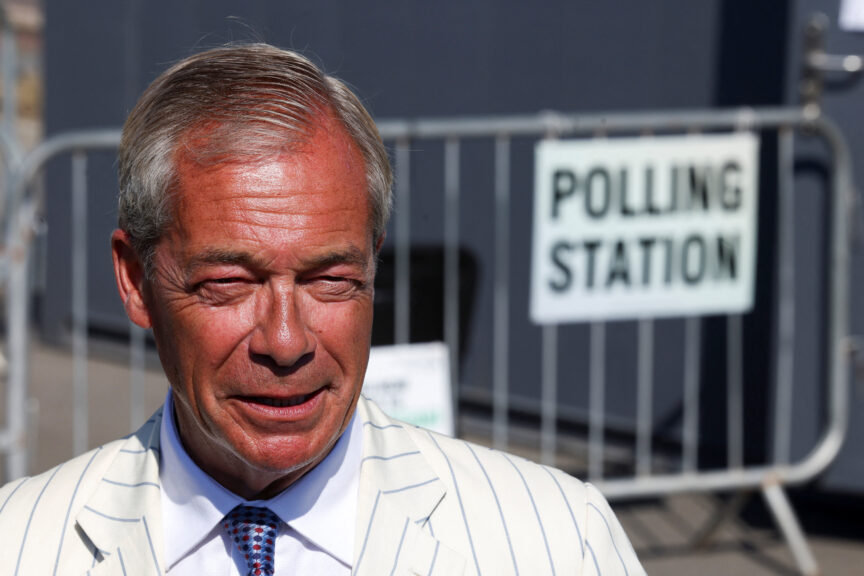
It was a resounding win for the candidate who’s not a bin. Farage secured Clacton with over 63% of the vote, even adding 1,000 votes to his majority. But even then, the Dulwich College alumnus was not satisfied. The Reform leader refused to attend the count. “I am damned if I am going to stand on a stage, having won a resounding victory… and be demeaned and humiliated by nobodies,” he told a crowd of supporters at ‘Farage-Fest’ (dubbed by GB News as a “political Glastonbury”).
It might surprise you to learn that I’ve never been a huge fan of Farage. But his ability to reshape politics in his image is undeniable. He turned Brexit from a niche rightwing interest into reality, single-handedly forced the issue of small boats onto the political agenda and is probably the single biggest threat to the Conservative party since universal suffrage. But there’s something about this version of Farage – aggrieved, sour, a bit of a whinger – which isn’t quite matching the political juggernaut of old.
Granted, I’m probably not his target audience. But Conservative voters, a key part of Nigel Farage’s coalition, have been slowly turning on him. Last August, Tory voters viewed him favourably by 54% to 39%; by this March that had reversed, with 53% unfavourable versus 42% favourable. A modest Burnham bounce has put Labour above Reform in the polls for the first time in, well, a very long time. Through much of 2025 and early 2026, the political story was that Reform kept advancing whatever happened: Tory voters were moving towards Farage, Labour was haemorrhaging support and the question was increasingly whether Reform could actually win the next election. That trajectory has, at least for now, stalled.
Farage may still be the country’s next prime minister. But he’s no longer the bad boy of Brexit, courting outrage and putting two fingers up the liberal establishment. Engineering his own byelection, campaigning against Count Binface, winning it and then immediately returning to the parliamentary investigation he was trying to transcend is neither threatening or transgressive. It’s pointless – and worse than that, it’s an object of ridicule. He might have won in Clacton, but Farage has lost something more important: his aura.
From Novara Media via This RSS Feed.