

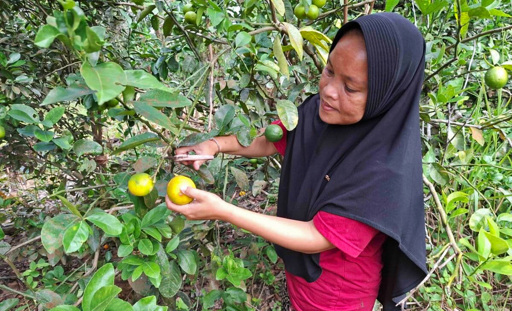
LUBUK KEMBANG BUNGA, Indonesia — Tesso Nilo National Park, located on the Indonesian island of Sumatra, often makes headlines due to human-wildlife conflict — a byproduct of illegal encroachment and deforestation by oil palm plantations. However, there is a ray of hope, thanks to female farmers who live in a buffer zone of the national park. In the village of Lubuk Kembang Bunga, in the buffer zone next to the park, women are leading an initiative to plant fruit trees that both serve a conservation purpose and provide extra income. To prevent elephants from destroying their fruit plantations, the villagers plant citrus trees, which repel the pachyderms. Elsewhere, they also plant fruits beloved by these large animals, such as jackfruit, its cousin cempedak, and stink beans, known in Indonesian as petai. Ernita, a 33-year-old farmer, said she can now breathe easy after planting citrus trees on the perimeter of her oil palm farm. “Before we had the citrus trees, elephants always ate our oil palm fruits,” she told Mongabay Indonesia. “We had to replant the trees four or five times … Praise be to God, since we planted the citrus trees, the elephants haven’t eaten our oil palm fruits.” Ernita’s farm lies just outside Tesso Nilo, so she can grow various crops, including oil palm. But other parts of Lubuk Kembang Bunga village fall within the park’s borders, where, technically at least, oil palm cultivation isn’t permitted. Ernita, a farmer and member of Perbani, grows citrus trees on the perimeter…This article was originally published on Mongabay
From Conservation news via This RSS Feed.