

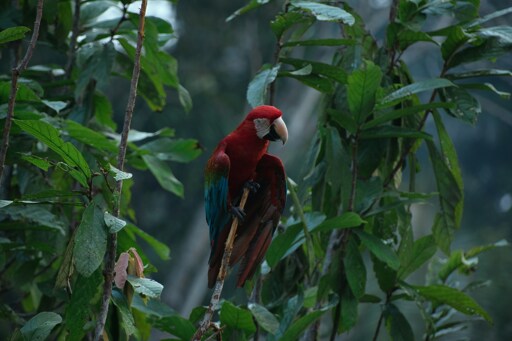
At a meeting with conservationists a couple of years back, Juan Lavista Ferres had a eureka moment. As the director of Microsoft’s AI for Good Lab, Lavista Ferres has extensively worked on projects that use artificial intelligence technology to process and analyze biodiversity data. At that particular meeting, however, he realized that a glaring gap persisted. “It takes a huge amount of effort to collect data,” Lavista Ferres, who is also Microsoft’s chief data scientist, told Mongabay in a video interview. “We never realized how bad it was until we worked closely with them [the conservationists] to see the whole workflow.” On returning to his lab, Lavista Ferres put together a team to find a solution. The result was Project SPARROW. Short for solar-powered acoustic and remote recording observation watch, SPARROW combines edge computing and AI to monitor biodiversity in real time and continuously. Powered by solar energy, the tool has been developed to function autonomously in remote forests to gather and process visual and audio data. “The whole idea of SPARROW is to make it trivial for conservationists to be able to collect data,” Lavista Ferres said. SPARROW has been deployed in 11 countries across five continents and has demonstrated that it can function continuously without human intervention for more than a year. Deployments in remote forests come with their own set of challenges, however, as devices are difficult to access. Amazon Conservation Association’s Los Amigos biological station. Courtesy of ACA. “Our most important challenge is to make sure…This article was originally published on Mongabay
From Conservation news via This RSS Feed.