

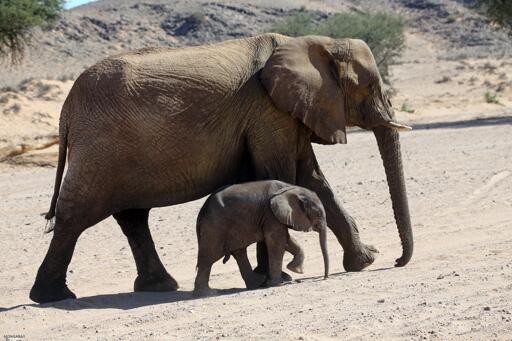
A growing human population, expanding croplands, and drier conditions driven by climate change within protected areas could significantly intensify human-elephant conflict in Southern Africa, a recent study finds. Southern Africa is home to almost 300,000 African savanna elephants (Loxodonta africana), with many populations rebounding after decades of poaching. The region is also seeing rapidly expanding farms and human populations, leading to instances of crop raiding by elephants. To understand what drives the problem in the region, they used data on crop raiding recorded within 38 community-managed communal conservancies in Namibia from 2004 to 2020, and used statistical methods and machine-learning models to assess the drivers across the broader region, including northern Botswana, Angola, and Zambia. Their analysis showed that human population growth and expansion of farms, settlements and other built-up areas led to higher rates of crop raiding. Conflict was also higher during the wet season, from November to April. Moreover, drier conditions within protected areas were associated with higher human-elephant conflict in nearby conservancies during the wet season, suggesting that poorer habitat conditions within the protected areas may be pushing the animals out, increasing the potential for conflict, the authors say. The researchers also found that projected changes in land use, human population, and climate change would expand the area at risk of crop raiding in Southern Africa by 2085. Evan Patrick, the study’s lead author, told Mongabay by email that local land use and development patterns are the clearest signals driving increases in conflict. “That means the projected…This article was originally published on Mongabay
From Conservation news via This RSS Feed.