

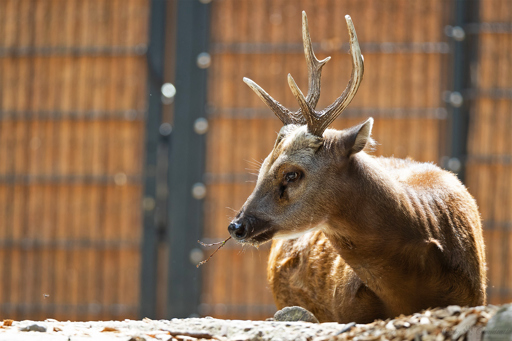
The net fell with a dull thud. Abraham thrashed once, twice, then went still. A metal notcher clicked against the soft cartilage of his ear, snipping a tiny piece of tissue into ethanol. An antiseptic spray then hissed over the wound, sealing it from infection. Abraham is a Visayan spotted deer (Rusa alfredi), who was born, raised and ultimately died at Silliman University’s Center for Tropical Conservation Studies (CENTROP) in the Philippines. Named for the unique constellation of pale spots running across their flanks, the Visayan spotted deer once roamed across six islands in the central Philippines. Deforestation for agricultural expansion and hunting wiped them from four, leading them to be listed in 1988 as endangered by the IUCN, the global wildlife conservation authority. Now, only the islands of Panay and Negros remain as their refuge. The last count, from 2016, put the wild population at 700 mature individuals. By 2019, Philippine authorities had escalated the national listing to critically endangered. A decade on, with deforestation and hunting persisting throughout the deer’s refuge, conservationists find it hard to say whether that number has held, or slipped further. A few hundred more spotted deer live in captivity, cared for in facilities scattered across the two islands. Before their numbers dwindle even further, researchers from both Panay and Negros have sprung into action to restore deer population. Their first move: unlocking the deer’s genetic secrets. Using the sample taken from Abraham, researchers from Silliman University, in Negros, and the Philippine Genome Center…This article was originally published on Mongabay
From Conservation news via This RSS Feed.