

Caracas, August 13, 2026 (venezuelanalysis.com) – The Venezuelan government and representatives of the defunct 2015 National Assembly announced a series of agreements after concluding a first round of talks on Wednesday.
The two parties will conduct a process aimed at transforming the judicial system as well as promoting the recovery of Venezuela’s gold reserves frozen at the Bank of England to support the country’s reconstruction following the June 24 earthquakes.
The agreement on the judicial overhaul, presented in a joint press conference at the 5-star Melá Hotel in Caracas, effectively replaces the process the Venezuelan National Assembly had launched in May following a reform that increased the Supreme Court of Justice (TSJ) from 20 to 32 members and a preliminary evaluation of magistrate candidates.
Instead, the delegations agreed to “renew and expand the judicial nominations committee,” launch a “new nomination process” for the appointment of all Supreme Court justices, and establish a council to review the credentials and requirements of nominees to ensure compliance with the Constitution.
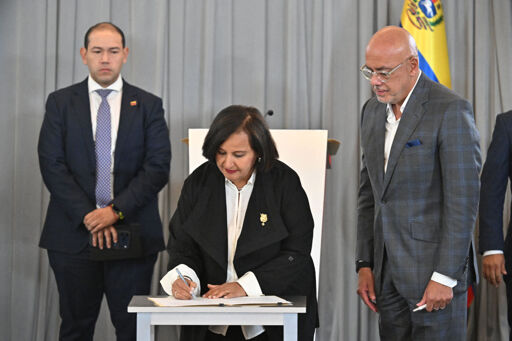
The joint document signed by National Assembly President Jorge Rodríguez, on behalf of the acting Delcy Rodríguez administration, and Dinorah Figuera, representing the opposition faction, makes no reference to the National Electoral Council (CNE), an issue considered key by anti-government forces.
Figuera had previously vowed that the dialogue process would produce a new CNE by the end of 2026. Lawmaker Tomás Guanipa said that the opposition considers it “very important” for the issue to be addressed as soon as possible in order to “radically” change the electoral authority.
The negotiators instead prioritized “the recovery of the country’s international reserve assets” held at the Bank of England, while “establishing mechanisms for transparency, traceability, and auditing in their efficient use, to guarantee the well-being of all those affected” by the June 24 double earthquake.
Since 2019, the Bank of England has refused to release 31 tons of gold reserves belonging to Venezuela, which were deposited in 2008. Successive UK governments aligned with Washington in refusing to recognize the Nicolás Maduro government as legitimate. At current gold prices, the reserves are worth approximately US $4 billion.
Wednesday’s agreement likewise included a pledge to “work on strengthening programs for housing, electricity, healthcare, and debris removal.”
Acting President Rodríguez welcomed the “first step” in the dialogue process and urged all political forces to join the talks, “putting the well-being, peace, stability, and development of the country first.”
“I trust that this process will help build a path toward better democratic coexistence among the country’s different political sectors and that it will translate into concrete benefits for Venezuelans,” Rodríguez wrote on Telegram.
Following an initial session on August 6, the delegations held daily meetings split between plenary sessions and working sessions focused on the post-earthquake emergency and judicial and electoral reforms.
Jorge Rodríguez and Figuera pledged that the talks would yield “concrete actions” with “strict compliance with commitments.” The parties are scheduled to meet again in mid-September through both in-person and virtual sessions.
Before Wednesday’s joint press conference, Figuera held separate meetings with opposition groups and NGOs. Anti-government figures demanded that the release of “political prisoners” be a priority in the dialogue framework. Far-right factions have complained that María Corina Machado was not included in the negotiations, though the Unitary Democratic Platform backing her also met with Figuera last Friday.
The latest government-opposition negotiation initiative follows previous iterations, including in the Dominican Republic (2017-18) and Barbados (2023).
Venezuelan authorities, including Jorge Rodríguez, had fiercely condemned the defunct 2015 opposition-majority legislature for usurping functions and plundering Venezuelan assets abroad. Rodríguez went as far as proposing that Figuera and associates be stripped of their Venezuelan nationality. Despite its mandate expiring in January 2021, a group of opposition lawmakers unilaterally decided to extend the term as the body retained recognition from Washington as Venezuela’s “legitimate government.”
The Trump administration has endorsed the latest dialogue process, with the State Department calling it a “unique opportunity” for a “political transition” in Venezuela.
Edited by Ricardo Vaz in Caracas.
The post Venezuelan Gov’t and US-Backed Opposition Faction to Renew Supreme Court appeared first on Venezuelanalysis.
From Venezuelanalysis via This RSS Feed.