

This article by Luis Hernández Navarro originally appeared in the August 12, 2026 edition of La Jornada, Mexico’s premier left-wing daily newspaper.
Havana. The Palace of Conventions looks like an anthill. Hundreds of delegates roam its hallways and rooms, take keepsake photos, hurriedly drink coffee, chat and, above all, fill the halls. They are gathering around the 100 years since the birth of Fidel Castro. They review his role as revolutionary and statesman, as a driving force of health diplomacy and a popular educator, as a central actor in the struggle against colonialism and a promoter of sport. But today, amid this immensity of activities, the forum of solidarity with Cuba, chaired by Miguel Díaz-Canel, stands out. In the string of speeches, those who take the floor agree that the comandante’s action remade the world map. His bold moves on the chessboard of international relations redrew the borders of Africa and Southeast Asia.
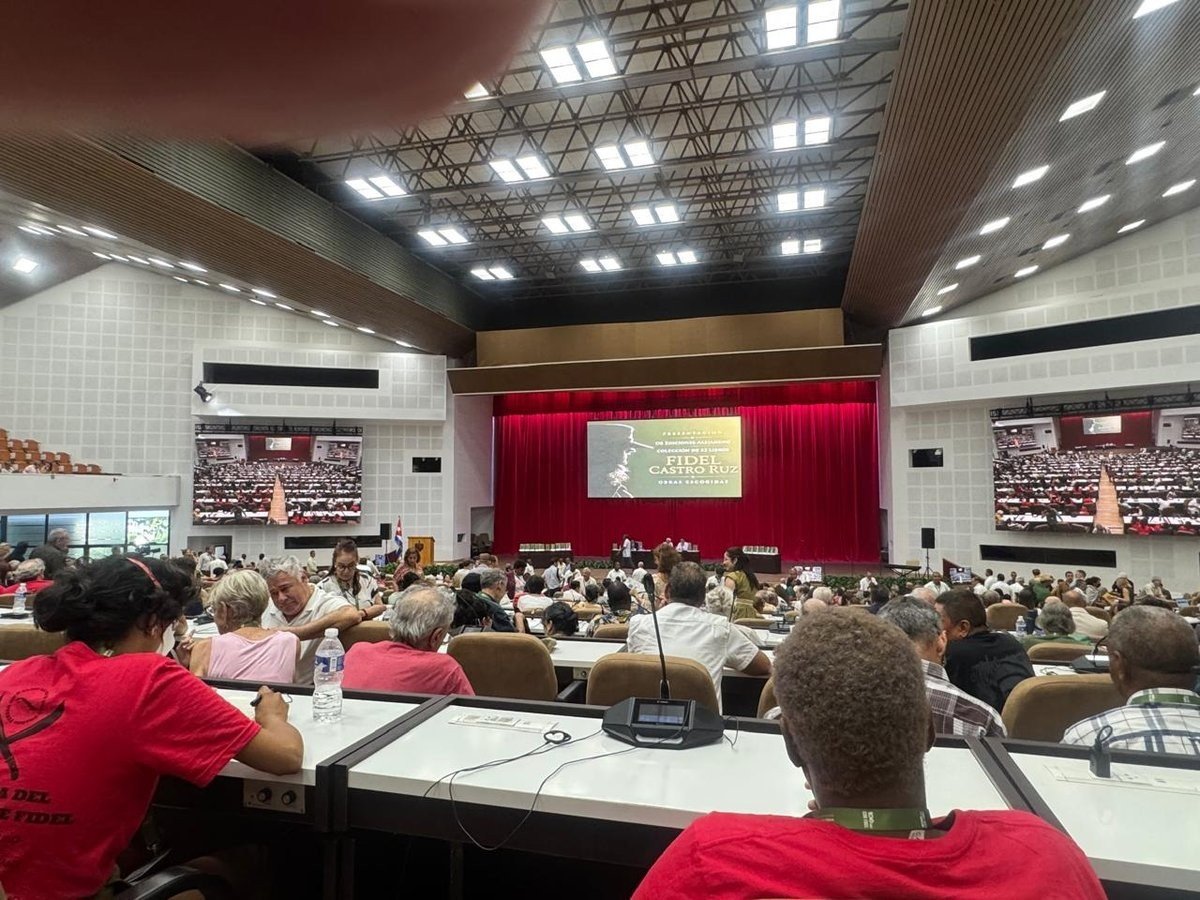
During the conferences yesterday at the Palace of Conventions in the Cuban capital, all agreed that with his bold moves the comandante remade the world map. Photo: Alex Castro
Although he was born in New Zealand, Michael Lapsley is honorary president of the friendship society between South Africa (where he moved to live in 1973) and the island. He is an Anglican priest. He directs the Institute for Healing of Memories. He militated in the African National Congress and was expelled from South Africa in 1976. A letter bomb sent to him by the apartheid regime made him lose both hands and one eye. On 10 occasions he visited the Cuban hero Gerardo Hernández in the prison where he was held in the United States. Love, Father Lapsley says, is not only a matter of sharing emotions, but of practical support. And he recalls that, when he had just suffered the terrorist attack that left him without hands and with one eye, the second person to visit him in the hospital was Cuba’s ambassador. He offered him medical treatment on the island. “Fidel Castro’s legacy,” he stressed, “is that he inspires us to keep fighting for justice. No to the genocide against Cuba!”
In his turn, the vice president of the Vietnam-Cuba friendship association denounced that “the blockade applied against the noble people of the island is a genocide in the 21st century.” He also recalled that the bond uniting the two sister nations transcends generations. Indeed it does. In homage to the epic of the Vietnamese war of liberation, in the song Madre (Mother), composed in 1972, Silvio Rodríguez says: “Mother, on your day / Motherland and mother revolution, / Mother, on your day / your boys sweep mines in Haiphong.” Right around those dates, the United States escalated its attacks against that Asian nation with greater belligerence and cruelty. Without further preamble, on May 1, Fidel Castro announced in the Plaza de la Revolución the dispatch of three medical teams to Vietnam. Amid the bombing, the island’s doctors devoted themselves to saving lives and healing the wounded.
A Vietnamese Publication as a Gesture of Reciprocity
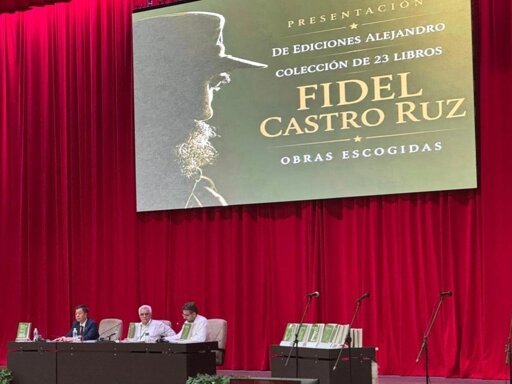
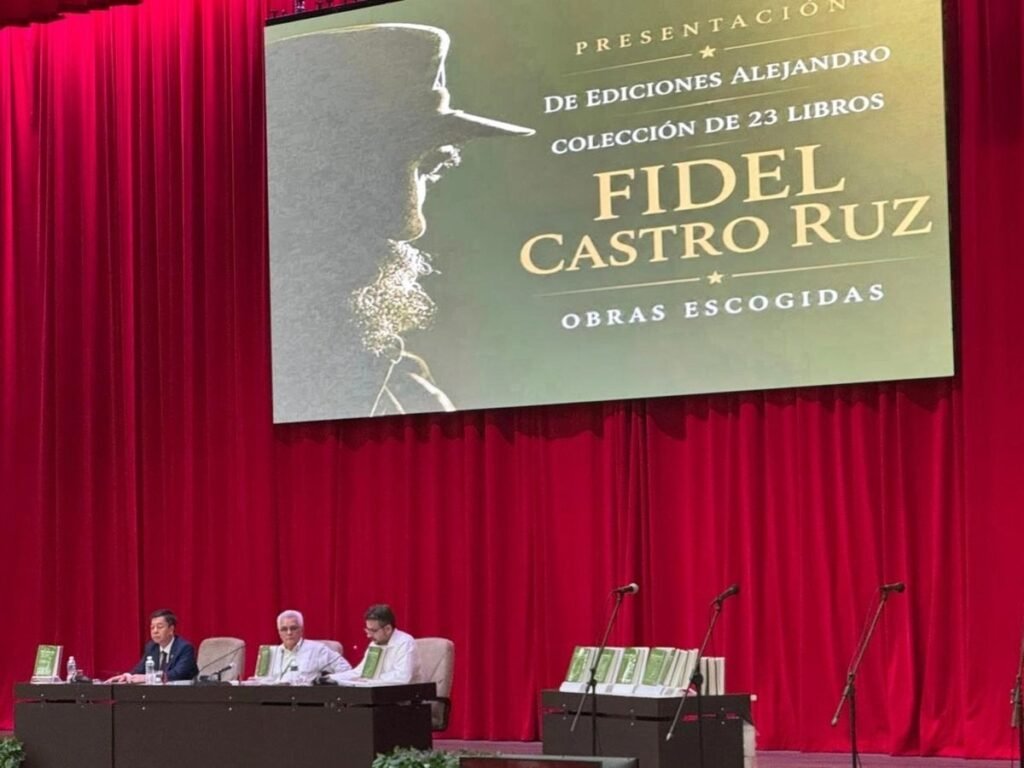
As a small great gesture of reciprocity, Vietnam has just published in print, together with the Cubans, the Selected Works of Fidel Castro, which were formally presented today at the Colloquium. Vietnam’s National Political Publishing House La Verdad printed 3,000 copies of the Selected Works of Fidel Castro Ruz. Vu Trong Lam was the director and editor in chief. They are 24 splendidly produced volumes, in the style of the classic selected works that former socialist countries published with the writings of Marx, Lenin, Mao Tse-Tung and so many other Marxist thinkers. Volume 23 consists of part of the letters that the comandante exchanged with Hugo Chávez.
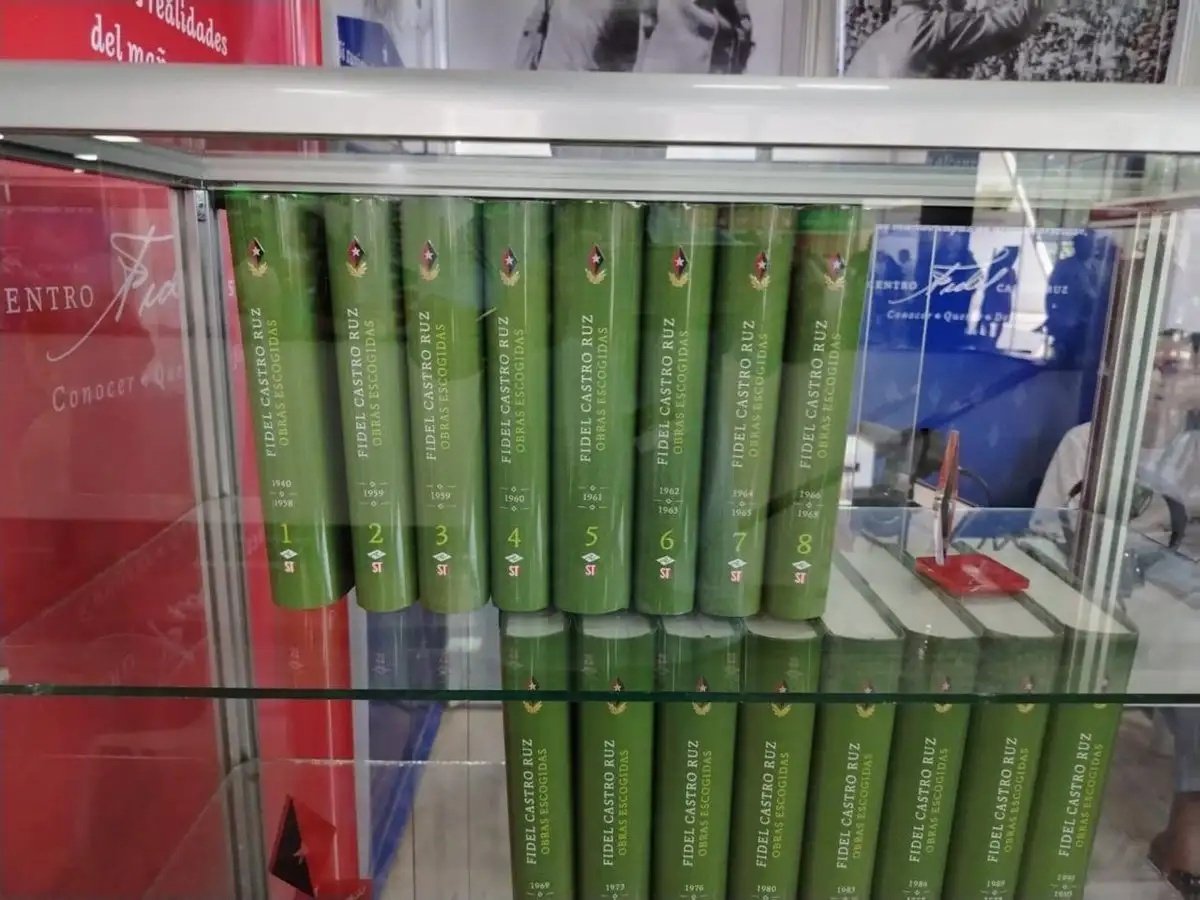
The Fidel Castro Center presents the 23 volumes of the Selected Works of Commander in Chief Fidel Castro on the occasion of the centenary of his birth. Photo: Luis Hernández Navarro
Alfonso Ramón Naranjo is a retired journalist, lives in Las Tunas, in eastern Cuba, and devotes himself to studying the Cuban War of Independence and the combative internationalist missions in Africa, particularly in Angola. The current crisis, caused by the new tightening of the blockade’s screws, has led him to lose significant weight. Sometimes his money is not enough, but he assures: “we are going to survive, we are going to keep moving forward. We have already shown it on several occasions. We did so during the Special Period, which was very hard, though not at the levels we have reached today.”
Alfonso presented a paper on Fidel as a military strategist during the war in Angola. As he explains, the comandante had an enormous capacity to predict what was going to happen. Reviewing declassified military documents, he found, for example, a warning to a Cuban commander in Africa telling him that the enemy was going to attack at a precise hour. And, indeed, at that hour the offensive against him took place. Naranjo was in Angola in the 1975-76 period. He returned in ’77 and in ’88, with Cuito Cuanavale. First he went as a war correspondent, but he had to trade the pen for arms, to follow the troops. When it was officially said that Cuba was collaborating with Angola, the journalistic work began to come out. The other times he went as a combatant. He was an officer.
In an interview with La Jornada he recounts: “there is an anecdote about Marshal Grechko, defense minister of the Soviet Union. Fidel went to a congress of the CPSU, and, in the free moments he had at the Protocol House, he would invite personalities to explain the development of the war in Angola (which had begun in 1975, with the entry of the South Africans, and ended in 1990). To Grechko he detailed what the situation on the ground was like, the trees, the soil, the rains and the rivers. Grechko stared at him and said: ‘Fidel, how bad Soviet intelligence is! We never knew you had been in Angola!’ And the commander in chief answered him: no, I have not been in Angola. It is a matter of liaison.”
Every day, Castro had the information about what was going to happen. From those reports and the photos, he came to know Angola perfectly. He issued orders: place a tank or an anti-aircraft artillery battery at a certain point. He predicted when the Cuban troops were going to be attacked. It was not witchcraft, it was his intuition. He was a strategist.
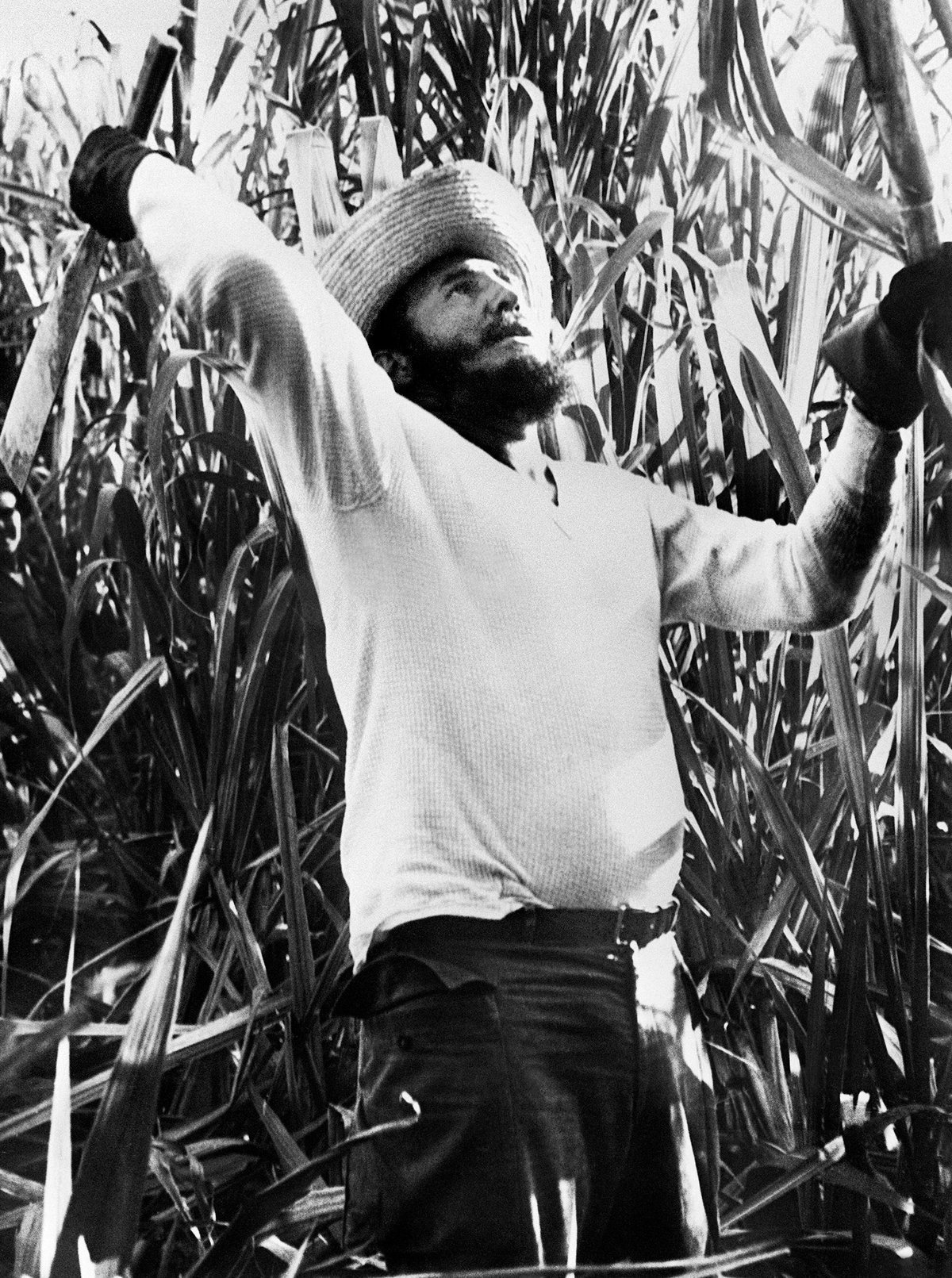
Fidel Castro (1926-2016) cutting sugarcane in a Cuban field, in October 1962. Photo: AFP
“On that mission, 2,000 Cubans fell. Sometimes one man became three. We Cubans have the desire to defend the sovereignty of the people. The Cuban, wherever he is, has a great sense of belonging to his homeland. And we defended Angola as if we were in Cuba. We were all completely volunteers. We only brought back the bones of our dead,” he explains.
Among the things that have been clearly established at the colloquium is that, for Fidel Castro, the word dignity had a synonym: Palestine. In many ways and at different moments, the speakers mentioned the comandante’s role in defending its cause and making it visible. Iraklis Tsavdaridis, executive secretary of the World Peace Council, was no exception. Among Comandante Castro’s legacy, he said, is support for the struggle against the genocide against the Palestinian people.
In 1966 — it was recalled at various panels — when the Organization of Solidarity with the Peoples of Africa, Asia and Latin America was created, Fidel promoted the recognition of the Palestinian struggle as a central link in the fight against colonialism. In 1973, Cuba broke off diplomatic relations with Israel and recognized the Palestine Liberation Organization as the legitimate representative of the Palestinian people. Anticipating what we have lived through, six years later he framed that issue as “the core of the Middle East problem.” In 1982, he received 500 Palestinian children on the island to study.
Foreign Minister Refutes New York Times Report
In the framework of the event, Foreign Minister Bruno Rodríguez refuted on social media a slanderous report by The New York Times. He warned that there is no “link or any participation by the Cuban government in human trafficking operations in Central America or Mexico.” On the contrary, he pointed out that, in bilateral meetings with the United States, his government has warned about the existence of operations trafficking Cubans into the United States, whose coordinating center is in southern Florida.
Years ago, don Pablo González Casanova affirmed what has been repeated in many ways during these three days of the colloquium: in Cuba lives a people whose consciousness has become will, its will intelligence, and its intelligence organization. Almost to conclude the massive solidarity event, Norberto Galiotti, coordinator of the Latin American and Caribbean Continental Network of Solidarity with Cuba and Just Causes, called for redoubling support for the island. “A single drop is little,” he said, “but with another, it makes a downpour.” He quoted the great Turkish poet Nazim Hikmet: “If I do not burn; / if you do not burn, / if we do not burn, / how will the darkness / become / light.” And he called on everyone to burn in order to illuminate these dark times.
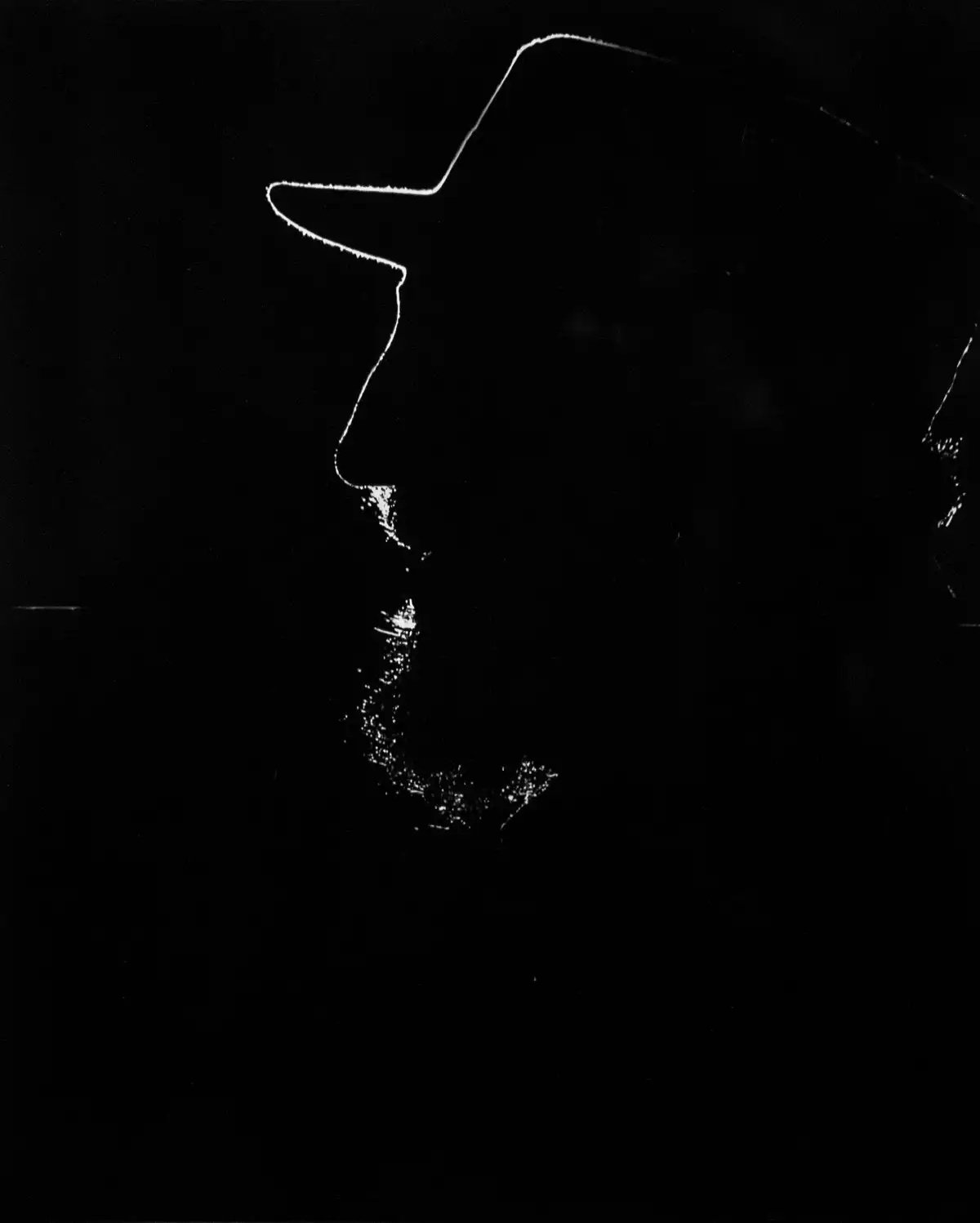
Fidel Castro (1926-2016).
-
Fidel Castro: Today He Would Have Turned 100; International Delegates Highlight His Legacy and Stand in Solidarity with Cuba
August 13, 2026August 13, 2026
At Havana’s centenary gatherings for Fidel Castro, international delegates hail his global legacy—from Angola to Palestine—and denounce the US blockade of Cuba.
-
People’s Mañanera August 13
August 13, 2026August 13, 2026
President Sheinbaum’s daily press conference, with comments on record tourism, freedom of expression and the right of reply, Alito Moreno’s US trip, and the arrests of PRI officials.
-
Nearly 700,000 Liters of Stolen Fuel Seized in Nuevo León and Tamaulipas
August 13, 2026
Three raids in Nuevo León, Tamaulipas, and Sinaloa left 14 detained and seized trucks, pumps, and firearms in a crackdown on fuel stolen from Pemex.
The post Fidel Castro: Today He Would Have Turned 100; International Delegates Highlight His Legacy and Stand in Solidarity with Cuba appeared first on Mexico Solidarity Media.
From Mexico Solidarity Media via This RSS Feed.