

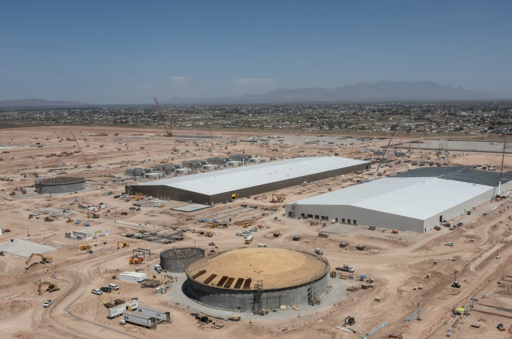
Since the commercial deployment of ChatGPT in 2023, generative artificial intelligence, or gen AI, has deepened social divisions. For the first time, a nondeterministic technology can go beyond executing calculations and automating mechanical work, giving rise to competing narratives: promises of unprecedented economic growth on the one hand and pervasive uncertainty on the other.
In the last three years, AI spending alone has effectively propped up the entire U.S. economy. Some speculate that the country has weathered trade wars, a global energy crisis, and mass deportations without slipping into a recession precisely because AI spending is acting as a massive private-sector stimulus. For the wealthy, the financial hype around AI made possible SpaceX’s IPO, the largest in stock-market history. Yet while Elon Musk celebrated becoming the world’s first trillionaire, his new data centers were facing lawsuits for polluting Black neighborhoods in Memphis. For working-class families, the reach of AI into nearly every domain of daily life — from jobs to education, health care, and even weapons and surveillance systems — has only reinforced public skepticism, seen more recently in a growing opposition to the construction of data centers.
AI is a strategic pillar of the Trump administration, which has allowed AI companies to amass unmatched economic and political power. In April, Bernie Sanders and Alexandria Ocasio-Cortez proposed a moratorium on new AI data centers, sparking a nationwide debate. Among critics on the Left, Jacobin contributor Holly Buck wrote in April that the moratorium could deepen social inequality by driving data centers offshore and raising commercial AI prices. “A moratorium will result in a business landscape that favors incumbents,” she claimed. According to Buck’s logic, AI firms would simply find a way around opposition, carrying out their plans anyway. Her article reads like a classic petitio principii, mirroring the same liberal logic of those who oppose rent freezes or tax hikes for fear that capital will flee in response.
On the other side of the debate, Astra Taylor and Saul Levin published a piece in the Guardian in May praising the anti–data center movement as an important form of popular resistance. “Organizing to block datacenter construction is a way for regular people to ensure their objections and preferences are heard,” they wrote. Further, “anti-datacenter organizing is the real fight, one centered on an industry choke point that people can reach out and touch. … Where else can people push back on job-eating algorithms, distorting deep fakes, and autonomous drone strikes?” The answer is simple: at the point of production.
Resistance to AI encroachment must be a broader societal struggle, one in which workers and their communities help forge collaborative channels connecting broader political, communal, and civil rights movements. For this, it’s important to understand not only AI’s impact on society but also the role that people play as producers and, ultimately, enablers of such technology. This is the basis of a Marxian critique of AI as the product of human labor. We can trace AI’s origins back to the path of U.S. economic development since the postwar era, using a historico-materialist approach to explain why AI embodies systemic contradictions at the heart of the U.S. imperialist system. From this analysis, we can see why it’s likely that an AI-centered boom-and-bust cycle will emerge and why the Democratic-centered opposition to AI does not reflect the interests of workers and their communities.
AI as a Commodity
For capital, AI remains ultimately a commodity. As a tool or service, AI consists of both software and hardware, the product of value chains that span the globe. First, silicon is extracted in the open pit mines of Latin America, West Africa, and Australia, then purified and refined in Chinese facilities. Semiconductor chips are designed in the U.S., set up for production in the Netherlands, manufactured in Taiwan and South Korea, and wired, tested, and packaged in South and Southeast Asia. At the end of this chain sit the hyperscale data centers that make AI operational, facilities typically housing 10,000 to 100,000 GPUs per cluster. Their construction and maintenance employ a vast workforce, from construction workers to big data engineers and data architects.
On the software side, when you interact with an AI model, you engage with the ideology of the megacorporation or state that owns it, which is mediated by the myriad social relations distilled into its training data. That data is painstakingly annotated by highly exploited data labelers in Asia and Latin America, then fed to the models designed by data scientists and AI researchers, which are ultimately built and maintained by machine learning engineers.
The outsized power wielded by leading AI firms — and Big Tech at large — is at its core the product of labor exploitation. Workers in and around the provision of AI wield huge potential leverage, given that they stand at the forefront of the AI boom. Developing forms of workers’ democracy and control over how AI is designed, built, deployed, and commercialized is paramount to building opposition to the industry. Across the political spectrum, workers in the U.S. are facing the consequences of AI’s commercial deployment. Mass layoffs and decimated entry-level jobs are routinely blamed on AI costs, which have risen exponentially as management forces workers to adopt AI tools. Meanwhile, companies are exhausting their annual AI budgets in a matter of months, prompting them to literally choose between keeping their workers or buying more AI tokens. Unions have increasingly had to address AI in contract negotiations, while a growing number of workers are turning to unionization to defend against AI encroachment.
In this context, the most vocal opposition to AI has come from Democratic outlets. In a recent conversation with Naomi Klein, journalist Karen Hao, a board member of the AI Now Institute, addressed the possibility of a different AI trajectory from a technical standpoint:
We don’t need to accept the logic of unprecedented scale and consumption to achieve advancement and progress. So much of what our society actually needs, better health and education, clean air and clean water, a faster transition away from fossil fuels, can be assisted and advanced with, and sometimes even necessitates, significantly smaller AI models and a diversity of other approaches.
This is true in part. AI systems can be smaller, more sustainable, and trained differently. This would certainly alter aspects of their interaction with society. Yet AI Now sees this as the outcome of a movement centered on AI regulation, ultimately enacted by, one would assume, a Democratic administration and Congress — AI Now itself was founded by former Biden advisers who helped craft his AI policy.
As AI’s history makes clear, relying on policy change through the partisan system has led to the current predicament. Contemporary AI and the rise of Big Tech have been bipartisan projects from the start and will remain so, given the pervasive role of software infrastructure in sustaining modern capitalism. AI’s primacy is a centerpiece of the current U.S. geopolitical strategy, but it is also the outcome of the nation’s economic development over the past half century. Behind all this lies a clear economic logic. The problem extends well beyond the moral bankruptcy of CEOs, which remains the rallying cry of Sanders and much of the Left. Instead, it raises critical questions that strike at the heart of the entire politico-economic system, namely, what kind of strategy is needed to change course.
Systemic Contradictions Embodied in AI
For Marx, the sole mechanism for producing new capital lies in the exploitation of labor. Workers produce surplus value during the unpaid portion of the working day, which is ultimately expressed in the price of the commodity as profit. Machinery, including AI, can transfer value from past cycles of production to a final commodity, but it cannot create new value; only workers can. Valorization through human labor sustains the entire economic edifice: production, commerce, and finance. It is for this reason that the average rate of profit, the ratio of surplus value to total capital invested, is a central category in Marxian economic theory.
Capital innately seeks to mechanize and automate work to improve labor productivity. This ultimately reduces the number of workers and hours worked during production. In the absence of class struggle, this puts downward pressure on wages. The more workers produce, the smaller their share of the social product. As Marx’s wrote in Economic and Philosophical Manuscripts:
The worker becomes an ever cheaper commodity the more commodities he produces. The devaluation of the human world grows in direct proportion to the increase in value of the world of things.
In any society divided by class, technological progress always comes at the expense of workers and their communities. As Marx explained in The Poverty of Philosophy:
From the very moment in which civilization begins production commences to be based on the antagonism of orders, of States, of classes, and finally on the antagonism between accumulated labor [or constant capital, which includes machinery] and present labor. No antagonism, no progress. That is the law which civilization has followed down to our day.
The deployment of AI has brought into sharp relief precisely this antagonism at the core of capital as a social relation of production. It is the exploitative nature of capitalism that lies at the heart of the AI problem, not simply the question of producing “smaller” AI models, as Hao would argue. Only models produced under a different economic paradigm, one not ruled by the drive to maximize productivity and profits, can overcome the perennial tug-of-war between past labor and living labor. Short of that, AI production will continue expanding in a desperate race for worldwide adoption, market concentration, and, eventually, profits. The unrelenting drive for larger scale, output, and profits renders every social, political, technical, or environmental consideration irrelevant.
The antagonism between machine and society is also expressed in the role of AI as the centerpiece of the ongoing international arms race. AI models are now the nervous system of modern military apparatuses and surveillance networks for state repression. In 2025, the federal government invested about $3.3 billion in nondefense AI R&D, along with hundreds of millions in defense and military contracts awarded to AI and tech companies. The U.S. Army has sworn in top tech executives from Meta, OpenAI, and Palantir as lieutenant colonels and part-time advisers under a special program to develop drones and warfare tech in preparation for “the next big war.” Domestically, DHS and ICE have been tapping into a database built by Palantir and powered by AI that aggregates government and commercial data to identify real-time “targets.” This is part of a larger federal project to build a comprehensive profile of every person in the country based on institutional information across agencies.
The current AI arms race is the historical product of capitalist dynamics. As explained earlier, technological progress expands productivity, and the profitability of capital tends to decrease as less human labor is used in production. The U.S. economy expanded its technological footprint in the post–WW II era. Investment in machinery grew as a proportion of total capital outlay, while the share allocated to wages declined in relative terms — a trend paralleled by the erosion of union density. This contributed to a secular decline in the U.S. average rate of profit starting in the 1960s and provided the impetus for neoliberal globalization beginning in the 1970s. During globalization, a massive transfer of value occurred from nonimperialist to imperialist economies. It is estimated that from 1995 to 2020, these international value transfers amounted to over 70 trillion euros. The U.S. in particular received exorbitant rates of return on foreign assets and liabilities from 1970 to 2022.
The foundational technologies underpinning AI — relational databases, the internet, and advances in theoretical computer science — coalesced as globalization ascended. The AI industry emerged from the fusion of the information and communications technology (ICT), chips, and cloud computing industries, together with the technological application of natural language processing. The launch of the World Wide Web in 1991 coincided with the dissolution of the Soviet-American order, which catalyzed the expansion of U.S. capital that’d begun in the wake of the Bretton Woods system’s collapse. As globalized production accelerated, internet-based logistics and infrastructure surged, dramatically reducing the costs of processing and transmitting information across the globe. The “ICT revolution” was key to globalized production since it enabled firms in imperialist centers to organize and manage production processes remotely. Federally subsidized infrastructure and technologies were developed with public funds and then opened to commercial traffic.
But as the United States and other imperialist nations kept investing abroad for over three decades, total capital stock in recipient countries surged, while worker compensation stagnated or declined (except in China). This eventually eroded profit rates in those nations, particularly in those holding the largest trade surpluses with the U.S.: Mexico, China, Vietnam, Germany, and Taiwan, contributing to the decline in the U.S. rate of profit as the volume of surplus value siphoned back to the States diminished. The exhaustion of the globalized world as a reservoir of what Marx termed surplus profits triggered an increasing scramble for new market partitions, spheres of influence, and regimes of exploitation. In a pattern exacerbated by the Great Recession and the COVID-19 pandemic, both Democratic and Republican administrations increasingly pursued trade wars and military buildup, and began to break long-term alliances with other imperialist nations and blocs. Within this new paradigm, the escalating arms race between the United States and China, today centered on AI, was inevitable.
In his 2025 book Chokepoints: American Power in the Age of Economic Warfare, former sanctions official Edward Fishman praises the emergence of a “systematic policy” by the first Trump administration, which established that “access to U.S. technology could prove as vital as access to the dollar, and that removing such access could be just as lethal.” Lauding Trump’s attempts to “seize the commanding heights of the digital economy,” Fishman writes that,
Joe Biden, whose ascent to the presidency was in many ways a repudiation of his predecessor’s record, did not walk back Donald Trump’s most aggressive penalties on China’s tech sector; he doubled down. Like the previous administration, Biden’s team viewed supremacy in frontier technologies as a central pillar of geopolitical power, particularly in the intensifying rivalry between the United States and China. As soon as he entered the White House, Biden and his staff made plans to extend Trump-era export controls on Huawei to cover the entire Chinese tech industry.
Export controls are one front in the battle; another is access to key minerals. For a decade, as tech and energy operations reliant on critical minerals ramped up, both the Biden and Trump administrations focused on securing access to these minerals in schemes and deals involving Ukraine, Greenland, and Canada. Trump’s suggestions of Americanization there and elsewhere are more an escalation than a break from the past; the U.S. has been trying to “curtail Chinese ambitions with a familiar playbook.” The fact that China continues to close the gap in AI model performance can only spur more protectionism by the U.S. government. Concurrently, weapons production has also grown in recent years. NATO, Japan, Canada, and Australia have significantly expanded their defense budgets and weapons stockpiles. Conflicts in the Middle East and Ukraine, alongside gunboat diplomacy to reassert neocolonial influence in Venezuela and Cuba, bear within their reactionary politics an expansionist mandate to secure energy sources, raw materials, trade routes, and labor markets. Predictably, in the face of global frictions and the contraction of international markets, an emboldened corporate class is seeking to cut production costs domestically even further to afford the massive AI buildout, seen as the ticket to maintaining U.S. hegemony.
The Threat to Labor
For the last 50 years, American capital has tried to boost the rate of exploitation domestically by means of speedup, work surveillance, wage stagnation, and rollbacks of workers’ basic benefits. The “AI revolution” extends back beyond the more recent rise of generative AI. AI in manufacturing started in the 1970s, enabling companies to design products with growing accuracy. By the 1980s and 1990s, the focus had shifted toward automation and real-time data collection. Today, AI powers sensor-based systems that surveil every aspect of production, fostering labor productivity by keeping output flowing at all costs. Nongenerative AI has been part of a decades-long process of automation in industrial jobs.
But with the current gen AI iteration, automation has extended to nonindustrial jobs. From 1950 to 1980, the ratio of what Marx called “unproductive labor” (concentrated in sales, finance, real estate, administration, and management) to productive labor (all labor that produces surplus value, including in the service industries) almost doubled, reaching 31.4 percent. Currently, 37 percent of the private-sector workforce is engaged in unproductive labor, which falls under what’s considered “overhead costs.” This vast segment encompasses administrative, managerial, accounting, sales, marketing, and clerical functions across the entire economy.
According to the latest data, corporate adoption of gen AI has followed two distinct rationales. On the one hand, its use across industries has centered on communications, content, and project management systems (reports, videoconferencing, emails, messaging, enterprise portals, etc.) as well as “marketing and sales for consumer goods and retail,” including customer support. In the financial sector, its highest use has been in “risk and compliance functions.” These tasks overlap significantly with the categories of unproductive labor.
A first wave of mechanization of unproductive jobs took place in the 2010s with the introduction of office management software and automated calendars. AI has renewed and exacerbated this trend, particularly following the release of “AI agents.” Yet, despite the lack of evidence of productivity increases, companies are using “AI washing” — blaming AI — to justify mass layoffs, mainly to cut operating costs. Companies have been carrying out mass layoffs of “white-collar” workers and freezing new hiring, especially for junior positions. AI has also increased work surveillance in office jobs, as made clear by Meta’s recent mandate to surveil and capture all its employees’ mouse movements and keystrokes. Meta’s plans, however, were promptly discarded after mass worker backlash. Since then, Meta’s stock has dropped 5 percent after Zuckerberg casually admitted that firing and replacing around 8,000 workers with AI agents “hasn’t really accelerated” productivity.
The second main use of AI has been in software production. Software engineering broadly can be classified as productive labor. Software is a significant component of constant capital, composing 15 percent of U.S. nonresidential fixed investment. According to mainstream economists, the productivity of workers in the software sector is higher than in the nonfarm business sector as a whole, and software itself raises the productivity of other sectors through the automation it provides.
There are many indications that tech companies are forcing their technical workforce to use AI for coding — speedup for coders is already taking place. Amazon and Google engineers report having to produce the same amount of code with half the number of workers, and tasks that used to take weeks are now expected to be completed in days. In other words, bosses are using gen AI — and the threat of AI — to demand increased work intensity as employees adopt AI tools. This means productivity increases, whenever they are genuine, will not be because of automation alone but to overwork as well.
There is also early evidence that companies are no longer hiring engineers at certain skill levels because they expect more senior staff to pick up the slack. This suggests that large-scale job losses attributed to AI are not necessarily coming from automation but from increasing the exploitation rate of the existing workforce, with or without productivity gains from AI use, and through the use of surveillance methods that have long been used in manufacturing and logistics.
Seen together, AI adoption is now targeting layers of the workforce that historically had a higher wage baseline and accounted for significant operating costs for corporations. If manufacturing jobs were gutted over the past several decades, professional jobs appear to be next. The unemployment rate for new workers is now much higher than the average. Bosses will keep trying to boost profits by reducing payroll, especially — but not only — in nonproduction activities. As economist Michael Roberts explains, productivity increases generally based on output and employment growth “will mainly be due to jobs disappearing, not output rising.”
AI Infrastructure and Economic Instability
Tech industry spending is now the only growth sector in business investment. The most capital-intensive aspects of Big Tech — AI chips, data centers, and cloud computing — are attracting mammoth investments at a scale that affects the entire economy. Meanwhile, AI model providers remain unprofitable. In the first quarter of this year alone, OpenAI generated $5.7 billion in revenue with an adjusted operating margin of -122 percent, meaning that for every dollar of revenue, the company lost $1.22. Nevertheless, Amazon, Microsoft, Meta, and others are betting that their massive infrastructure investments will meet demand for cloud computing capacity and allow them to train new models.
Yet this AI-centric data center infrastructure is not being built merely to service projected demand for current models but to fulfill fantastical speculation that larger models will yield “superintelligence.” Consequently, investments in cloud infrastructure have massively outpaced revenue. By the end of 2025, Amazon, Google, Microsoft, and Meta had collectively invested over $400 billion in AI infrastructure — an outlay that some estimate requires $2 trillion in new AI revenue by 2030, a 100-fold increase from a $20 billion baseline to justify the initial investment.
The AI bubble is real and deeply delusional. $344 billion in AI-related bonds have been issued in 2026 alone, with default risks tied directly to profitability and demand. High on the bullish market, AI and Big Tech companies will continue slashing jobs to appease investors until the next round of funding arrives, in patterns eerily reminiscent of a Ponzi scheme. Widespread layoffs in the tech industry are occurring as companies attempt to offset massive AI capex expenditures. Over 700,000 jobs have been slashed since 2022 in the tech industry. However, the commercial cost of AI is already catching up with the increasing cost of AI infrastructure. This could trigger a financial crisis induced by a loss of credibility in the short term, and given the bubble’s size, it could have unprecedented global repercussions.
Alternatively, the bubble could be prolonged for some years, especially since AI is a centerpiece in the state’s new military strategy, the industry enjoys the government’s full backing, venture capital keeps flocking toward the AI industry, and federal regulations have been lifted. This scenario could precipitate a classic crisis of overproduction in the long term.
For Marx, crises of overproduction are conditioned by a quicker fall in the rate of profit during economic booms, when an abundance of capital contributes to faster technical development and eventually reaches a point where more means of production are created than can be absorbed by existing industry. If tech companies continue to invest heavily in AI infrastructure, the costs of energy and raw materials could tend to rise, driven by expected demand and exacerbated by disruptions in global trade and high energy prices. As expenditures in constant capital rise, workers may face more layoffs, and companies may see a decline in the rate of surplus value.
Whether we experience an imminent financial bust or a prolonged bubble followed by an overproduction crisis later depends on whether the promised productivity gains materialize — and whether the massive infrastructure spending can eventually generate returns that justify the investment. Alternatively, it depends on whether workers put their foot down and throw a wrench in the system of cogs.
Building Resistance to AI Encroachment
Almost every major labor conflict in recent years has involved negotiations regarding AI. Labor contracts forged in the wake of powerful strikes have begun to secure some protections. Opposition to employer control over AI was a unifying theme behind the 2023 WGA and SAG-AFTRA strike. After their 2023 and 2024 strikes, Boeing and UAW workers secured contract provisions against the punitive use of AI, mandating worker oversight in its deployment. The NewsGuild-CWA has included similar language in over a dozen contracts protecting “bargaining unit work … defining the scope of AI and requiring interaction and oversight by bargaining unit employees.” Recent gains by tech workers through strikes organized by the Times Tech Guild and Kickstarter United stand as additional positive examples that underscore the importance of asserting workers’ control over the use of technology through class struggle.
The movement against data center construction has also started to influence organized labor. Sanders and AOC’s moratorium bill has drawn support from the AFL-CIO, UAW, the AFT (teachers), NNU (nurses), and AAUP (university professors). While an actual moratorium on new data centers could certainly help curb Big Tech’s dictates, Sanders’s bill is largely symbolic and unlikely to pass, particularly given opposition within its own Democratic caucus, with members denouncing it as “idiocy.” Thus, the bill has been used mainly as a campaign slogan in Democratic races. But campaign promises for legal “safeguards” won’t halt an AI industry that sits at the core of the contemporary U.S. economy.
Within pro-Democratic politics, opposition to data centers has largely advanced calls for government regulation. Groups like AI Now call on nonprofits to “do the right thing”:
Policymakers can implement strong data privacy and transparency rules, and update intellectual property protections to return people’s agency over their data and work. Human rights organizations can advance international labor norms and laws to give data labelers guaranteed wage minimums and humane working conditions, as well as to shore up labor rights and guarantee access to dignified economic opportunities across all sectors and industries. Funding agencies can foster renewed diversity in AI research to develop fundamentally new manifestations of what this technology could be.
This call on the millionaire class to oppose the billionaire class is anchored in a fundamental demand for enforcing antitrust regulation. In the past, the government has broken up large corporations, as it did in the 1980s with AT&T, only to see them reconfigure into even larger entities, since capitalism innately tends toward accumulation, concentration, and centralization. The stated goal of antitrust movements, however, is to strengthen markets by increasing competition among businesses through government intervention.
Yet higher capital competition involves a push for higher rates of surplus value or exploitation. Advocating for anti-monopoly regulation in the service of “customers” does not immediately translate into a better social standing for working-class families. The flip side of this consumerist argument is held by a constellation of intellectual critics, including Valerie Veatch, director of the recent film Ghost in the Machine, along with many academics, bloggers, and podcasters whose sharp denunciations of AI ultimately collapse into inane calls for consumer boycotts based on personal moral codes.
Pointing out the structural limitations of these critiques of AI isn’t a call to cynicism or acquiescence; quite the opposite. If there is one thing the Trump administration has made clear, it is that no demand or prospect for struggle is too ambitious. Over the past year, American society has seen what imperialist decay means. The engines of war, racist bigotry, and untamed colonialism turn anew as the frantic race for surplus profits intensifies. Progressive union officials have largely hunkered down since Trump’s election, fearing not only federal backlash but also reprisals from sectors of their own membership who voted Republican. Their partisan politics have left their unions vulnerable to the broader polarization in the country, rendering them incapable of cutting through the chauvinistic and nativist poison with a clear-cut class struggle policy and grassroots political work that stands independent from a highly discredited Democratic Party. To urge a clean break with business unionism and Democratic politics is not hyperbole.
AI, the centerpiece of the current arms race, is the fetishized manifestation of an exhausted economic system that’s brewing an unprecedented social crisis. The repressive apparatus erected under Trump is part of the plan to reorient the core of the American economy around weapons production. War economies require much higher rates of exploitation and, therefore, beget workers’ political and organizational atomization. The gigantic value chains that make AI possible point to the international character that a struggle against the industry must bear.
For this reason, the labor movement in the U.S. must stand in solidarity with its class siblings around the world, advocating not just for economic demands but for political ones as well. The use of AI and U.S. cloud computing to monitor and attack the population of Gaza was the focus of tech workers’ protests at Microsoft and Google and is now well known. This begs for a break with the narrow scope of business unionism. Union organizing, workers’ power, and democracy cannot happen in isolation from the most consequential social struggles occurring now. Recent episodes of heightened social struggle, such as those in Minneapolis and St. Paul, underscore the types of solidarity actions needed to reinvigorate a genuine political opposition. As long as the unions and the socialists, such as DSA and their mouthpieces like Jacobin, continue to mushroom under the shadow of a geriatric Democratic Party, the unhinged Far Right will continue to capitalize on growing levels of indignity and poverty. The upper-middle classes have already begun to structure defense movements. It falls to American workers to decide whether they act as appendages to them or organize independently.
It’s in the interest of every working-class sector to establish a socialist framework for united struggle within and beyond the industry and nation. Capital’s threat of offshoring exposed the utter bankruptcy of the narrow nationalist and protectionist position of American trade union leadership in the 1980s. Workers placed their faith in politicians like Reagan and Clinton, who inflicted historic defeats on the unions. It’s time to learn from the past and break with the pervasive narrowness of a craft or guild mindset. If progressive unions like the UAW are bold enough to raise a 32-hour workweek as a flagship demand, they surely can call for a nationwide joint struggle to repeal the Taft-Hartley Law once and for all. Enacted in the 1940s, after major strike waves, it has undercut workers’ rights to participate in domestic and international solidarity actions for nearly a century. Instead, it enabled right-to-work laws, imposed the NLRB as a regulatory mechanism governing labor, and curtailed political freedom within the unions.
Yet value, surplus value, and therefore capital remain uniquely generated by human labor. AI merely reformulates knowledge facilitated by the asynchronous production of hardware and software through labor processes that involve an international workforce. This is the ultimate capitalist choke point. Regulatory schemes are bound to leave intact the core impetus driving AI’s current development. The fundamental contradiction between technological and human progress is embedded in capital as a social relation. The AI industry has merely exacerbated and expanded this antagonism at a stage of capitalist development where oligopolistic competition seeks to redivide the global market. Resistance to AI encroachment must involve a broader societal struggle in which unionized and nonunionized workers build inclusive political, communal, and civil rights movements.
The post Using Marx to Build Resistance to AI Encroachment appeared first on Left Voice.
From Left Voice via This RSS Feed.
You must log in or # to comment.