

This article by José Luis Granados Ceja originally appeared in the August 12, 2026 Mexico Solidarity Bulletin.
Subscribe here to receive original content and a Mexico news compilation weekly.
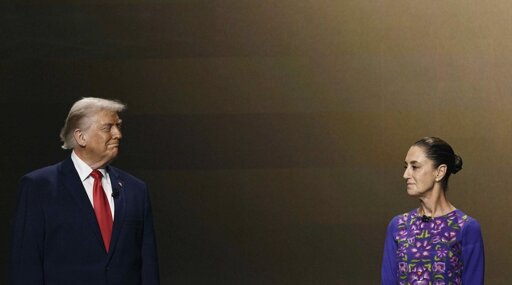
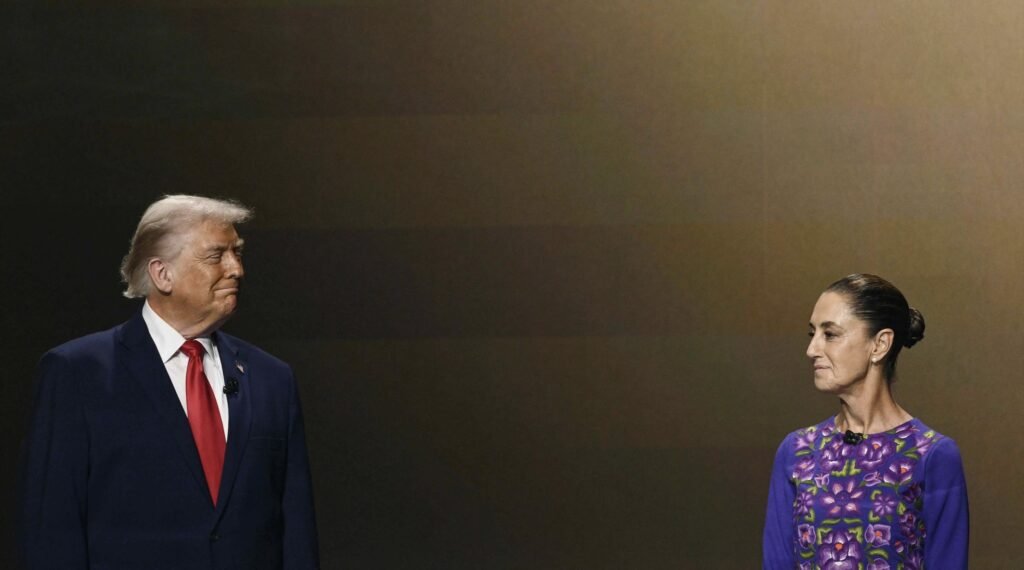
Mexico was once again the winner after US President Donald Trump’s latest round of tariffs. The Mexican government’s bet on using the United States-Mexico-Canada Agreement (USMCA) to ensure tariff-free exports and protect Mexican industry has proven to be the correct short-term tactic. The USMCA trade agreement continues to serve as a crucial protective shield, giving the country a competitive advantage amid a climate of escalating global tariffs imposed by the US, even on key allies and trading partners such as the European Union and Brazil.
But a good short-term tactic doesn’t always make for a good long-term strategy. Dark clouds loom on the horizon for the US economy, and an economic downturn for our largest trading partner could have severe consequences for Mexico.
A recent spike in US Treasury yields is stoking fears of financial instability as increased borrowing costs could squeeze homeownership and credit access. Rising yields are no small matter; these are the effective interest rates the federal government pays to borrow money, which directly dictates consumer interest rates. Higher rates will likely spell an economic slowdown. It is worth recalling that concerns over the impact of Trump’s “Liberation Day” tariffs on the bond market are what ultimately led him to back off.
Secretary of the Treasury Scott Bessent’s decision to very publicly intervene to rescue the Japanese yen proves that Washington has real worries. The decision by US financial authorities to help stabilize the crashing Japanese yen was a defensive maneuver aimed at preventing Tokyo, one of the largest holders of US bonds, from dumping hundreds of billions of dollars in Treasuries onto an already fragile US debt market.
Adding to concerns, the US labor market suffered a setback in July as employers cut 23,000 jobs, and prior months’ gains were revised significantly downward, while the unemployment rate was artificially held in check only because discouraged jobseekers gave up and left the workforce entirely.
Given this, Sheinbaum cannot count on a robust US economy alone to carry forward her economic plans. With inflation tamed, President Claudia Sheinbaum has projected accelerated growth for the Mexican economy during the second half of the year, but crucially, she is putting the emphasis on state-led development.
At a recent press conference, Sheinbaum assured us that ramped-up public works contracts, strategic infrastructure and the federal “Vivienda para el Bienestar” housing initiative will serve as primary engines for domestic job creation and industrial expansion.
This week also saw Mexican Foreign Minister Roberto Velasco visit with Brazilian President Luiz Inácio Lula da Silva, advancing important bilateral discussions aimed at deepening regional integration; this is an example of the concrete steps Mexico is taking to strengthen strategic relations with the South American giant and diversify its trading partners.
Mexico is making a calculated move to shield itself under the USMCA for now, while building enough strength at home and abroad with key partners so that when the US economy inevitably stumbles, Mexico doesn’t go down with it. It’s a gamble for sure; how it plays out may ultimately determine the future of the Fourth Transformation.

José Luis Granados Ceja is a journalist and political analyst
based in Mexico City. He currently covers Latin America for Drop Site News. He is the co-founder of MSP's Soberanía podcast and a presenter on the show Sin Muros on Mexico's Canal Once. He focuses on political issues, social movements, elections and human rights.
Follow him @GranadosCeja
-
Beyond the USMCA: Why Sheinbaum Can’t Bet Everything on the US Economy
August 13, 2026August 13, 2026
With Treasury yields spiking and US job losses mounting, Mexico’s USMCA shield may not hold, pushing Sheinbaum toward state-led growth and new partners like Brazil.
-
Ayotzinapa Back in Spotlight – Soberanía 119
August 13, 2026August 13, 2026
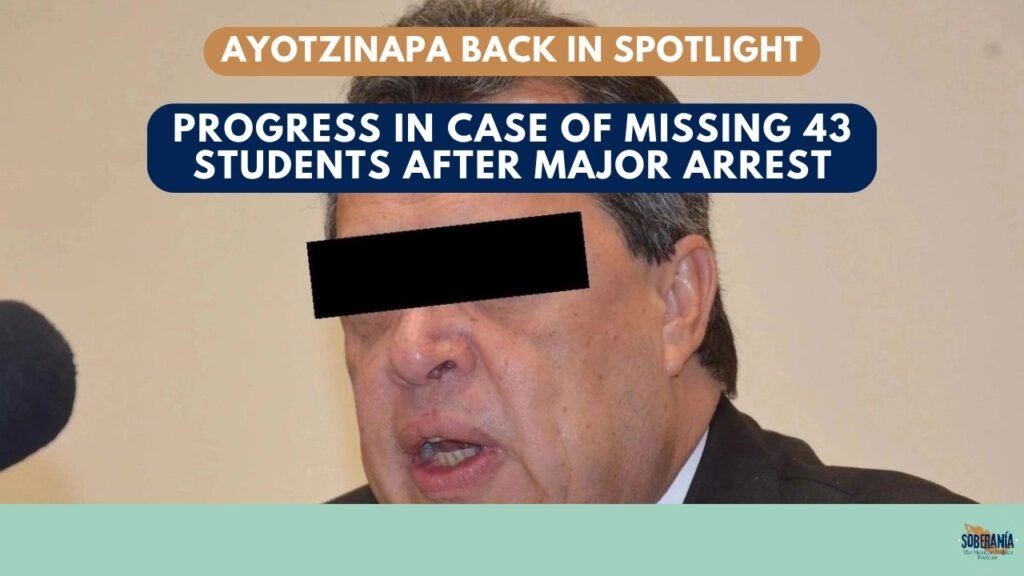
Hosts welcome the arrest of ex-Governor Aguirre in the Ayotzinapa case, dissect the State Department’s video glorifying the Monroe Doctrine, tour a turbulent South America, and skewer the PRI’s Alejandro Moreno for begging Washington for sanctions.
-

The Boom in Mexican Computer Exports
August 13, 2026August 13, 2026
Trump’s China tariffs rerouted the AI data-center supply chain to Mexico, now the world’s third-largest computer exporter—overtaking its own auto industry.
The post Beyond the USMCA: Why Sheinbaum Can’t Bet Everything on the US Economy appeared first on Mexico Solidarity Media.
From Mexico Solidarity Media via This RSS Feed.