

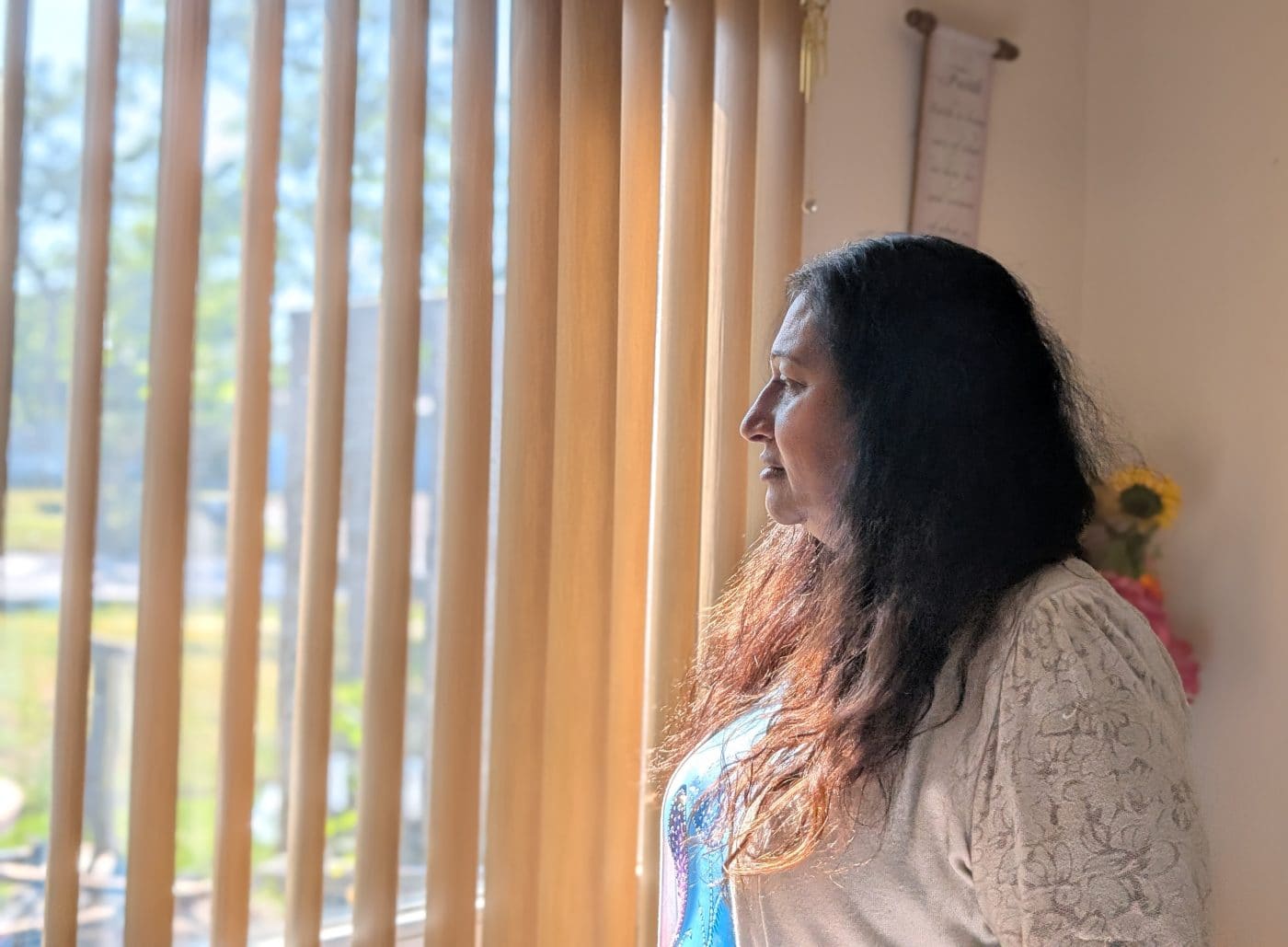
Beena Ruparelia does not need to check a thermometer to know when heat has settled into her northwest Toronto home.
She can see it on her skin.
“You see me sweating,” she says while waving a handheld fan and placing a standing fan right beside her. The temperature inside the rental home she shares with her husband, Peter, near Martin Grove and Albion roads, reaches as high as 40 C during heat waves, including this past July.
The couple does not have central air conditioning. Beena says their home traps heat throughout the day.
“So even having a shower, coming out, you’re literally sweating,” she says. “It’s unbearable.”
At night, the heat rises to the second floor, making it difficult to sleep. Peter, who recently turned 65, says there’s no escape.
“The way the sun is directed in, the morning sun comes right into our bedroom,” he says.
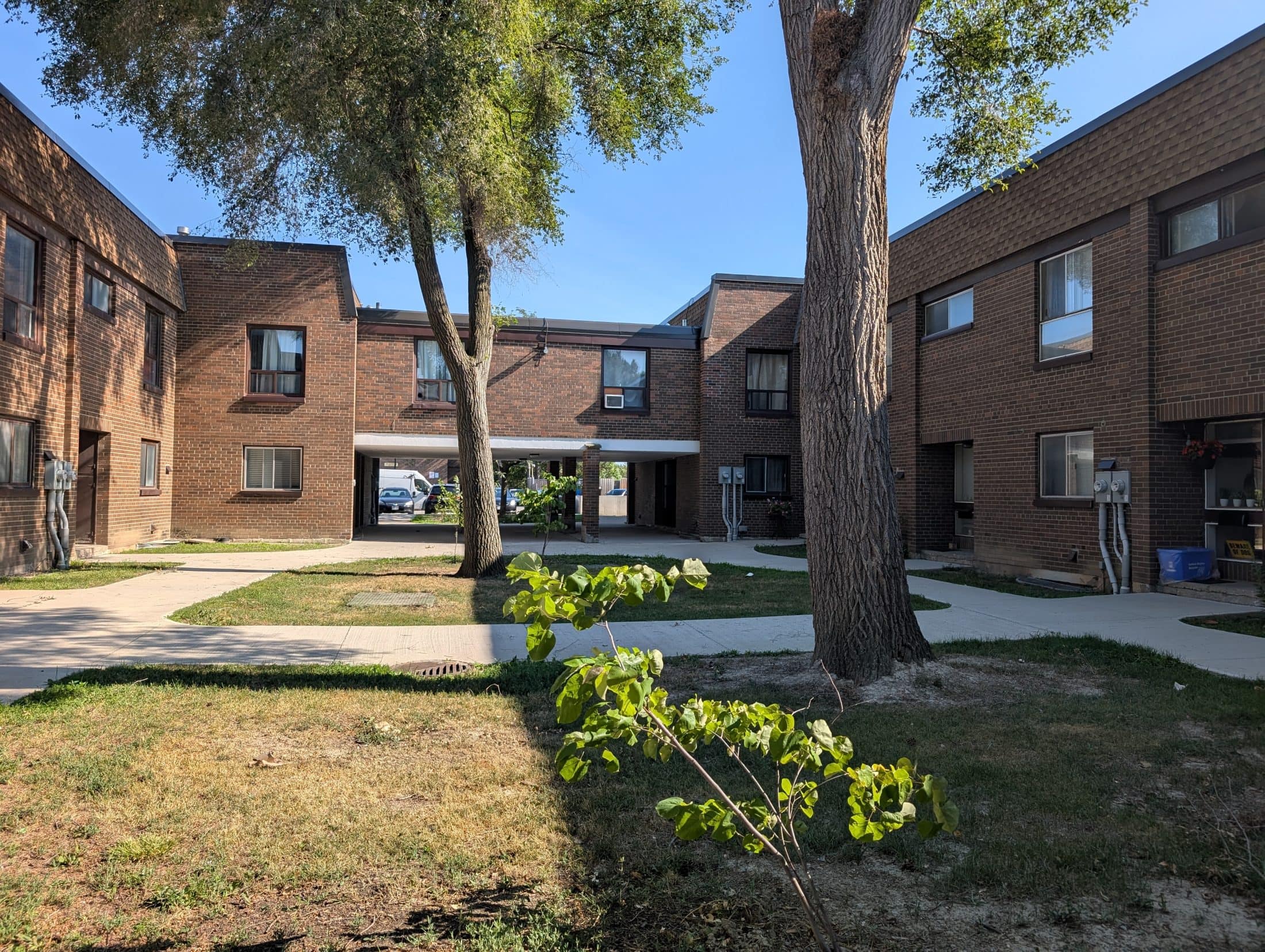
Beena Ruparelia says the aging homes in her complex become extremely hot in summer and portable air conditioners are a common sight in neighbours’ windows. She says it’s a sign that residents have little choice but to find their own relief from the heat.
The couple use portable air conditioners overnight, but the units cool only part of the home and increase their electricity bill by about $20 to $30 a month during the summer, Beena says.
When the heat becomes stifling, they retreat to the semi-finished basement.
“We go right down,” Beena says. “That’s the only other place to go.”
The temperature also dictates what they eat. Turning on the stove would add even more heat, so Beena says she relies on sandwiches, microwaveable food and other meals that require little cooking.
The Ruparelias’ experience sits at the centre of a growing gap between provincial and municipal housing rules and the changing climate.
The Ruparelias’ home was built in the 1960s. Like much of Toronto’s rental housing, it was built for surviving winter, when keeping heat in was a greater concern than keeping it out. But as the city gets hotter, low-income renters are among those most vulnerable to extreme heat.
Renters also have no legal right to a maximum indoor temperature. The City of Toronto will likely take at least another year to institute a maximum indoor temperature by-law, while the Ontario government hasn’t committed to introducing one at all.
As Toronto experiences longer and more frequent periods of extreme heat, the debate is shifting from whether cooling in rental units is necessary to who should be responsible for providing it — and who should bear the cost.
“Is it on working-class people or is it, in this case, on landlords?” Bruno Dobrusin, co-chair of the Toronto Tenant Union, asks. He has become all too familiar with renters’ stories of frustration and, in some cases, desperation.
“I feel like the main change in the last few years has been mostly the scale: how many more people are going through this and how much more often we hear of tenants just fighting to have some form of cooling in their apartments,” Dobrusin says.
Unlike Mississauga to the west, Toronto does not have a maximum indoor temperature by-law for rental units. Dobrusin says tenants have reported being denied permission to install an air conditioner or being told they must pay an additional $50 to $80 a month to operate one, he says, mostly due to the increased electricity needed to run them.
“Another $50 a month is quite a bit on your budget,” he says.
He says residents often go to Tim Hortons or TTC stations as cooling spaces because they are widely available, require little or no spending, stay open late and allow people to remain for long periods without being disturbed. But they can’t sleep there.
The lack of cooling cannot be separated from Toronto’s broader housing and affordability crises, he says.
As rents rise, more people are sharing homes. During extreme heat, multigenerational and crowded households can face an additional burden as several people share a space designed for just a few occupants.

Bruno Dobrusin is the co-chair of the Toronto Tenant Union, an organization that provides resources and advocates for all renters in the city. He began working for tenants’ rights in 2018 through the York South-Weston Tenant Union, which has now merged with Climate Justice Toronto to form the new union.
Dobrusin says working-class tenants may also spend their days in poorly ventilated or inadequately cooled workplaces before returning to apartments that offer no relief.
“What people are going through are multiple crises that are exacerbated by the climate crisis,” he says.
Toronto was built for a different climate
The city projects the number of days each year with temperatures above 30 C could rise from an average of 10 days between 1971 and 2000 to between 36 and 44 days by the 2050s. By the 2080s, Toronto could experience between 46 and 78 days above 30 C annually, depending on future greenhouse gas emissions.
Climate change is accelerated by greenhouse gases concentrating in the atmosphere from many sources, but primarily from the burning of fossil fuels like oil and gas.
Health Canada data shows 66.3 per cent of the heat-related deaths recorded in Canada since 1981 occurred after 2016. More than one-third occurred in 2021, the year of the Western Canada heat dome.
Extreme heat can cause dehydration, fainting, heat rash and heat stroke. It can also worsen pre-existing health conditions of the heart and kidneys, as well as respiratory diseases.
Children, seniors and people with existing health conditions can be more vulnerable to extreme temperatures.
And outdoor temperature alone does not determine who is most at risk.
Pavement, concrete and buildings absorb and radiate heat, while neighbourhoods with fewer trees and less vegetation lack natural sources of shade and cooling. This creates what is known as the urban heat island effect.
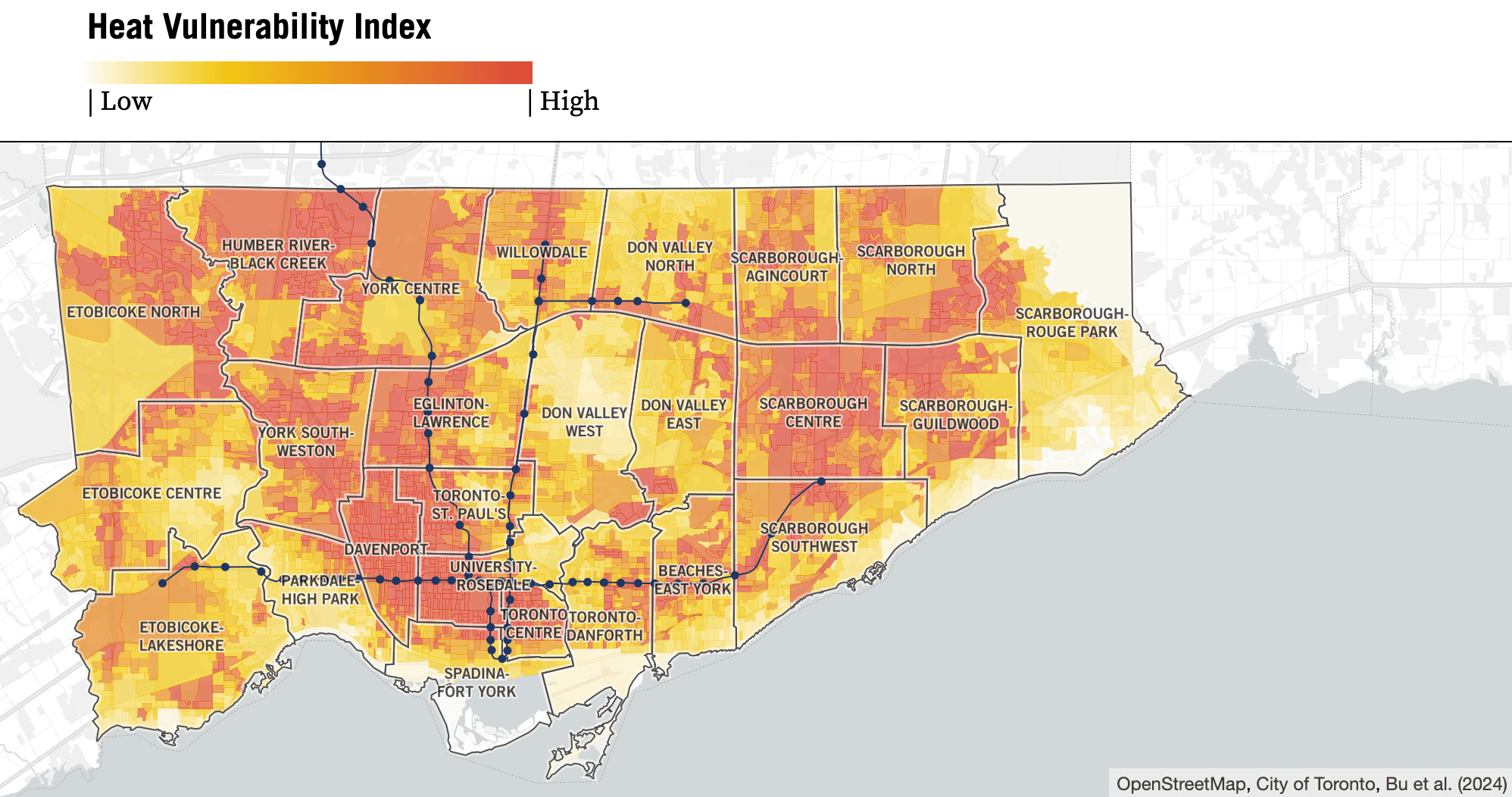
Heat vulnerability, which considers exposure to heat along things like lack of green spaces or the demographics of an area, varies across Toronto. The most vulnerable areas are shown here in red, with heat exposure measured using average heat-degree days above 20 C between 2010 and 2019. Map: University of Toronto
Karen Smith, an associate professor at the University of Toronto’s department of physical and environmental sciences, helped develop what’s known as a heat vulnerability index for Toronto.
Smith says heat vulnerability considers residents’ sensitivity to high temperatures and their capacity to adapt. That includes whether someone can afford an air conditioner or travel to a cooling space. A resident’s age, health, income and housing conditions can also determine whether a hot day becomes dangerous.
What the index shows is that the areas with the highest heat vulnerability are also among the city’s lowest-income neighbourhoods, and have high concentrations of immigrants.
Overall, she says, city blocks highly concentrated with apartment towers are more vulnerable to heat than the rest of the city. And while a public cooling space may offer temporary relief, it does not necessarily help a tenant who returns to a hot apartment at night.
Toronto Public Health wrote in an email to The Narwhal that it is continuing to work with the University of Toronto to update the heat vulnerability index with additional indicators and more recent data, but otherwise referred questions to the City of Toronto.
Why Rexdale faces overlapping risks
The Toronto and Region Conservation Authority has identified Rexdale, the area where Beena and Peter Ruparelia live, as a community facing overlapping environmental and socio-economic vulnerabilities.
A 2023 resilience strategy found apartments account for about 61 per cent of the neighbourhood’s housing and most of its housing stock was built before 1980. Jennifer Taves, senior manager of sustainable communities with the conservation authority, says the community also has older single-family homes that have not been retrofitted for central air conditioning.
The strategy flagged heat stress, limited tree canopy in some areas, food insecurity, transportation barriers and flood risk as additional concerns. It also found that Rexdale has a higher proportion of children aged 14 and younger than Toronto as a whole.
Because of these risks, the conservation authority decided to prioritize Rexdale for climate adaptation strategies, creating a Sustainable Neighbourhood Action Program with help from community stakeholders.
In 2024, residents in three towers received 47 climate-resiliency kits containing things like instant cold packs and temporary window shades, as well as portable air purifiers and purifying plants for days the sky is filled with wildfire smoke. Taves says there are no current plans to expand that program, but some bigger projects involve gardening, tree planting and engagement efforts.
“We know that heavily shaded neighbourhoods are much cooler than neighbourhoods that don’t have that shade canopy. So investing in that natural infrastructure or [shade] infrastructure is a very important part of preparing for these effects,” Taves says. The official term is shelterbelt infrastructure, which is when a line of trees and shrubs are planted in one or more rows to help lower surface temperatures like at Rowntree Mills Park and areas along Kipling Avenue.
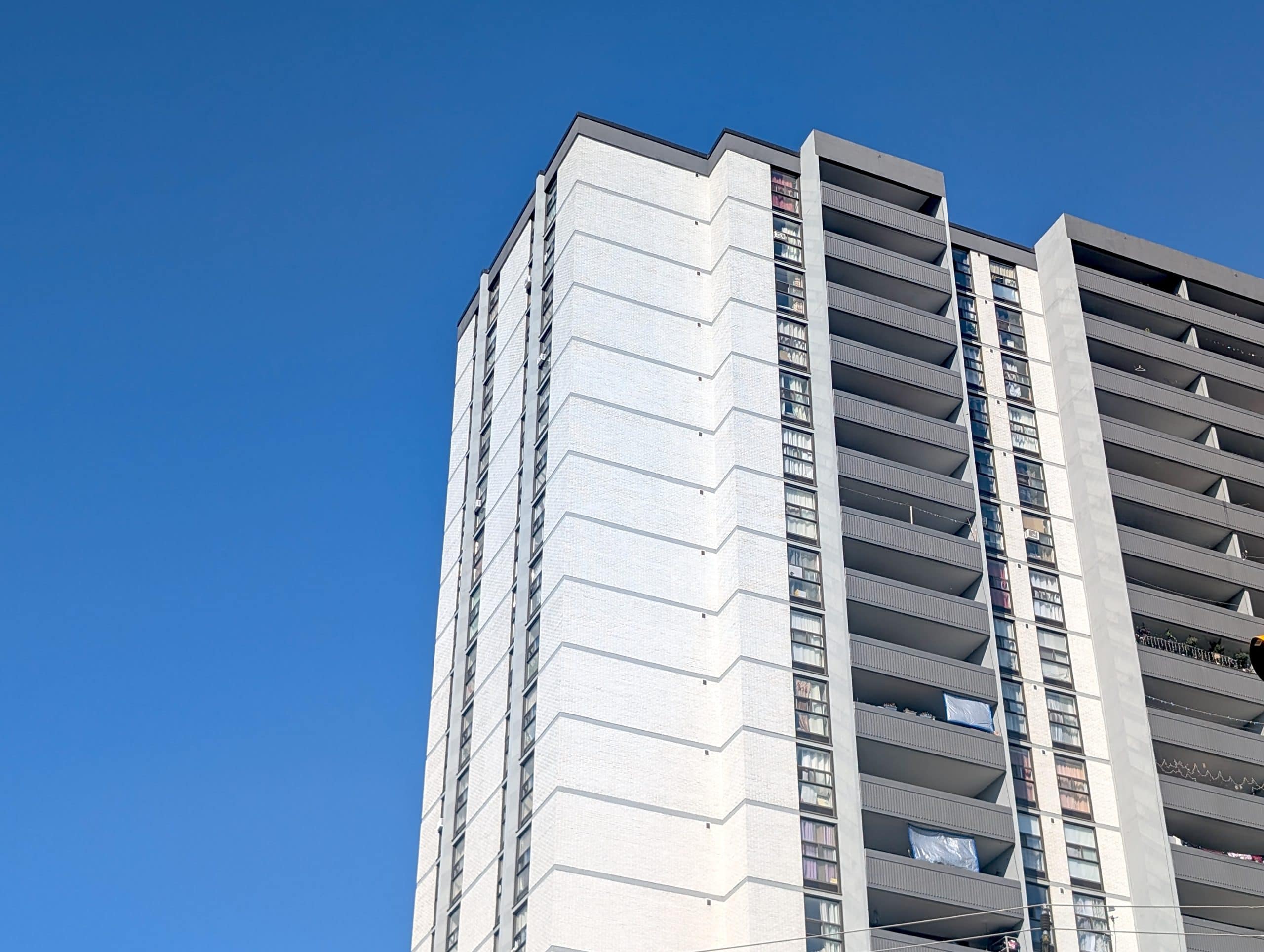
Blinds and sheets cover windows and balconies of apartment buildings along Kipling Avenue, as residents try to block out the summer sun and keep their homes cooler.
What is the province doing about heat vulnerability
This past July, a three-year-old amendment to Ontario’s Residential Tenancies Act finally kicked in: now, tenants have the explicit right to install and use a window or portable air conditioner when the landlord does not provide cooling.
The change addresses one problem Beena and Peter say they faced for years: being told they were not supposed to use portable units.
The tenant must notify the landlord in writing. The air conditioner must be installed safely and must not damage the property. If electricity is included in the rent, the landlord can raise it to cover higher bills — but rent hikes can’t exceed the actual electricity cost or stay in place when the tenant removes the unit or stops using it for the season.
But even when a charge accurately reflects electricity use, it may remain unaffordable for a senior or another tenant living on a fixed income, according to Dania Majid, a staff lawyer and director of the tenant duty counsel program at the Advocacy Centre for Tenants Ontario.
Majid says her organization has heard concerns about lump-sum charges, administrative fees and installation requirements associated with air conditioners. Because the provincial provisions are new, many disputes have not yet been considered by the Landlord and Tenant Board.
She’s one of many tenant advocates that want Toronto to pass a legal maximum indoor temperature of 26 C that applies to all rental units, similar to the legislated minimum during colder months.
“We wouldn’t do that to them in the winter,” Majid says. “So why are we doing this to them in the summer?”
But the Federation of Rental-housing Providers of Ontario says a legislated maximum indoor temperature would raise significant logistical and financial questions.
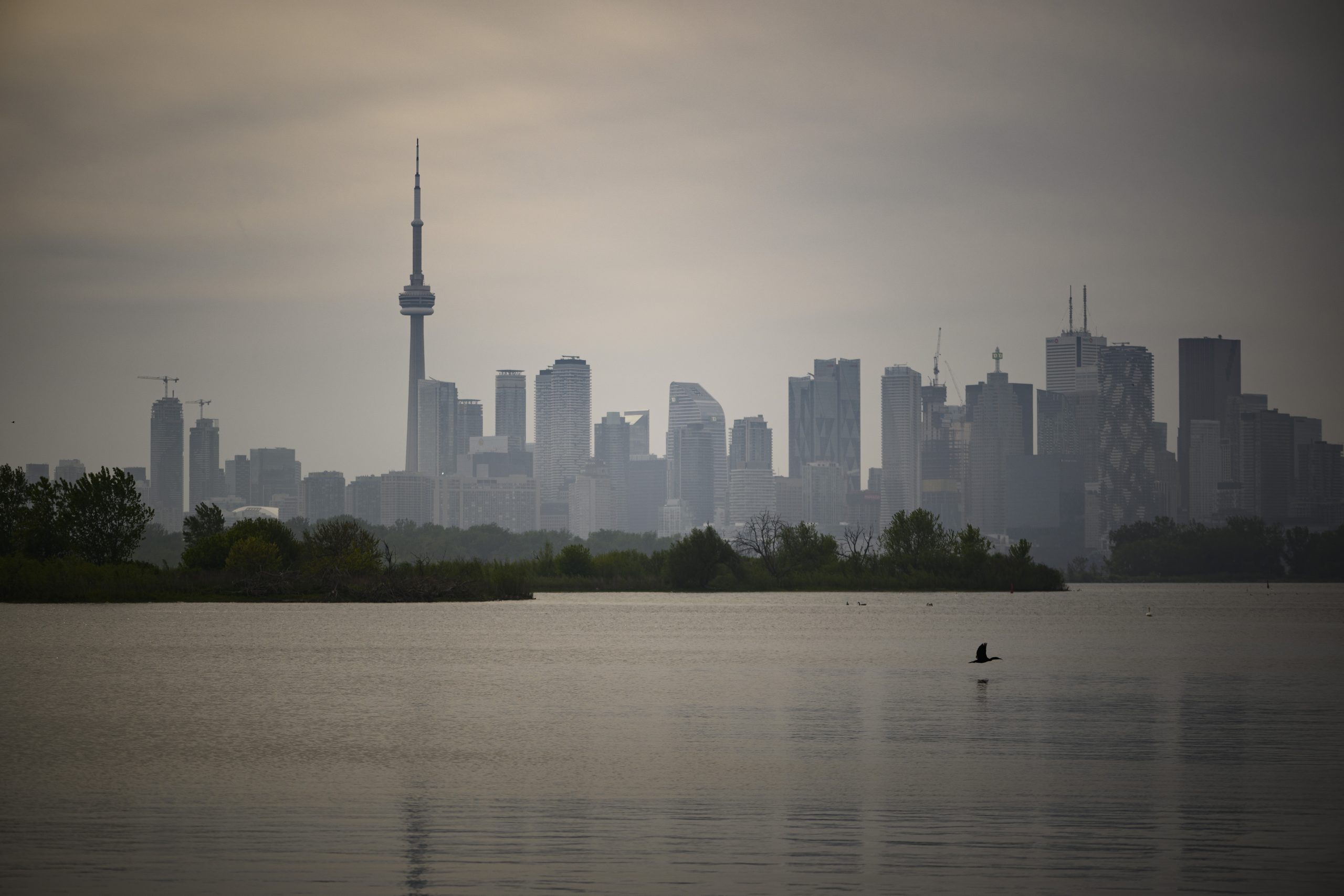
Toronto is one of the cities moving toward a maximum indoor temperature standard for rental housing, as tenant advocates push for stronger protections from extreme heat while rental providers warn that aging buildings may need costly upgrades to meet new cooling requirements. Photo: Christopher Katsarov Luna / The Narwhal
The federation agrees tenants need protection from extreme heat, Marielle Hossack, the federation’s director of policy and regulatory affairs, says. That’s why it supported the air-conditioner changes to the Residential Tenants Act, giving tenants the flexibility to buy their own. Even so, some older buildings may not have the electrical capacity to power an air conditioner in every apartment at the same time.
Honouring a maximum temperature could require electrical upgrades, new mechanical systems and other major retrofits, she says. And that work would require time, planning, skilled labour and significant investment.
“Requiring landlords or housing providers to absorb the electricity cost is not a sustainable solution where electricity is included in rent,” she says.
Governments should instead provide targeted energy or income assistance to low-income or medically vulnerable tenants, Hossack says.
The Ontario Ministry of Municipal Affairs and Housing did not respond to questions by publication time.
The long, long road to a maximum temperature for Toronto renters
Toronto does not currently have a maximum temperature that applies to all rental units.
When a landlord already provides air conditioning, it must be operated from June 1 to Sept. 30 and keep the unit at no more than 26 C. But if no air conditioner is installed when the tenant moves in, no maximum temperature applies.
As of June 1, apartment buildings that don’t offer in-unit cooling must keep at least one existing indoor amenity space at or below 26 C during the summer. This only applies to buildings that are three or more storeys and 10 or more units and does not apply if construction is needed to meet the requirement.
Toronto city council seems to be moving toward a broader maximum indoor temperature by-law, but slowly. In June, the city manager was instructed by council to report back by June 2027 on findings and key considerations for a by-law and implementation plan.
The city has also asked Ontario to establish a province-wide maximum temperature of 26 C and to prevent landlords from increasing the rent above the normal annual limit if the city does pass a by-law. Right now, landlords can hike rent if it’s meant to comply with municipal by-laws.

Beena and Peter Ruparelia have lived in their home in Rexdale since 2015. Their northwest Toronto neighbourhood has been identified as particularly vulnerable to extreme heat, with older housing, limited tree cover in some areas and overlapping social and economic pressures.
In an email to The Narwhal, a City of Toronto spokesperson wrote equity is central to the city’s Heat Relief Strategy.
“We continue to explore new ways to strengthen the strategy and help residents stay safe during periods of extreme heat,” it says.
The city offers cooling spaces at libraries, community centres and civic centres, along with more than 700 park drinking fountains and mobile water trailers. Residents also have access to pools, splash pads, wading pools and supervised beaches, with some pools extending hours during heat warnings.
Toronto is also expanding programs intended to provide and install up to 2,400 air conditioners for low-income and vulnerable residents.
For Beena and Peter, organizing with other tenants has become part of that solution.
After years of feeling that she and her husband were dealing with the conditions in their home alone, they joined the Toronto Tenant Union. She says she wants governments to hear directly from the people living through extreme indoor heat.
“The first thing is that they need to come and speak to the landlords,” she says. “They need to fight on our behalf.”
The Narwhal’s reporters are telling environment stories you won’t read about anywhere else. Stay in the loop by signing up for our free weekly dose of independent journalism.
From The Narwhal | News on Climate Change, Environmental Issues in Canada via This RSS Feed.