

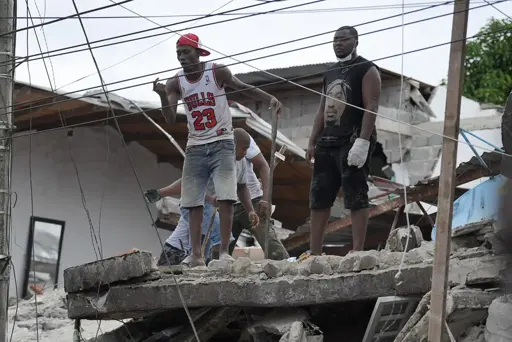
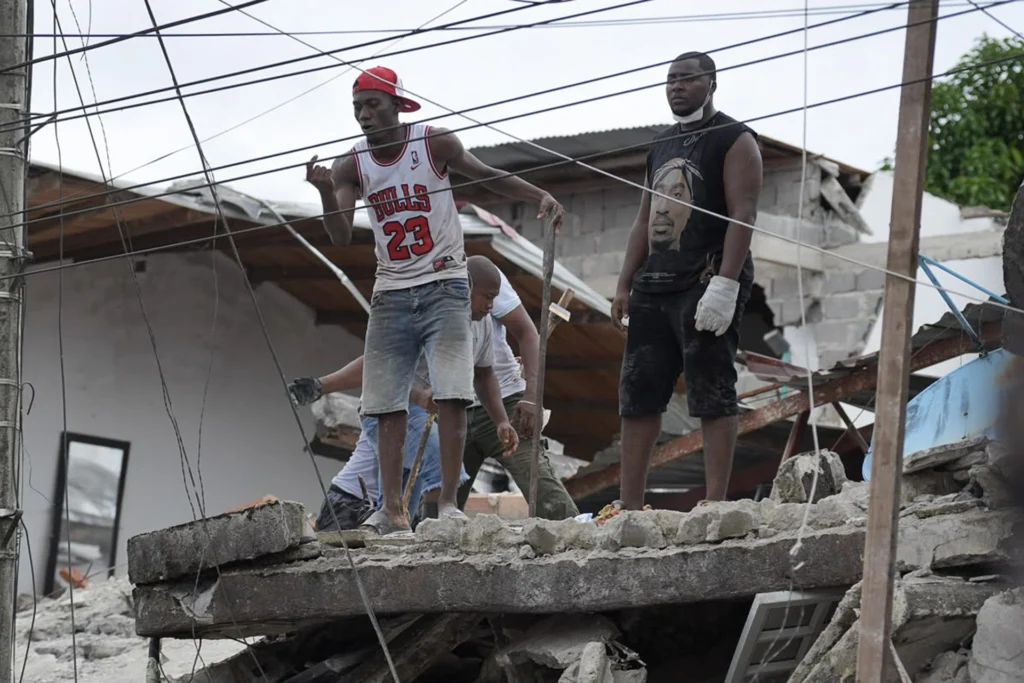
Residents of Quibdó, capital of Chocó department, face a severe humanitarian crisis after the magnitude 7.4 earthquake, denouncing the lack of concrete material assistance from the Colombia’s government while families sleep outdoors amid the risk of building collapse.
The August 10 seismic event left 239 people dead, 3,755 injured and 287 missing, according to the National Unit for Disaster Risk Management (UNGRD). The official balance records 49,214 people affected, 24,324 families damaged, 140 collapsed buildings and more than 54,000 homes destroyed or damaged across the impacted departments.
The consequences of the earthquake have severely affected the housing infrastructure of Quibdó, where many homes present intact external facades but suffered the total collapse of their internal structures.
RELATED: United Nations Joins Colombia’s Earthquake Emergency Response
The consequences of the earthquake have affected the housing infrastructure of the Chocó, where many houses have intact external facades, but suffered the total collapse of their internal structures.
Buildings located near slopes and rocky outcrops lost their support walls, triggering the subsequent sliding of the constructions and making re-entry impossible due to unsafe ground conditions.
#Colombia | Indigenous Wounaan and Emberá communities in Chocó face critical conditions following the 7.4-magnitude earthquake, as damaged communications and infrastructure leave remote areas increasingly isolated.Authorities have yet to determine the full extent of casualties… pic.twitter.com/T8r0iWwy6V
— teleSUR English (@telesurenglish) August 12, 2026
The national government decreed three days of national mourning for the victims, but residents of Chocó insist that symbolic gestures are not enough. The absence of concrete solutions for water supply and electricity in sectors such as Corosito has compounded the desperation of families who refuse to abandon their damaged homes for fear of losing their material goods.
The community demands the effective and immediate presence of state institutions through real assistance that resolves the loss of housing and livelihood of the affected families.
Ver esta publicación en Instagram
Una publicación compartida de teleSUR English (@telesurenglish)
Communities Organize Relief
In response to the institutional vacuum, social organizations and Human Rights defenders installed a transitory humanitarian camp with a community kitchen in the Olaya Herrera Park of Pereira, department of Risaralda, to assist the earthquake victims given the overcapacity of municipal shelters and the lack of effective response from the national government.
The social movement in Pereira enabled community kitchens to ensure breakfast, lunch and dinner for those affected, as well as basic medical assistance focused on children and pregnant women. The collection of food, supplies and medicines comes from the voluntary contribution of citizens, allowing the formation of aid packages for distribution among those sleeping outside the enabled shelters.
“It has been the social organization and the popular movement that have been able to rise to the needs that our people of Pereira have today, because what we see is that there is an institutional system that has not had the capacity to guarantee the needs that the city has today as a result of the earthquake,” stated a member of a human rights defense organization in the area.
The activist denounced the absence of concrete solutions for drinking water and electricity in sectors such as Corosito, in addition to the residents’ rejection of abandoning their damaged homes for fear of losing their material possessions.
The popular collectives will maintain logistical and nutritional support activities indefinitely in the Olaya Herrera Park, subject to the supplies donated by the population to sustain the emergency response. This community solidarity, born from the failure of state institutions, demonstrates once again that in moments of crisis the organized people become the first line of defense for the most vulnerable, while the Colombian government faces growing criticism for its slow and selective response to one of the worst natural disasters in the country’s recent history.
From teleSUR English via This RSS Feed.