

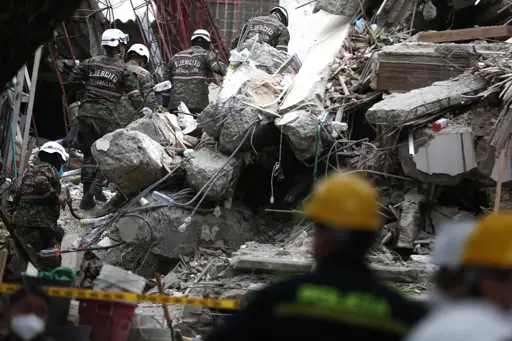
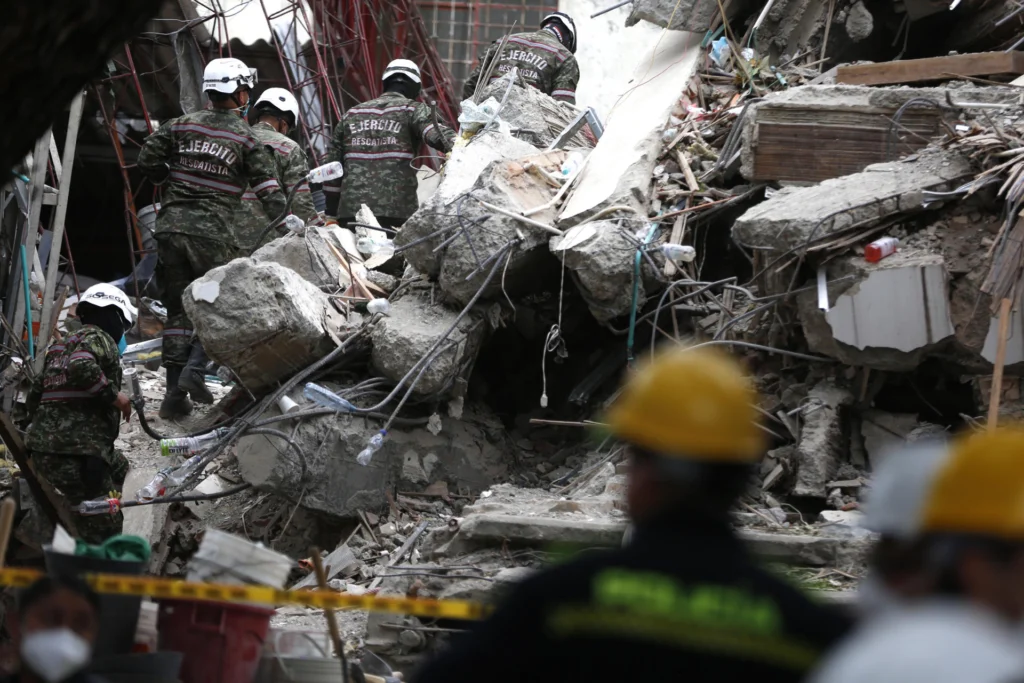
The United Nations is collaborating with Colombia authorities to complement the emergency response after the devastating earthquake that left 239 dead, 3,755 injured and 287 missing, according to the latest official balance.
The quake, which struck on Monday, August 10, with its epicenter in San José del Palmar, Chocó, and a magnitude of 7.4, has affected 49,214 people and left 24,324 families damaged, according to the National Unit for Disaster Risk Management (UNGRD).
Within the joint effort, the United Nations Children’s Fund (UNICEF) is providing water, sanitation and hygiene supplies to benefit 25,000 people in Chocó and Buenaventura, while coordinating child protection actions with the Colombian Family Welfare Institute.
RELATED: Mexican Rescue Brigade Los Topos Arrives in Colombia
“With more than two decades of presence in Chocó, continuous presence in Buenaventura and more than 76 years in the country, UNICEF is coordinating its response with national and local authorities and with United Nations partners, and is prepared to expand its support to ensure that children and their families have access to vital assistance and protection,” the agency stated.
María José Torres, UN resident coordinator in Colombia, noted on Tuesday that the magnitude of the earthquake exceeds preliminary estimates and that the disaster assessment is continuously updated as reports arrive from the regions.
The UN Office for the Coordination of Humanitarian Affairs (OCHA) warned of persistent relevant information gaps, noting that the total number of victims, all shelter sites and the specific requirements of each locality have not yet been precisely determined.
My heartfelt condolences to those who have lost loved ones in the deadly earthquake in #Colombia.
While search and rescue efforts are underway, the health priorities are to treat the injured, ensure essential health services are maintained in the affected areas, and assessing… pic.twitter.com/hmsG7FsFj2
— Tedros Adhanom Ghebreyesus (@DrTedros) August 12, 2026
UNICEF Delivers Vital Supplies
According to Torres, the attention priorities cover shelter, health, food security and protection. Although search and rescue remains the main task, humanitarian partners are already operating on the ground and the United Nations has emergency supplies previously positioned to be transferred to the affected zones.
The natural catastrophe has caused massive consequences for the country’s housing infrastructure. According to the latest report, 9,215 homes were completely destroyed, 45,457 residential buildings were damaged and 140 buildings collapsed in the impacted departments.
The impact on public services and community facilities covers 1,667 educational centers, 530 community centers and 188 health centers damaged, in addition to 43 aqueducts and 29 banking entities with registered damage. The road and transport network also presents severe damage across 129 roads, 20 vehicle bridges, one pedestrian bridge and two airports.
Following the 7.4-magnitude earthquake that struck western Colombia, UNICEF is scaling up its response to support affected children and families in the department of Chocó and the city of Buenaventura (on the Pacific coast).
Read more.
https://t.co/zAziz3jRie
— UNICEF (@UNICEF) August 12, 2026
The seismic event registered on August 10 in Colombian territory had its epicenter in San José del Palmar, Chocó, and reached a magnitude of 7.4, becoming one of the most destructive earthquakes in the country’s recent history.
The UN system’s deployment underscores the scale of the humanitarian challenge facing Colombia, where rescue teams continue searching for survivors while the country begins the long process of assessing damages and planning reconstruction in the affected regions.
From teleSUR English via This RSS Feed.