

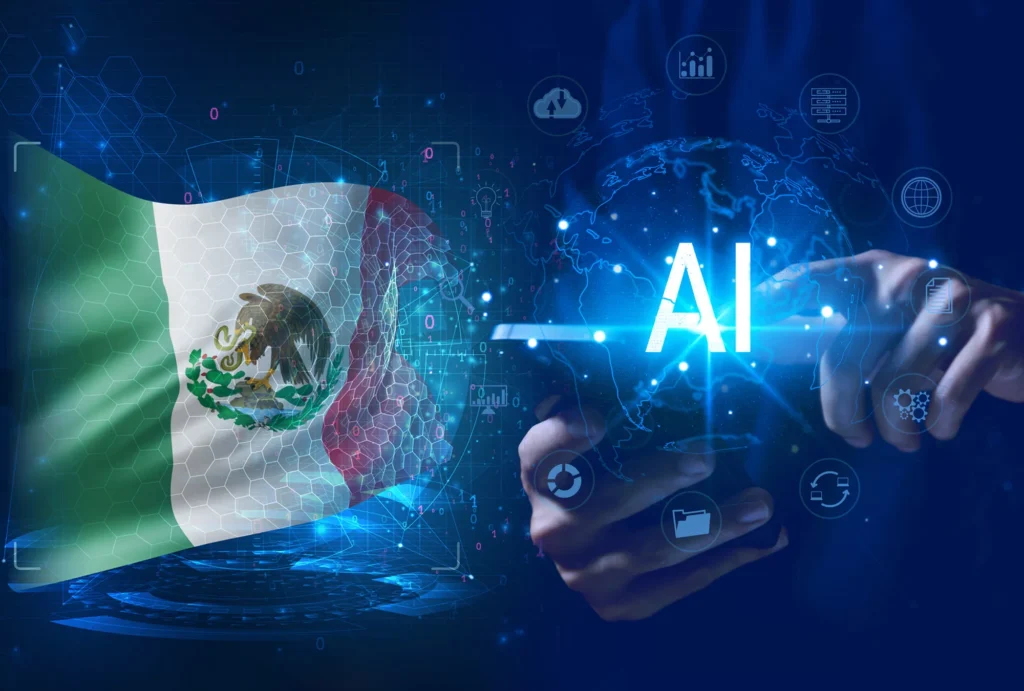
The use of artificial intelligence (AI) is expanding among Mexican companies, with 55% of businesses using these tools regularly. However, only 6% of organizations report a significant economic impact from these technologies, according to the report Mexico AI Pulse: From Ad-Hoc Adoption to Organizational Implementation, released this Wednesday by Endeavor Data Unit, with support from Xertica.ai.
RELATED:
Mexico Doubles High School Enrollment Target to 400,000 Nationwide
The analysis, based on 163 Mexican organizations with more than fifty employees, indicates that technological expansion has not yet translated into a widespread transformation of corporate operations. Only 31.1% of companies report broad integration of AI into their business processes, and 71% do not recognize any concrete economic value.
Vincent Speranza, CEO of Endeavor Mexico, explained this reality when assessing the current scenario: “AI is already present in organizations, but it is not yet part of their actual architecture.
#IA y transformación laboral, factores que obligan a replantear la #educación en #México: #IMCO
En México el 95% de las organizaciones prevé que la inteligencia artificial modificará sus operaciones, advirtió el Instituto Mexicano para la Competitividad. pic.twitter.com/ArYzIFi9tK— contacto.news (@contactonews1) August 11, 2026
The text reads, “AI and labor transformation, factors that force a rethinking of #education in #Mexico: #IMCO In Mexico, 95% of organizations expect that artificial intelligence will modify their operations, warned the Mexican Institute for Competitiveness.”
The advantage will not lie in who adopts the most tools, but in who is able to integrate them into their data, processes, talent, and incentives to transform them into an institutional capability.”
The AI Sophistication Index places the analyzed ecosystem at an average of 45.1 points out of 100. Half of the organizations remain in the “Exploring” stage, and only 3% reach the “Leading” category. Furthermore, only 12% consider their data to be of sufficient quality to scale solutions.
The main barriers to digital transformation are cybersecurity and privacy (64%), talent shortage (60.9%), and budget (57.8%). Despite this, 85% recognize integration opportunities, so the challenge is to develop the infrastructure, governance, and talent necessary to generate results at scale.
#FromTheSouth News Bits | In Mexico, navy vessels and local workers are battling a massive sargassum seaweed invasion that is smothering beaches across the Riviera Maya and Tulum. pic.twitter.com/LD3rfA4dl0
— teleSUR English (@telesurenglish) August 11, 2026
From teleSUR English via This RSS Feed.