

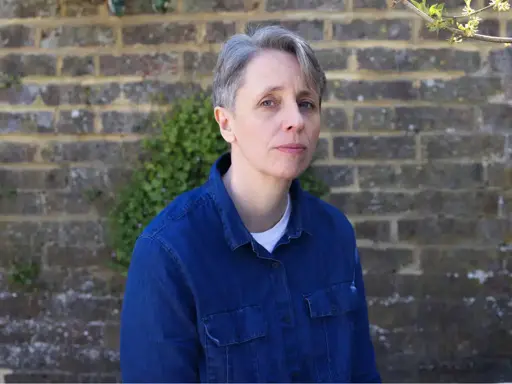

This weekend I had the unfortunate luck of stumbling across an opinion piece in the Times by the academic, philosopher and transphobe Kathleen Stock. In a nutshell, Stock argues that Gen Z women are pretending to have chronic illnesses and invisible disabilities, and that using walking sticks has become some sort of trend influenced by social media.
Raising suspicion in a society that already dismisses women’s health
As a millennial woman with hypermobility syndrome, who may one day need a walking stick – I had to use one during the final weeks of my pregnancy – I was immediately incensed. I am angry that the Times would run such a shockingly ableist piece at a time when disability and chronic illness advocates have only just managed to get mainstream media to report on the huge problem that is women’s health symptoms being dismissed.
Our national healthcare system is broken, even more so for women and people with uteruses, with national and independent inquiries – such as that published by Baroness Amos in June – exposing what we have been arguing about all along: medical professionals dismiss women’s health concerns and gaslight us into believing that the root of our symptoms is anxiety.
This dismissal of women’s symptoms has serious consequences. I constantly come across news reports in which young women have been told by their GPs that they have anxiety, only to find out they have a serious illness like cancer.
Blaming women’s health symptoms on anxiety
It was therefore disappointing to see Stock use that same line: that the symptoms Gen Z women are experiencing are caused by anxiety. She writes:
When you dig into their explanations, a few officially medical-sounding words tend to recur: postural tachycardia, joint hypermobility, fibromyalgia, chronic fatigue. What these syndromes all share is a set of non-specific symptoms, versions of which are familiar to all of us: dizziness, a racing heart, exhaustion, brain fog, muscle pain. And of course, many of these are also symptoms of anxiety.
What Stock fails to understand (or perhaps has not even tried to research) is that the conditions she refers to – postural tachycardia, joint hypermobility, fibromyalgia, chronic fatigue – do have non-specific symptoms, because they are chronic illnesses that cause a wide array of fluctuating symptoms that most GPs struggle to piece together.
Hypermobility syndrome, for example – the condition I have – is known as a spectrum disorder because there is such a wide range of seemingly unconnected symptoms that affect sufferers at varying levels.
I was once that young woman who went to numerous doctors with a seemingly unconnected set of symptoms that included chronic fatigue, joint subluxations, neuropathy, random rashes and skin lesions, only to be told it was anxiety. I was fortunate to be able to see a consultant rheumatologist, as at the time I lived in Qatar and my father’s work provided medical insurance.
In the space of 40 minutes, after a physical examination and taking my family and medical history, I had a diagnosis: hypermobility syndrome. I can tell you it was not anxiety causing these symptoms, but the other way round, as the doctors I saw prior had told me it was all in my head.
A disproportionate number of women are affected by chronic illnesses
Most women in the UK are not as fortunate as me to see a rheumatologist privately. Most people wait 10 to 20 years to get their hypermobility spectrum disorder or Ehlers-Danlos Syndrome diagnosis. 70% of those diagnosed are women. In the meantime, Kathleen, while we are waiting one to two decades for a diagnosis, we have to put up with these “unpleasant feelings” and do our own research.
It is a medically known fact that conditions like hypermobility syndrome, Ehlers-Danlos Syndrome, POTS, fibromyalgia and ME disproportionately affect women and there has been a lack of funding into medical research into these conditions, and into why they affect women and people with uteruses more than men. So yes, Kathleen, for this reason, it is “a disproportionate number of women” to which this applies.
The severity and nature of the symptoms also vary from hour to hour and day to day. I could go to the gym and do a deadlift today; tomorrow, I could have such debilitating fatigue that I am bed-bound. So yes, Kathleen, I do have a “strangle unstable body” that “intermittently require[s] support.”
It is therefore not rocket science to understand that a woman experiencing such symptoms may take a walking stick out with her because she may be able to walk or roller skate (the example she used) right now, but in an hour’s time could be experiencing fatigue, neurological symptoms or pain and need her walking aid.
Underinvestment in medical research
The underinvestment in medical research into these conditions means researchers do not know the reason why most of those with these illnesses are women and people with uteruses. However, as part of a recent article I wrote for Stylist, I spoke to Sara Hirsh Bordo, author of Autoimmunity and the Good Girls, who found correlations between childhood trauma, experiences of sexual assault or rape, and caregiving, and women developing these illnesses.
Stock writes that, if a person spends a lot of time sitting or lying down, they become more unfit and feel worse, and recommends encouraging these young women to “ditch the props.” Only an able-bodied person would write such a thing. When you have a chronic illness, trying to push yourself to do more only makes your symptoms worse, often leading to a crash.
Stock perpetuates stereotypes about disabled people
What Stock seems to have an issue with is the fact that women who have chronic illnesses do not fit into society’s idea of what a disability should look like.
She calls it “social contagion”; I call it women finally finding community online and sharing tips on what to wear with their mobility aids and how to bedazzle their walking sticks. Disabled women want to look nice too, Kathleen, especially when the fashion industry does not cater to us.
To be honest, Stock’s take on young disabled women does not surprise me. As others have pointed out, she has a history of trans exclusionary views and it seems she has now moved onto the disabled community. What is to be gained out of belittling and judging the most marginalised and vulnerable groups in society?
A feminist is someone who should have other women’s backs. With a platform in one of the UK’s biggest newspapers, one would hope a writer like Stock would use that to raise awareness about chronic illness and disabilities, instead of trying to cast more doubt and suspicion in a society that already struggles to believe women.
Featured image via the Guardian
From Canary via This RSS Feed.