

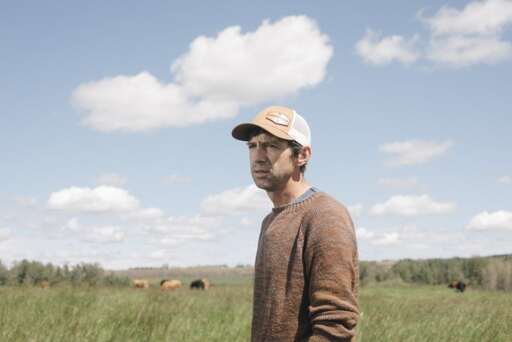
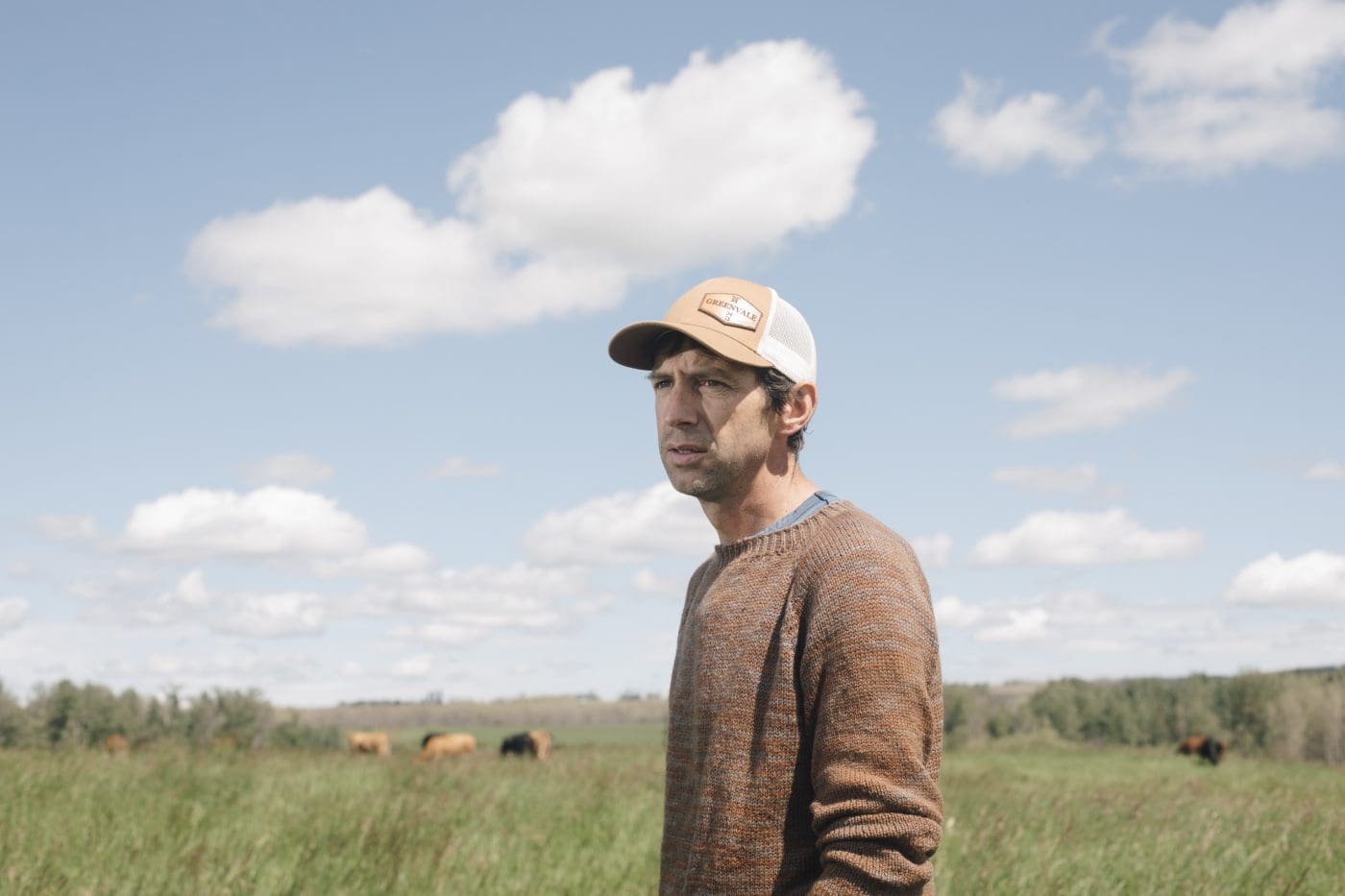
Assar Grinde is the kind of man whose calm is infectious, even as he rattles off an encyclopedic knowledge of facts about drought, water and the impacts of fracking on the region he calls home. A cattle rancher by trade who studied geology at the University of Alberta, you get the sense he’d rather be tending his herd than fighting with regulators and oil and gas companies.
But on a Sunday in early July after a morning on the ranch, he sits in the back of his friend Daniel Iseli-Otto’s truck, sporting a sweater knit by Iseli-Otto’s mom, and talks about the reasons he can’t just walk away.
It started three years ago when Lloyd Creek — a tributary of the Blindman River, which runs through the land Grinde’s family has ranched for generations — dried up. It was something he’d never seen before and he says the oil and gas companies were still pulling water from the river.
“We wanted to make sure that the river didn’t dry up because we thought that was crazy,” Grinde says.
He and Iseli-Otto helped found the Blindman River Watershed Society and dove into the labyrinth of data used by the Alberta Energy Regulator and the equally bewildering bureaucratic divisions of the provincial government.
Summary
- Ranchers and residents in central Alberta are concerned about the amount of water being used for fracking in a region struggling with years of dry weather and drought.
- That fear has increased as companies seek access to vast quantities of fresh groundwater from the same source as drinking water wells.
- The owners of a bison ranch say the industrial activity has taken a significant toll on its herd and they plan to move.
It’s a funny time to be talking about the stress on the Blindman River watershed and the concerns he and Iseli-Otto have when it comes to the vast quantities of fresh water being used by oil and gas companies for hydraulic fracturing, or fracking.
The fields around Rimbey, Alta., about 200 kilometres north of Calgary, are saturated in surreal hues of green, stark against the grey skies of an abnormally wet July that has brought much-needed rain.
It’s a far cry from the drought-like conditions of May and June, conditions that have become all too common in a region suffering through a decade-long dry spell.
But the sudden rush of water isn’t enough to quell the concerns of area ranchers and residents who watched that creek run dry and their drinking wells drop. They say the rain isn’t enough to make up for how much has been lost from the aquifers — the deep underground natural reservoirs that feed those wells.
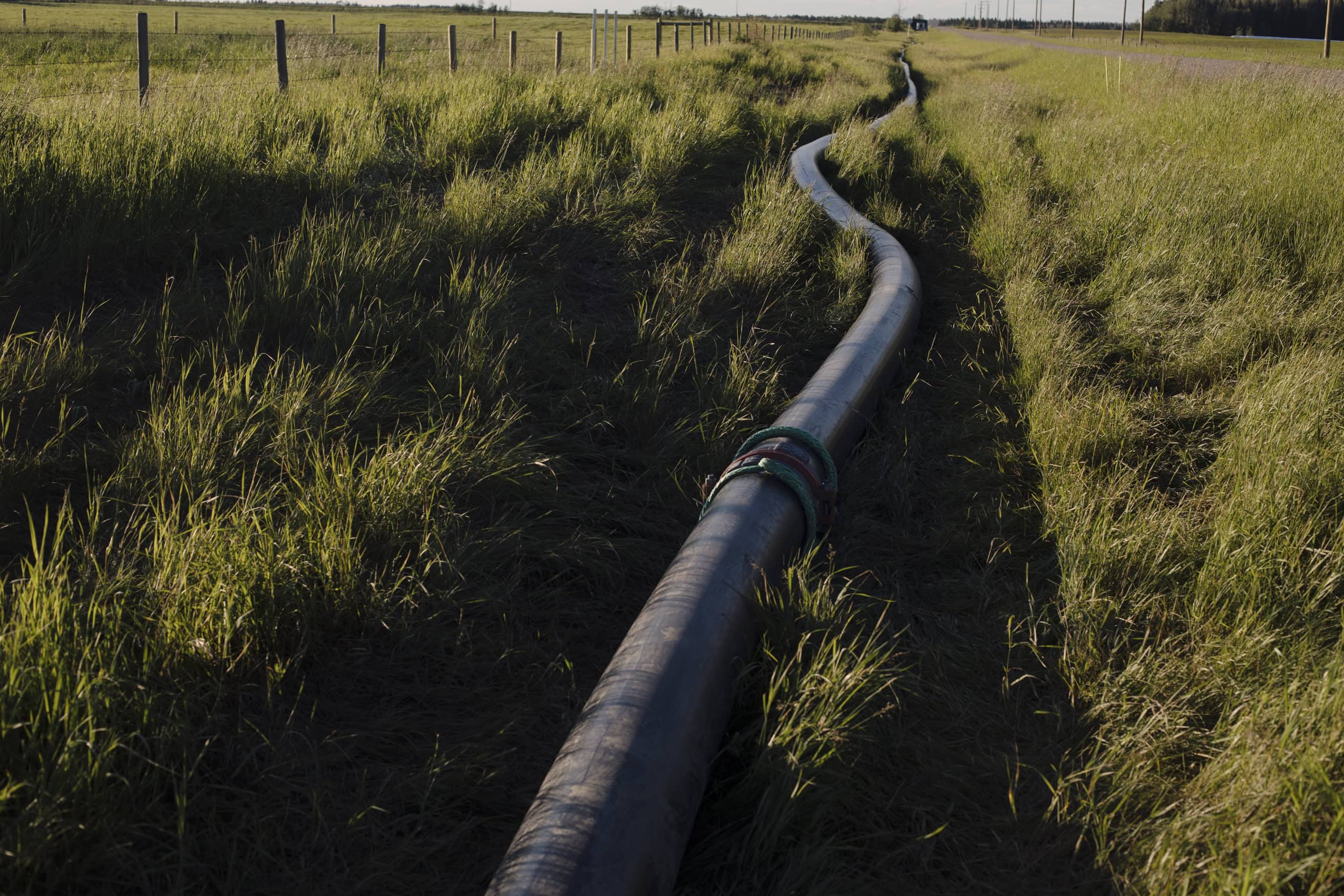
High-pressure hoses, which carry water from rivers, reservoirs and municipal ponds, are ubiquitous throughou the area. The fracking industry consumes billions of litres of water each year.
And then there’s the issue of oil and gas companies using billions of litres of water to crack open the earth beneath those green fields and exploit one of the hottest gas fields going, the Duvernay. They take surface water when there isn’t any to spare, and a fleeting moment of plenty might only make it worse, according to landowners who met with The Narwhal.
Grinde says promises were made by those companies, but rarely kept.
“ ‘We’re going to be taking the water at high flows when there’s too much of it, and we’ll store it and then use it when we need it.’ That was the industry’s sales pitch,” he says, driving through the region southwest of Edmonton along with Iseli-Otto. “But then we’ve been in a drought eight of the last 10 years, and they are still pulling water down.”
Dana Kreil, the chair of the nearby Medicine River Watershed Society, and a councillor for Lacombe County, says there’s no trust in the province to monitor the water and to intervene. Her society has bought its own monitoring equipment and is pressuring the government for solutions.
“You can’t fool the locals,” she says, making it clear she’s speaking for the watershed society and not the county. “There are people telling me the top of their runners wouldn’t get wet in that river. So you can’t tell me that those are acceptable levels for pumping from there.”
‘You only get conflict when there’s scarcity’
The Blindman River, as well as the Medicine, aren’t among the great waterways of the world. With enough momentum, it wouldn’t be hard to leap from one bank to the other. They are slow and meandering, but they are critical to ranchers and farmers.
They are also tenuous.
Neither river is fed by the mountain glaciers to the west. They rely instead on spring runoff and underground aquifers to keep water flowing. This year’s early-summer drenching is an indication of the feast and famine cycles expected to be the norm as the climate shifts — droughts with sudden onslaughts of rain. Grinde says his ranch received almost as much rain in June as it did the entire year previous.
For decades, fracking companies here have been injecting water deep into the ground to break up rock holding gaseous wealth in tight crevasses. That water, vast quantities of it, is almost entirely permanently lost to the water cycle as it remains trapped in the reservoirs that previously held gas. The practice was largely accepted by area landowners, but then water became scarce and drilling activity increased.
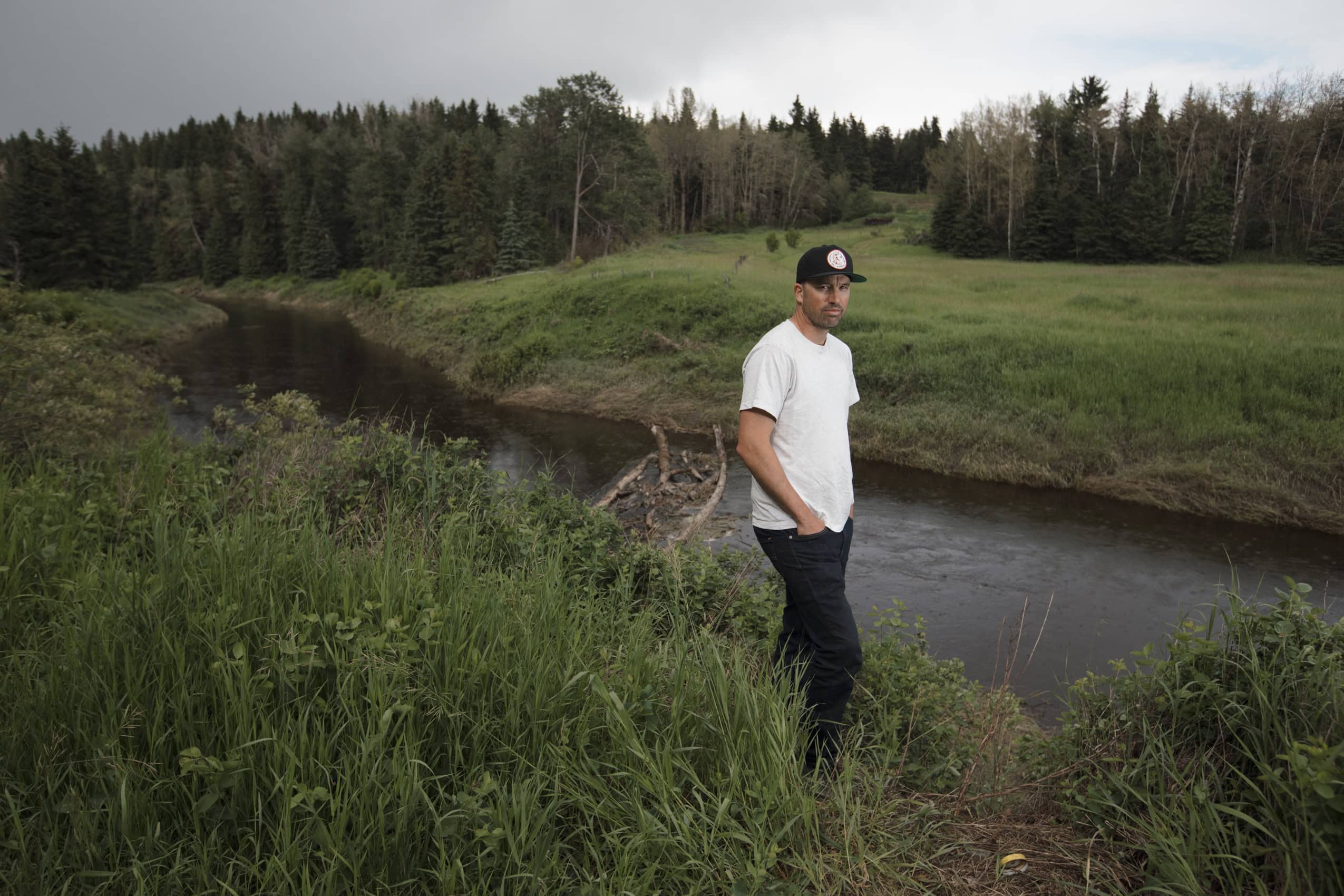
Daniel Iseli-Otto has watched the landscape around his home change over the decades — forests cleared for crops, and now waterways running dry due to drought and fracking. He’s concerned about the impact on rivers such as the Blindman, pictured here, concerns which have not diminished despite a wet summer.
“We haven’t had to care about fresh water because we never had this issue before,” Grinde says. “You only get conflict when there’s scarcity, and you have that imbalance between supply and demand, and that’s really what’s happened in the last few years.”
Once Grinde and others started paying attention, they discovered a system of what they say is weak oversight, weak data and regulatory capitulation.
Water use is overseen by both Alberta’s Environment Ministry and the energy regulator — depending on who’s using the resource — and Grinde says it leads to a lot of plausible deniability. Water monitoring in the area is based on a federal government sensor 50 kilometres away in Blackfalds, Alta., but Grinde says it doesn’t actually measure the flow of the river, just the water pressure. Even if it did, Grinde thinks the minimum flows established by the province to determine when a company can pull river water for fracking are too low.
The Alberta Energy Regulator did not answer a question about the monitoring situation on Blindman River, but said monitoring is used to inform when a company can divert water. It noted that monitoring can be seen on the Alberta Rivers site.
The regulator says companies are responsible for measuring flow if there is no station nearby.
“So then that kind of led us down this path of trying to figure out: ‘Do you guys have rules around it?’ ” asked Grinde.
For some in the area, the answer is more uncertain than they’re comfortable with.
Company wants to pull billions of litres from critical freshwater aquifer
In March, Spartan Delta, a fracking company operating in the area, applied for a water licence to pump a maximum of 475 million litres of water per year — about 2.4 million bathtubs’ worth — from the Paskapoo Formation, a vast underground freshwater reservoir that stretches south past Calgary and north past the Athabasca River near Fox Creek.
That raised red flags for those in the region already worried about a strained system.
Grinde wants the government to prevent oil and gas companies from accessing shallow fresh groundwater for fracking, implementing a ban now so that it doesn’t have to draft new rules in the midst of a full-blown crisis.
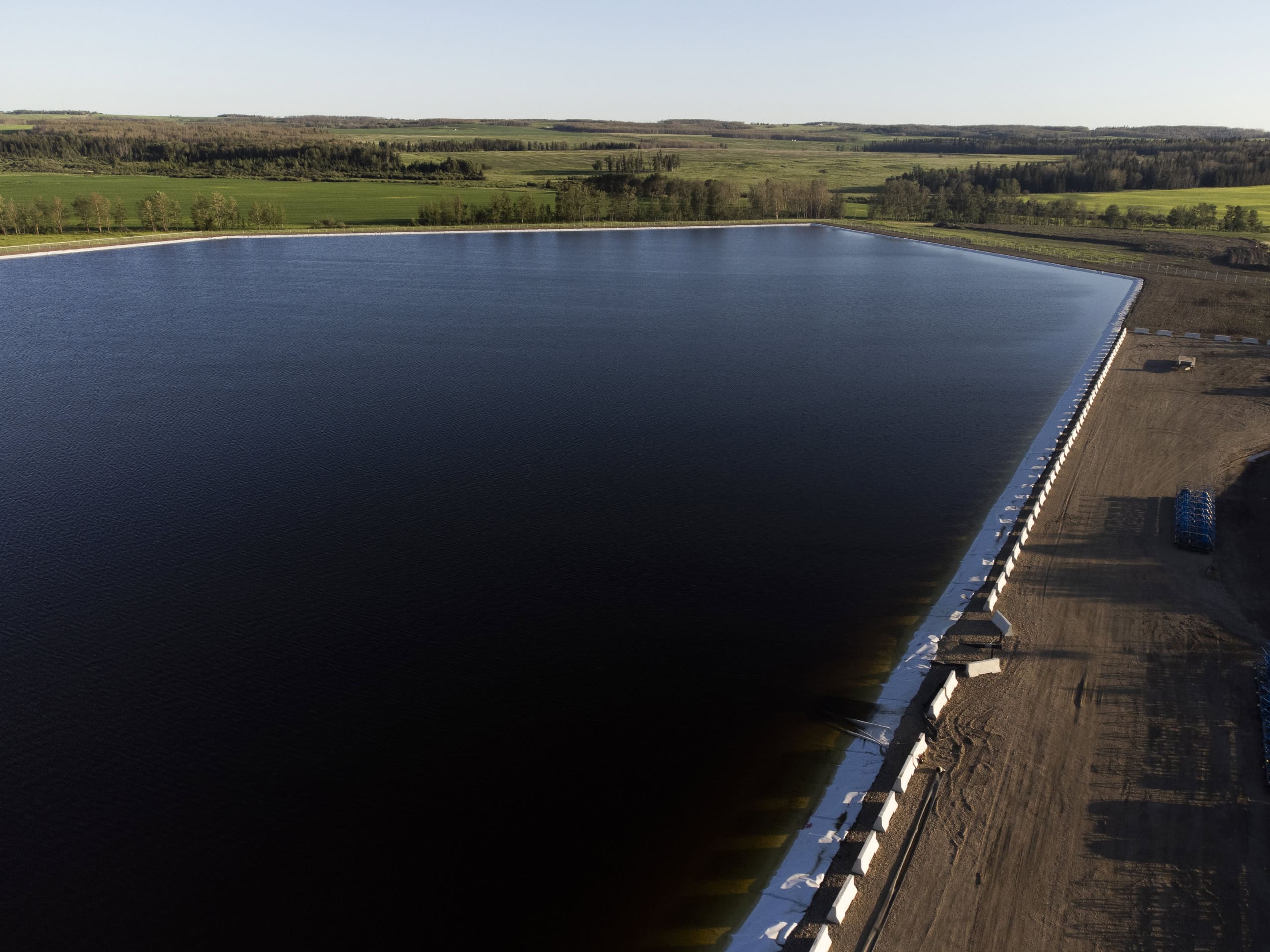
Fracking companies build and fill immense reservoirs like this one near Rimbey, Alta., with fresh water from rivers, creeks and aquifers. That water is pumped deep underground to fracture rocks to release oil and gas.
“Right now [the companies] say, ‘Well, we don’t have any more surface water available to get licensed, we’re just going to start drilling shallow groundwater wells,’ which is really concerning because we don’t know enough about the groundwater, and it’s so vital to everybody who’s living here,” he says.
Tens of thousands of wells tap into the aquifer for drinking water, as do towns across Alberta. According to a report by the federal government, the Paskapoo “supports more groundwater wells than any other aquifer system in the Canadian Prairies,” making it “the most significant supply of groundwater” in the whole region.
That same federal report — published almost 20 years ago — also cautioned the aquifer is slow to recharge and the amount of water that can be pulled from the aquifer might be limited and may have already been exceeded in 2008.
Spartan Delta already pumps water from the Medicine River, with hoses stretching along ditches and culverts throughout the region pulling water into massive reservoirs. It also uses recycled water from its operations, but that only accounts for approximately 10 per cent of its use.
In 2024, the latest year of data from the Alberta Energy Regulator, Spartan Delta used approximately 171 million litres of fresh water for fracking. Its latest application shows the company estimates it will need much more than this, around 1.5 billion litres per year for the next 10 years.
The company did not answer emailed questions but sent a statement instead, saying it is focused on “responsible, sustainable development of oil and gas.”
Spartan Delta said it adheres to all rules and regulations set out by the regulator, Alberta’s Environment Ministry and local bylaws.
“All of our water use is determined by Alberta Environment,” reads a portion of its statement. “The company receives temporary diversion approvals, term licences and has undergone several audits to validate we are in compliance with all of the terms of the water approvals. All resident concerns are evaluated by the appropriate regulating body of our activities during the approval process.”
The regulator also did not directly answer questions emailed by The Narwhal, but did provide information on water use. An unidentified spokesperson said the regulator reviews all water licence applications and considers risks to individuals and the environment. The spokesperson added there are restrictions on water use if levels drop below prescribed thresholds and that restrictions can also be implemented in response to “landowner concerns.”
Analysis on aquifers is conducted by hydrogeology experts, the email said.
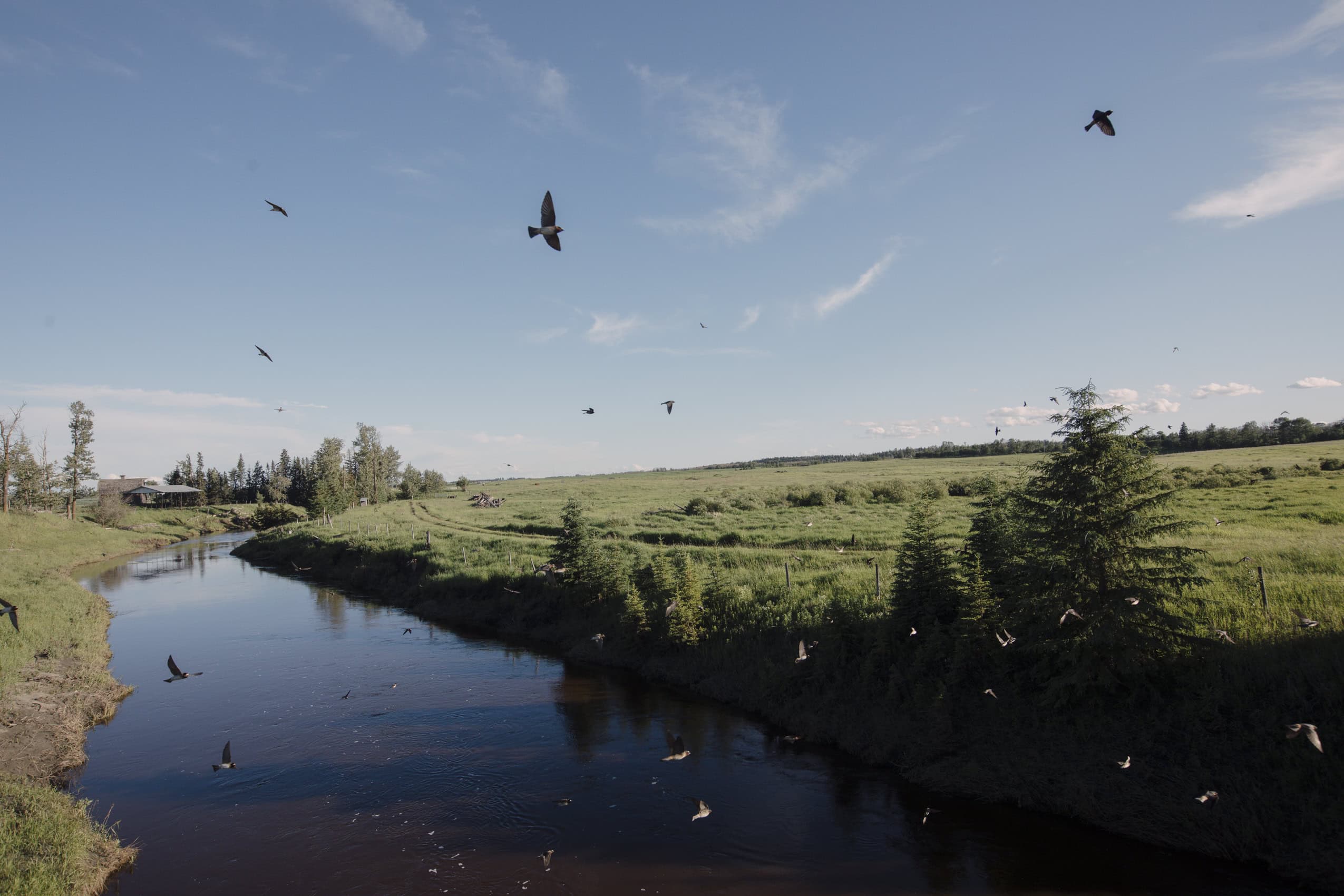
Swallows fly over the Blindman River, full after an abnormally wet June and July. The river is small, but critical to the ranchers and farmers who work in the area.
Though landowners are concerned about Spartan Delta’s water use, the company is a small player compared to others.
Parallax Energy Operations used almost one billion litres in 2024, while Canadian Natural Resources Ltd., one of the largest oil and gas companies in Canada, used 2.9 billion litres of fresh water for operations across the province. Overall, fracking consumed 20 billion litres of fresh water in 2024, up sharply from the seven billion litres consumed in 2013.
Grinde’s goal is to prove to the province and the regulator that the aquifer is dropping, realizing that officials could just turn around and say, well, it’s a drought.
“But even if it is a drought, the volume of water that the companies are using for fracking is accelerating that,” he says. “It could be that if there’s only a certain amount of water, you have to justify the use for certain things, right? So maybe you have to talk about hierarchy of use.”
Time and again, Grinde, Kreil and Iseli-Otto talk about the amount of work required to collect information, to get in touch with provincial officials, to make someone listen. Without decades of data, the response from officials and companies is: prove it.
“It’s the province’s job,” Kreil says. “It’s not the watershed society’s job. We’re volunteers.”
The provincial government did not respond to questions emailed by The Narwhal.
Alberta ranchers say their bison herd collapsed when a fracking company moved in
It’s easy to look out across the fields and patches of trees and imagine the landscape in central Alberta is largely unchanged, but Iseli-Otto, who works as a carpenter and has lived here his whole life, looks out his truck window and remembers bush where fields now stretch — a child’s wilderness transformed into cropland. It’s a reminder of how quickly things can change. How the immutable becomes a memory.
The change can be slow, or it can come on in a relative blink.
Tucked into a secluded corner of the countryside, is the home of Butch and Nicole Smith, two bison ranchers who have lived and worked in the area for decades, with the dream — shared by one of their daughters — of passing their ranch to the next generation.
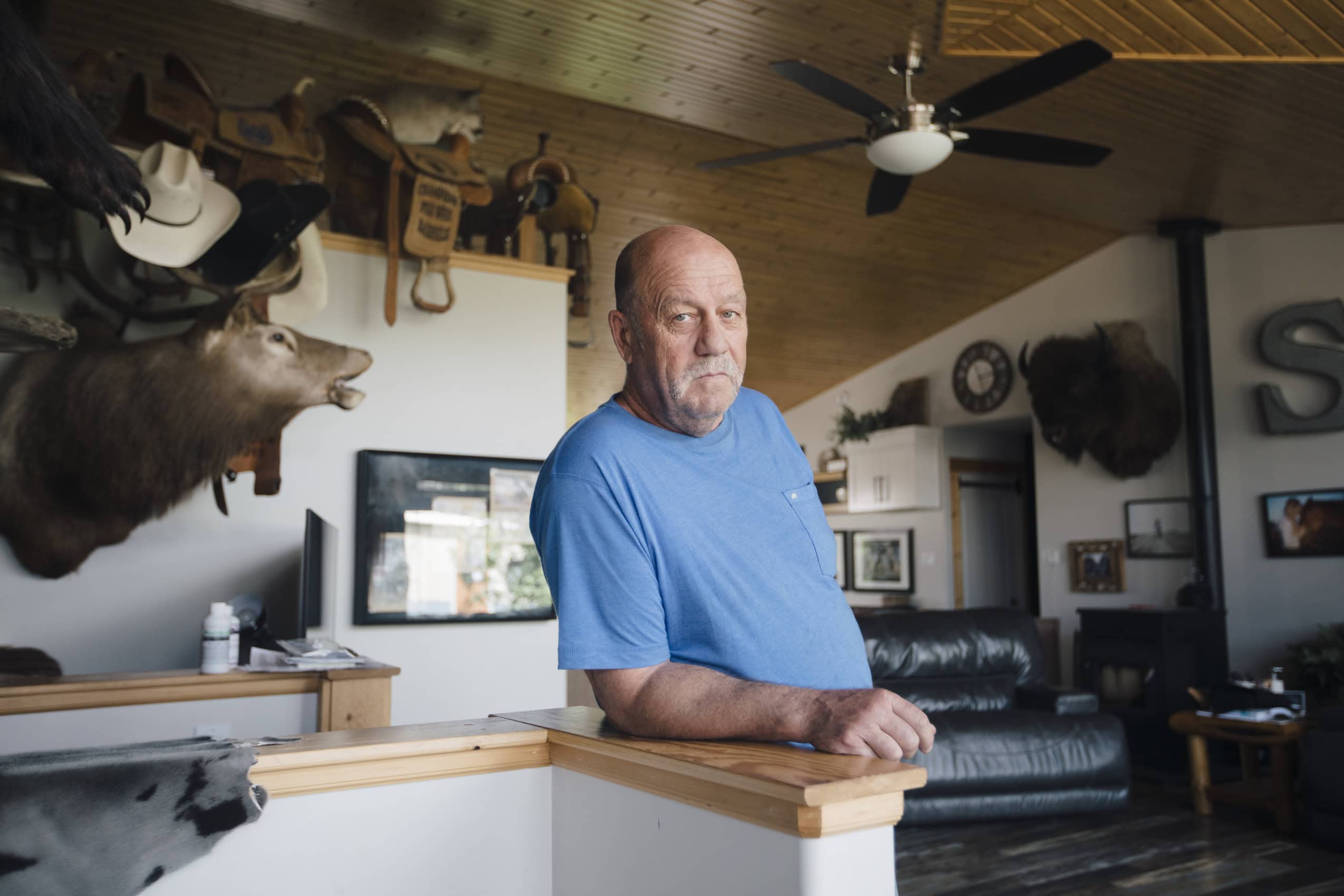
Alberta bison rancher Butch Smith says his animals’ routine was disrupted when a fracking company began constructing two large reservoirs across from his isolated property. He said the herd collapsed during construction and problems persist now that the company is pumping water. He and his wife, Nicole, plan to move.
Inside the home, a stuffed cougar looks down from its final perch above the kitchen, and the walls are covered in framed rodeo photos showing the victories of the family’s horses. Tail Light was the “team roping heading horse of the year.” Hickory, the “2011 pole bending horse of the year.” Their daughters have won an astonishing number of championship rodeo belts and saddles, all of which are on display.
A hint of the Smiths’ directness, and their frustration, comes in the form of a small sign by the kitchen table: “What (and I can’t stress this enough) the fuck,” it reads.
Over bison burgers and sausages, the Smiths talk about how Spartan Delta cleared the land across from their feedlot and built two massive reservoirs two years ago to store the vast quantities of water the company pumps. They talk about how construction and pumping for the reservoirs, which bisect a wetland, led to startling changes in their bison herd.
“We started seeing the wildest behaviour from them,” Nicole says. “They’re very habitual animals.”
The herd was refusing to move to the areas they usually feed, and there was a sudden drop in their herd.
Nicole says they had 240 pregnant cows in the fall of 2024, but only 194 live births.
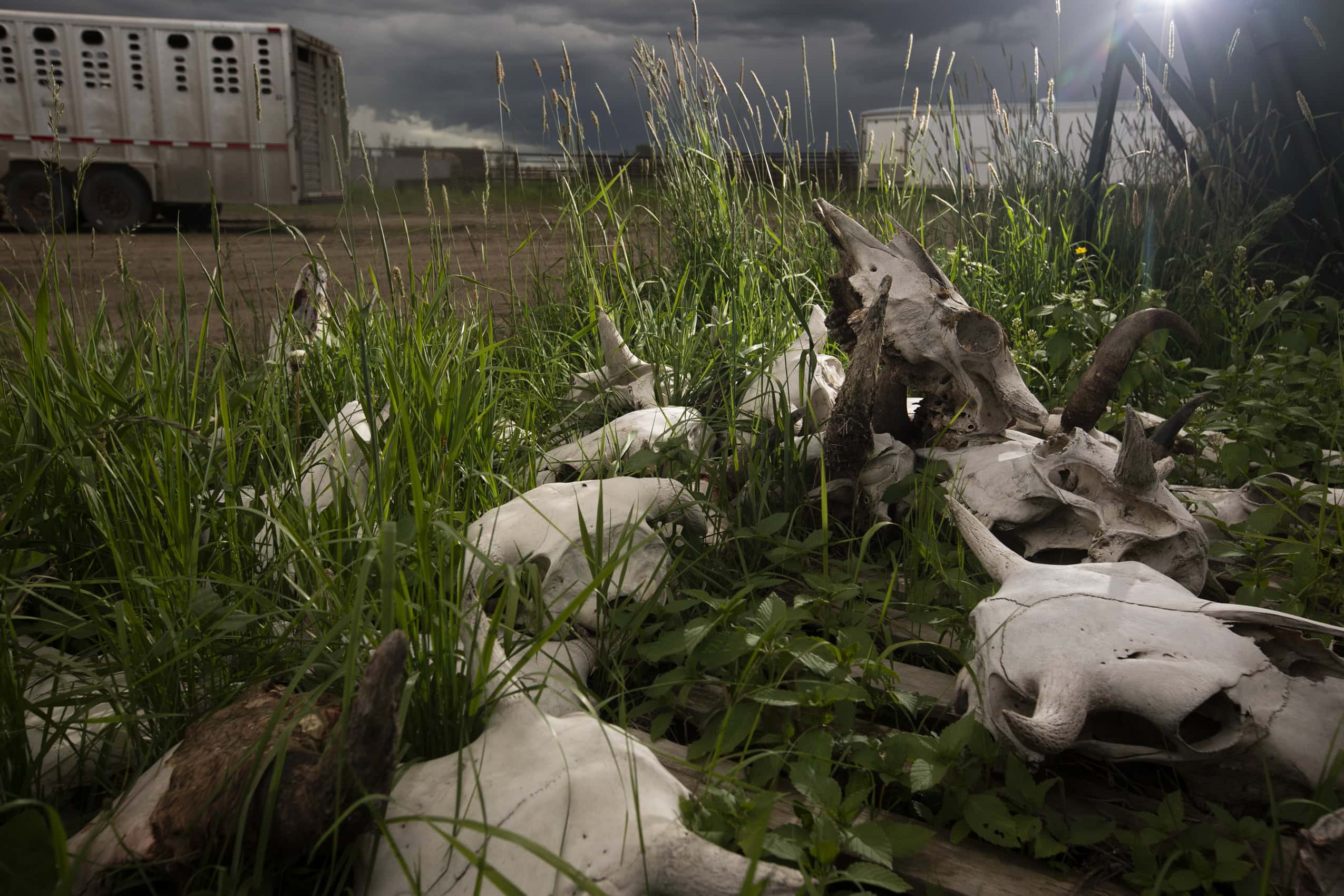
Heaps of bison skulls on the Smith family bison ranch near Rimbey, Alta. Butch Smith says increased mortality and reduced birthrates are making their operation untenable. The family also has concerns over the level in their water well, which they say has dropped.
“We had many dead calves, aborted calves and calves that starved as stressed mothers produce not enough milk,” she says.
The Smiths blame the stress of the industrial activity and the disruption to stubborn routines.
The Smiths, however, aren’t the types to sit back and watch. They say they’ve spoken with their MLA, Jason Nixon, with the premier, with two environment ministers — Rebecca Schulz and RJ Sigurdson — and Energy Minister Brian Jean. They are working with Ecojustice, an environmental legal outfit, and were invited by the Alberta NDP to sit in the legislature last spring after speaking with MLA Nagwan Al-Guneid.
Now, after two years of fighting, they’re losing faith and plan to move.
“Neither one of us is a — how do I say it — a sitter arounder. I’m not gonna sit here and be miserable. I can’t even walk anymore because both ways just reminds you of all of it,” Nicole says.
“I’m raging when I hit the end of my driveway — every single time.”
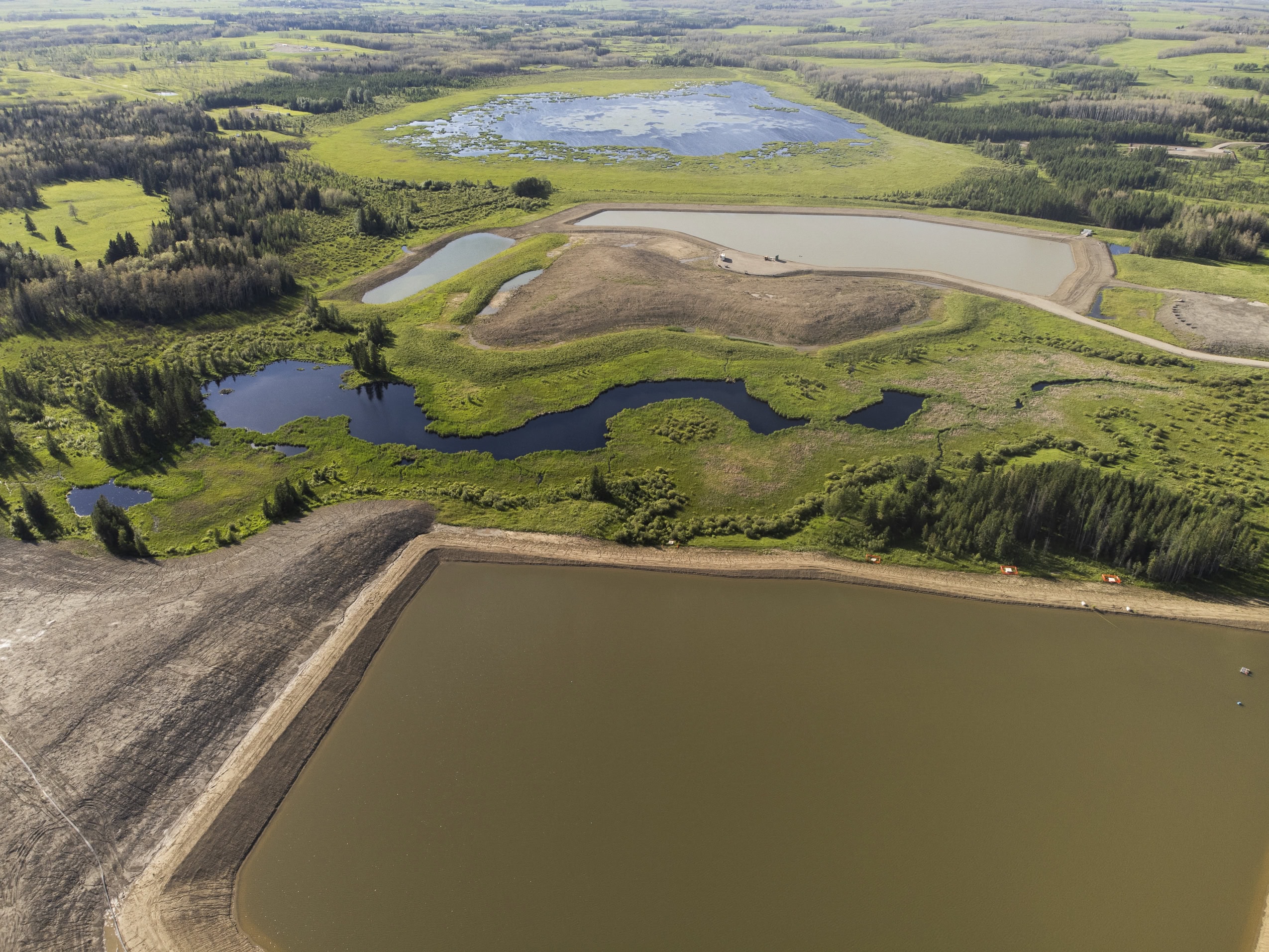
Spartan Delta built these two reservoirs across the road from the Smiths’ ranch. The reservoirs run through wetlands and the family says the sound of the pumps is disrupting their lives and the well-being of their bison.
‘There’s very little oversight right now’
Tensions are high in the region where fracking butts up against homes and ranches. In early July, a rumour spread that some of the hoses that pump water from ponds and rivers were shot at, but the Alberta RCMP said there were no reports of an incident on that day. Perhaps most telling was that none of the people who spoke with The Narwhal seemed surprised, although no one supported the idea and warned of the danger of puncturing the high-pressure lines.
There is a real sense that landowners have been abandoned in favour of oil and gas.
Kreil, whose society includes representatives from eight municipalities, including Red Deer, Lacombe County and Sylvan Lake, said the group recently met with the minister of Environment and Protected Areas and the CEO of the Alberta Energy Regulator to talk about the stress on the watershed. In its presentation, the society noted more than half of all fresh water in their watershed is allocated for oil and gas. Temporary water licences are almost entirely for fracking.
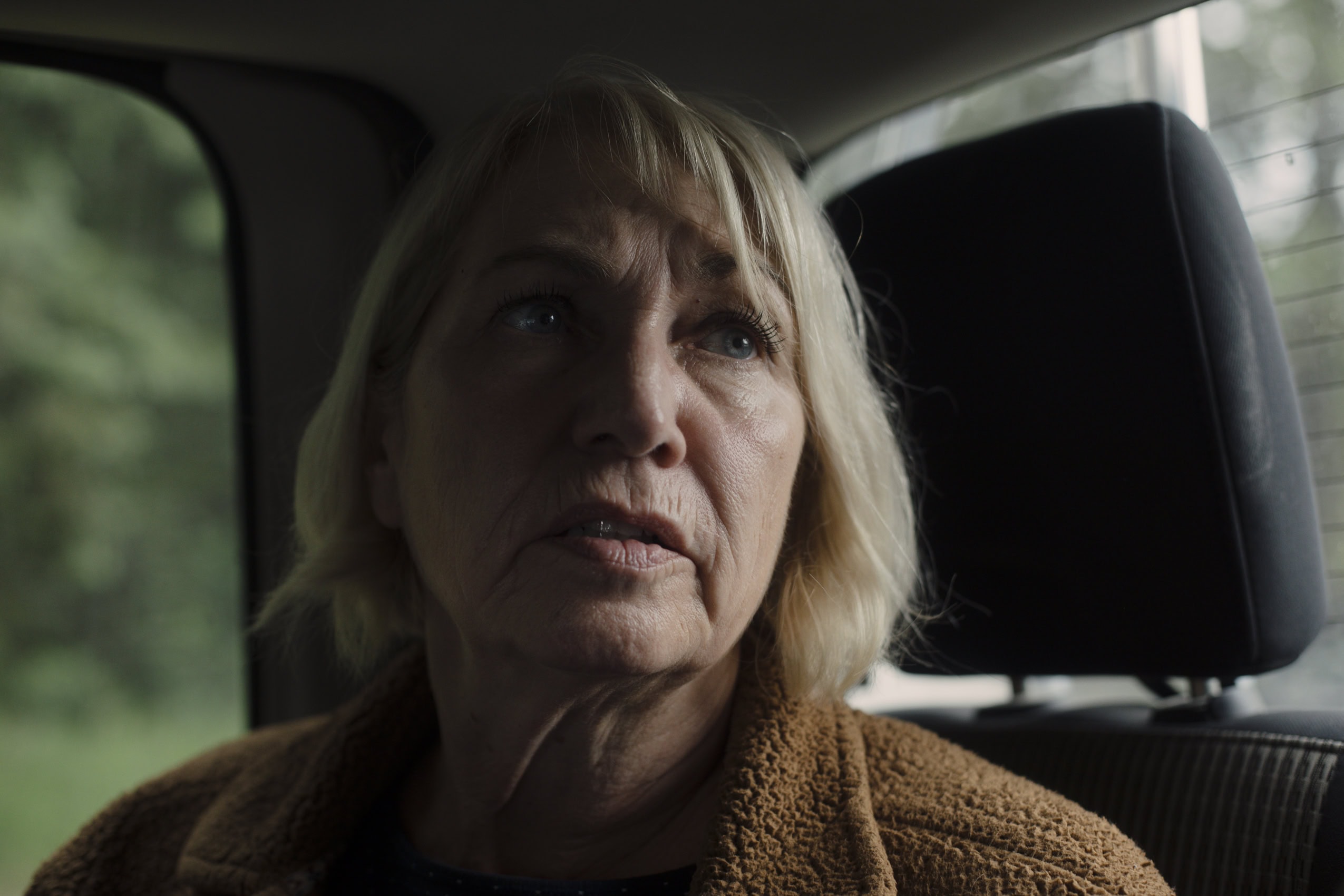
Dana Kreil, chair of the Medicine River Watershed Society, is frustrated by the lack of monitoring and action from the province. She says there has to be pragmatic solutions for water use, which includes oil and gas operations.
She says the minister told them to write a resolution calling for policy changes through the Rural Municipalities of Alberta — an organization which represents towns and districts across the province.
“I think he felt that he had dealt with us enough to say: ‘Write a resolution,’ ” she says.
Kreil stresses she’s not opposed to oil and gas, or to fracking in particular, but there has to be a balance.
“When we went to the minister, we said we want some solutions,” she says. “We’re not just coming here to bellyache and complain.”
Her organization wants to see more wastewater treated and reused, including municipal wastewater, to reduce or eliminate fresh water use. It wants better data on the state of the watersheds and a better understanding of drought and its impacts. And it wants new regulations governing use by agriculture, oil and gas and municipalities.
But those critical of the way fracking companies are operating all point their finger at the regulator when asked what the biggest problem is. The rules are weak and out of touch, responsibility is passed on and there’s no enforcement, they say.
“The problem with the Alberta Energy Regulator is there’s very little oversight right now,” Kreil says.
Iseli-Otto says he tried alerting a contact at the regulator about companies pumping from the Blindman River in May when the water levels were worryingly low, but nothing came of it.
Two days later, he was driving home and the pumps were running.
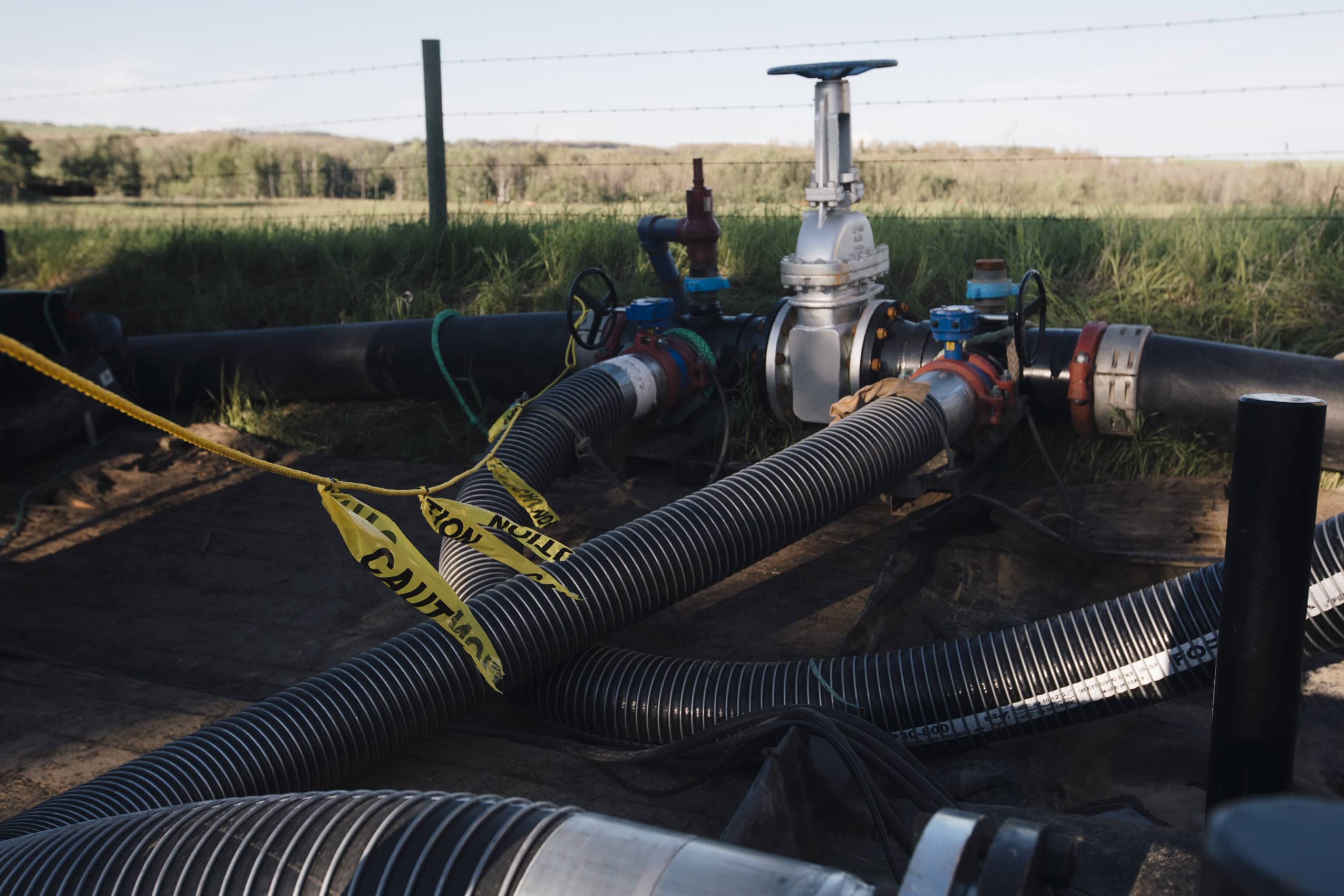
Pumps and hoses line road ditches throughout the region, forcing water from ponds and creeks into large storage reservoirs to be used for fracking wells.
“So I texted him and I said, ‘Hey man, pumps are running, what’s going on? Why is this happening?,’ ” he says. In screenshots of the text messages shared with The Narwhal, Iseli-Otto then asks if someone from the regulator had checked to see if the pumps had stopped.
“That’s the point at which I got the automated text message saying this number is not monitored.”
Alberta pushes to double production, build pipelines
The regulator is an arms-length government body, but that doesn’t mean it’s entirely independent. The government sets the overall policy direction for the regulator to follow, for example, and the government appoints the regulator’s board of directors.
Recently, it appointed David Yager to the board, a long-time friend of Premier Danielle Smith who also acts as one of her special advisors, and tasked him with overseeing a revamp of the organization.
There have also been revelations of direct intervention from the provincial government into regulatory decisions.
And the direction from the government is clear: it wants to double oil and gas production and it’s willing to incentivize companies to do so, even as it helps finance a new pipeline to the West Coast.
With the push for more production and without more stringent rules on water use, the problems in the area are likely to continue, or increase.
“We’ve had companies tell us ‘We’re not doing anything differently until the government tells us to,’ because it’s a competitive industry,” Grinde says.
“We said to the minister, as long as this is free, they will never change,” Kreil adds.
But in the end, something has to give, she says.
“You can’t be running the people out of water for oil.”
The Narwhal’s reporters are telling environment stories you won’t read about anywhere else. Stay in the loop by signing up for our free weekly dose of independent journalism.
From The Narwhal | News on Climate Change, Environmental Issues in Canada via This RSS Feed.