

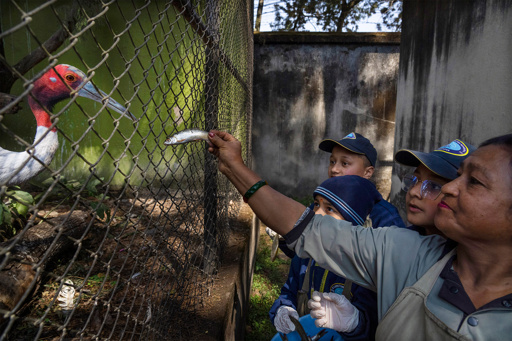
KATHMANDU — Delayed reporting, poor communication and weak biosecurity allowed bird flu to spread through Nepal’s Central Zoo in June and July killing or prompting the culling of at least 65 birds and animals, according to an internal inquiry report obtained by Mongabay. The investigation by the nonprofit National Trust for Nature Conservation (NTNC), the autonomous body that manages the zoo and frequently partners with the government, found that officials failed to act adequately on a warning about avian influenza among crows (Corvus splendens) in Kathmandu. The facility also remained open for five days after a rapid test indicated the virus was present. “The investigation found serious negligence and weaknesses at the management level,” according to the report, a copy of which was provided to Mongabay following a right to information application. The inquiry was led by Rachana Shah, the NTNC’s spokesperson and programs manager, raising questions about a conflict of interest. Shah rejected concerns about a potential conflict of interest, saying the goal was to identify institutional failures and draw lessons from the outbreak. “We treated it as an opportunity to draw lessons from the incident, rather than as a formal investigation into the bird flu outbreak at the zoo,” she told Mongabay. “If a similar incident occurs in the future, we will bring in an external expert.” According to the report, bird flu killed 27 birds and 14 mammals between June 12 and July 2, 2026. Authorities also culled 21 birds on suspicion of bird flu to contain…This article was originally published on Mongabay
From Conservation news via This RSS Feed.