

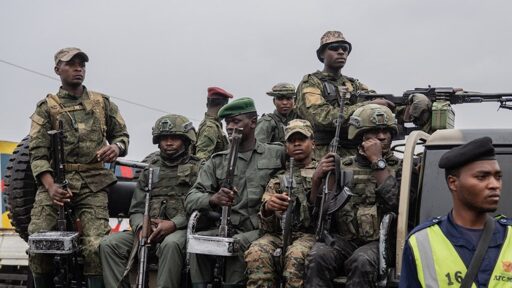
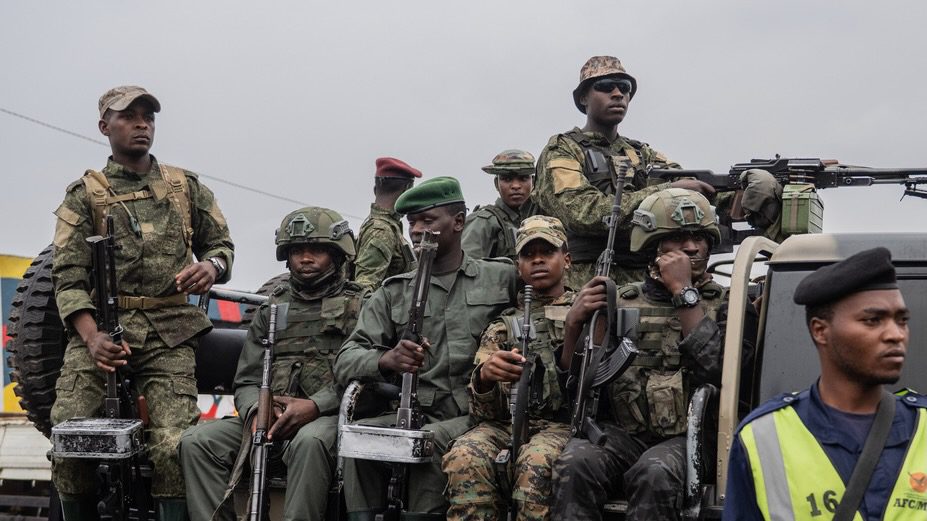
The Democratic Republic of Congo (DRC) and the AFC/M23 coalition have begun implementing a detainee-release arrangement agreed under the Doha peace process, with 15 people released and handed over to the armed group in eastern Congo.
The operation, facilitated by the International Committee of the Red Cross (ICRC), took place between August 6 and 7, 2026. It’s one of the first tangible steps towards implementing commitments reached by the two sides during negotiations.
According to the ICRC, the 15 detainees, who had consented to taking part in the operation, left Beni in North Kivu in a convoy on the evening of August 6. The convoy traveled through Uganda, which had agreed to facilitate their passage, before arriving in Rutshuru Territory in southern North Kivu on August 7. The detainees were subsequently handed over to the AFC/M23.
ICRC calls for further releases
“We hope that this operation will bring some comfort to families who have been separated for so long from their loved ones,” said Stephanie Eller, head of operations for the ICRC in Kinshasa. Saying the operation could pave the way for further detainee releases agreed upon by the parties during their negotiations.
Under the Doha process, the ICRC says it is acting exclusively as a neutral intermediary at the request of the parties, particularly in facilitating the safe transportation and handover of people released by them.
The ICRC has also stressed that its role remains strictly humanitarian. Under international humanitarian law, detainees must be treated humanely under all circumstances, while their safety must be ensured during release operations.
Doha agreements yet to be fully implemented
The current process follows a series of agreements reached through the Doha negotiations. The framework began with a Declaration of Principles signed on July 19, 2025, followed by an agreement establishing a prisoner-exchange mechanism on September 14 and a ceasefire monitoring and verification mechanism on October 14.
Read more: DRC–Rwanda leaders head to Washington for final peace deal with Trump
However, the release of the 15 detainees is being viewed cautiously by Congolese in eastern Congo.
‘A confidence-building measure’
Speaking to BreakThrough News, LUCHA member Stewart Muhindo described the transfer as an important but limited development.
“The two stakeholders agreed to release the prisoners from both sides. Almost one year after that agreement, now we can see the first signs of that agreement,” Muhindo said, adding that the development was being received positively by communities affected by the conflict.
Muhindo nevertheless described the operation primarily as a confidence-building measure rather than evidence that the broader peace process was advancing smoothly.
He pointed to the nearly one-year gap between the agreement and its first implementation, as well as the limited number of detainees involved, as indications of the difficulties facing the process.
The agreement envisaged the release of larger numbers of detainees, Muhindo said, while noting that so far only one side had carried out a release.
“We still need to see if the M23 side will also respect its commitments,” he said.
Ceasefire remains a major test
The detainee exchange also comes amid continuing concerns over the implementation of other elements of the Doha framework, including the ceasefire and broader security arrangements.
For Muhindo, the main challenge is that both the Congolese government and M23 have interests that could make implementation difficult.
“The Congolese government is trying to use the war to advance its project of changing the Constitution and allowing President Félix Tshisekedi to remain in power.
The M23, meanwhile, is gaining economic benefits from mining and continues to receive support from Rwanda. If peace is achieved, the M23 could lose much of its current position and influence. As a result, both parties to the Doha agreement have interests that could encourage the continuation of the conflict.
Read more:Lithium mining in the DRC: A new mineral rush spearheaded by the US, EU, and other major powers
That is the most difficult situation we are facing now, because it is the civilian population that continues to suffer from the war, while these two stakeholders are gaining from it,” Muhindo said.
If the operation leads to further detainee exchanges and progress on the wider ceasefire commitments will depend on the willingness of both parties to implement the remaining provisions of the agreement.
This is the first step among many, and it remains to be seen whether it can be sustained, particularly as part of efforts to achieve long-term peace agreement.
From BT News via This RSS Feed.