


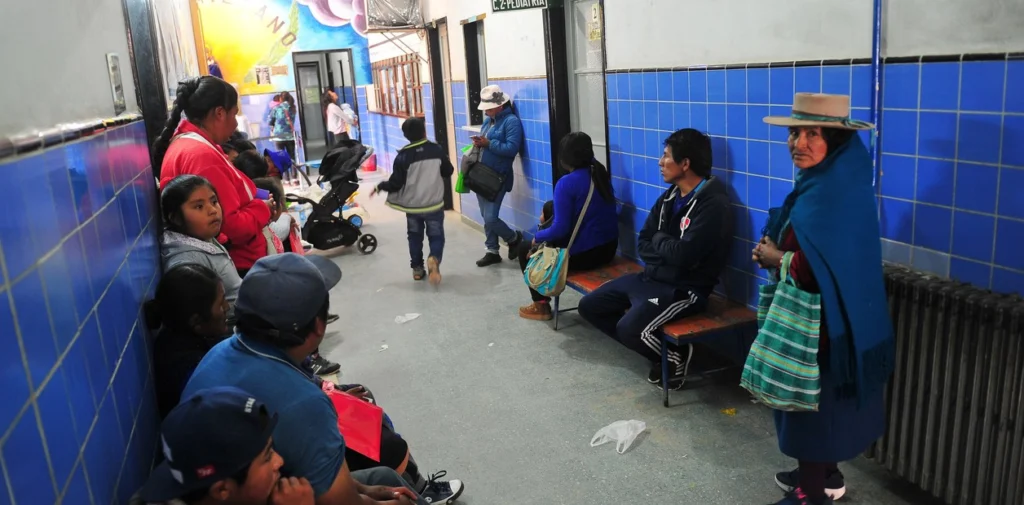
The Argentina’s Government eliminated free medical care for non-resident foreigners in national public hospitals and approved the expulsion of migrants who incite hate messages, expanding the anti-immigration agenda of Javier Milei after the 2026 World Cup final.
The Resolution 1066/2025 of the Ministry of Health obliges non-resident foreigners to pay tariffs or present an international health insurance to receive routine medical care in public hospitals of the country.
The measure reverses the humanitarian and solidarity policy that historically guaranteed free public health in the country.
RELATED: Argentina Senate Passes Revised Property Rights Bill
The new system establishes a detailed list of services with prices and formalizes the so-called “Operating Procedure for the Healthcare of Foreign Persons“. Patients must prove legal residency with their national identity document or a sworn declaration of international coverage, pay the corresponding fee in legal currency, and only then receive medical attention. The text warns that without a health insurance, the service will be “cancelled.”
Although the norm mentions a supposed “equality of conditions,” the procedure creates a differentiated system based on migration status. In emergencies, access cannot be denied to any foreigner regardless of their situation, but non-residents will be billed later while residents will not. The regulation exempts immediate payment only for critical cases such as heart attacks, strokes, severe trauma, obstetric and neonatal emergencies, or any pathology that represents an imminent risk to life.
LOS HOSPITALES PÚBLICOS NACIONALES ARANCELARÁN LA ATENCIÓN SANITARIA A EXTRANJEROS
A fines del siglo XIX, Argentina recibió una oleada migratoria virtuosa que, a base de trabajo y respeto por la ley, aportó su parte para construir un país que se codeó con las grandes potencias… pic.twitter.com/Ao41BIS5NY
— Vocería Presidencial (@Voceria_Ar) August 11, 2026
Text reads: “National public hospitals will tariff health care to foreigners (…) As of today, the Ministry of Health of the Nation has established that medical care for non-residents is taxed in the usual health benefits of national hospitals. The regulation states that when the patient has health insurance, the establishment must notify the insurer of the care provided and issue the electronic invoice for cost recovery. In cases where they do not have coverage, the hospital must prepare a budget and receive payment of the benefit before it is carried out (…)”
Expulsions Expand Crackdown
The healthcare measure complements the Decree 366/2025, issued in May, which modified the Migration Law, created a mandatory health insurance for tourists and non-resident foreigners, and introduced fees for public university education. Days later, the government cut more than 45 million dollars from critical health areas.
In the same framework, the Argentinean government added a decree issued last month after a social media campaign against the country following the World Cup 2026 final. The measure prohibits entry and orders “the expulsion from national territory of any foreigner who directs or incites messages of hate, discrimination and/or violence against the Argentine people,” as well as those who “outrage the national symbols.”
Human Rights organizations warned that the broad wording of the decree enable to arbitrary interpretations, since concepts such as “hate messages” or “outrage to national symbols” lack precise legal definitions and could criminalize legitimate criticism. The Center for Legal and Social Studies (CELS) recalled that migration legislation should not punish opinions and that due process requires concrete evidence of incitement to violence.
#Argentina | Javier Milei’s government has ended free routine healthcare at national public hospitals for non-resident foreigners, who will now need health insurance or must pay for treatment.
Life-threatening emergencies will still be treated regardless of immigration status,… pic.twitter.com/4SUY6F9Q1I— teleSUR English (@telesurenglish) August 12, 2026
The combination of health fees, education charges and expulsion threats dismantles the tradition of Latin American solidarity and open borders that characterized Argentina. Regional analysts consider that the measure mercantilizes a fundamental human right, criminalizes the migrant population and deepens the vulnerability of workers, students and families who transit through the country, contradicting the integration commitments assumed in the region.
From teleSUR English via This RSS Feed.