

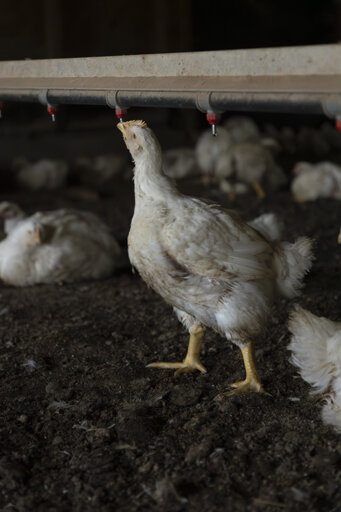
When it comes to identifying harmful bacteria, it helps to look at the company their genes keep. Researchers with the Arkansas Agricultural Experiment Station, the research arm of the University of Arkansas Division of Agriculture, used a machine-learning approach to study not just which genes a bacterium has, but also where those genes sit next to each other. That “genetic neighborhood” helped researchers distinguish disease-causing strains of Enterococcus cecorum, a poultry pathogen, from nonpathogenic strains.
From Biology News - Evolution, Cell theory, Gene theory, Microbiology, Biotechnology via This RSS Feed.
You must log in or # to comment.