

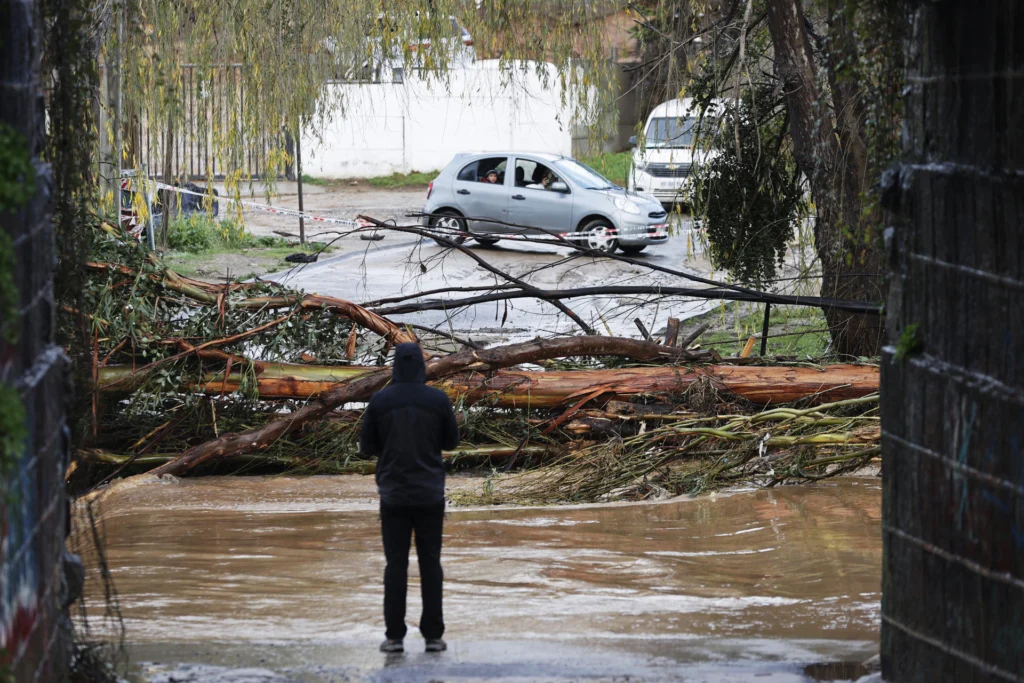
The Chile’s government declared a preventive emergency this Monday in northern Chile due to an incoming weather front expected to bring heavy rains to several regions.
Chilean government mobilized the armed forces and activated emergency protocols in three northern regions to mitigate the impact of intense rainfall, strong winds, and snowfall expected to continue until next Sunday.
The preventive emergency will primarily affect the northern regions of Arica, Parinacota, and Coquimbo.
RELATED: 5 Urgent Facts About Chile Flood Emergency as Deadly Storm Hits
According to official reports from the National Disaster Prevention and Response Service (Senapred, in Spanish), previous extreme weather events have already caused 15 deaths across the nation. In terms of material damage, the entity registered 2,476 victims, 30 destroyed homes, 988 homes with severe structural damage, and 5,871 with minor affectations.
The economic impact of the previous storms is substantial. Estimations from the consulting firm Colliers indicate that accumulated infrastructure and material damage, particularly in public installations, has already reached approximately 1,000 million dollars. Due to the severity of these prior events, several of the targeted northern areas still remain under active states of exception.
Ante el sistema frontal que afectaría a la zona norte, hemos activado una Emergencia Preventiva Climática entre Arica y Coquimbo hasta el 16 de agosto. Estamos coordinando recursos, monitoreo permanente y apoyo de los distintos organismos del Estado y las Fuerzas Armadas para… pic.twitter.com/UsrwuUtGGV
— José Antonio Kast Rist (@PresidenteKast) August 11, 2026
Text reads: “Faced with the frontal system that would affect the northern zone, we have activated a Preventive Climate Emergency between Arica and Coquimbo until August 16. We are coordinating resources, permanent monitoring and support from the various state agencies and the Armed Forces to anticipate and protect families.”
State Response Measures
During an emergency committee meeting, Chilean President José Antonio Kast analyzed the upcoming front and coordinated the military deployment of the Armed Forces to support regional response efforts in the affected provinces.
The Minister of the Interior, Claudio Alvarado, explained that the declaration aims to accelerate administrative processes and strengthen institutional cooperation before the storm hits. Alvarado emphasized that prompt response times are essential to protect citizens and vital infrastructure from potential disasters.
To mitigate risks, the national government prepared several contingency plans. These measures include the activation of temporary shelters, the technological monitoring of ravines, land patrols, and the strategic positioning of heavy machinery to clear roads in case of connectivity failures. Furthermore, authorities did not rule out the suspension of school activities in high-risk zones, a measure previously implemented during July’s emergencies.
The director of the National Disaster Prevention and Response Service, Alicia Cebrián, warned that this incoming system will bring high-intensity rainfall, wind gusts, snowfall and thunderstorms. She noted that prevention is critical because these northern regions do not usually experience such extreme weather conditions.
Meanwhile, the Meteorological Directorate of Chile (DMC, in Spanish) projected that the country will register precipitation levels above average over the next three months. Experts confirmed that the El Niño phenomenon will remain active until the austral autumn of 2027, signaling prolonged climate instability for the South American nation.
From teleSUR English via This RSS Feed.