

Following major geopolitical shifts in West Asia, a question has been raised frequently: where is the left and why has it been unable to defeat capitalism and imperialism?
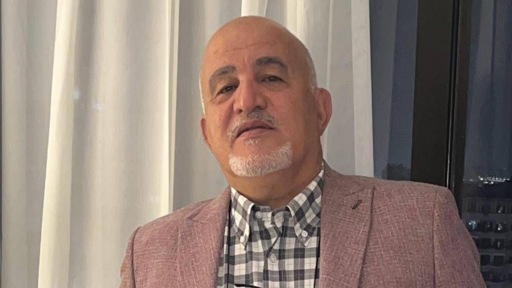
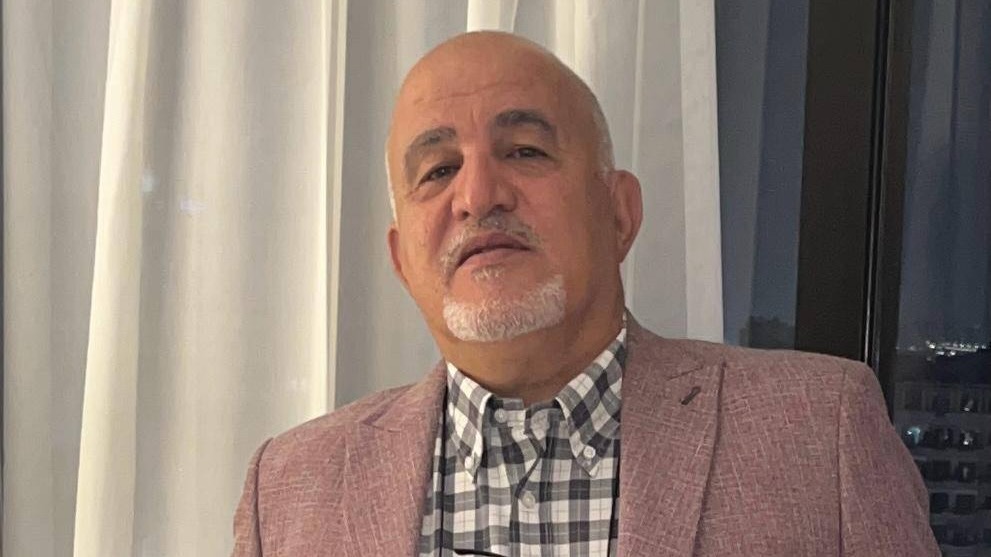
BreakThrough News spoke with Dr. Emad Al-Hatabeh, a central committee member of the Jordanian Communist Party, for his insights into the state of contemporary left movements in the world, and those in the Arab region in particular.
There is no monolithic left, says Al-Hatabeh
Dr. Emad Al-Hatabeh argues that the left is not in a crisis, but the very concept of “the left” as it is understood today is the crisis. This resulted from the broad categorization of the “left,” which contains severe ideological and practical contradictions within a label that attempts to encompass both Western social democrats and Third World liberation movements.
According to the Jordanian communist leader, the umbrella of “the left” ranges from reformist Western politicians like Bernie Sanders, Jeremy Corbyn, and Zohran Mamdani to armed Maoist guerrillas in the jungles of the Philippines.
“The fragmentation of left thought across an excessively wide ideological spectrum has weakened its core identity. This in turn makes a unified political position nearly impossible to identify,” Dr. Emad affirmed.
Read more: Resisting the upcoming US campaign in West Asia
Reform vs. revolution
Dr. Emad clarified the contradiction between the left in Western countries, and those in the Global South in terms of their position in relation to capitalism.
“Western left movements largely seek to reform and humanize capitalism from within liberal democratic frameworks. Yet, radical liberation movements, which represent the left in the Global South, seek the systemic overthrow of imperialism and capitalism,” he said.
This contradiction has also extended to include the definition of the working class.
“The traditional working class has also been fragmented and affected by capitalist and imperial factors. A worker in the West benefits economically from a military facility within the global defense industrial complex, which manufactures weapons used against agrarian workers in the Global South,” Dr. Emad noted.
Furthermore, he highlighted that some left movements have tended toward pragmatism, fearing state repression due to the demonization of communists in the post-Soviet era.
Consequently, many left parties have abandoned revolutionary theory in favor of “minimum-baseline” reforms. These parties operate entirely within bourgeois electoral frameworks, chasing the illusion of achieving socialist transformation through capitalist democratic mechanisms.
Al-Hatabeh slammed some left parties for receiving Western NGO funding, stressing that anti-imperialist movements cannot oppose imperialism while surviving on its money.
“These acts erode the left’s credibility among the public,” he asserted.
Contemporary challenges facing the left
Dr. Emad contends that while local context dictates tactical positions – such as responses to military coups or domestic governance – the identity of the left must remain uncompromising on key structural issues, including private property, capitalism, and imperialism.
“There should be a distinction between personal and private property within the modern Marxist framework,” Al-Hattabeh maintained.
“While extremist interpretations often call for the total abolition of property, personal property, such as a person’s home, car, or small family business is not what leftist ideology targets,” he explained.
“Private property, in a Marxist sense, must be defined as asset ownership leveraged to exploit labor and generate surplus value,” Dr. Emad continues.
The crisis of the Arab left
When it comes to the Arab left, Dr. Emad sees that it has historically faced a deep structural issue.
“Leftist ideology in the Arab region was largely imported by intellectuals, who were abroad and returned to their countries bringing that ideology with them,” he said.
Dr. Emad also indicated that left groups in the Arab world historically emerged from splits within nationalist and petty-bourgeois movements rather than grassroots labor struggles. As a result, many remain disconnected from the daily realities of working-class communities and rural populations.
He believes that anti-capitalist struggles do not fully apply to the Arab world, as its countries are not heavily industrialized and operate on the edges of the global capitalist system rather than at its core. They are dominated by comprador elites and brokers rather than productive industrial capital.
”We fought non-existent domestic industrial capitalists with slogans designed for European economies,” Dr. Emad remarked, referencing the analysis of Lebanese theorist Mahdi Amel.
Instead, the region’s primary historical tether to leftist ideology has been anti-imperialism, forged during decades of 20th-century colonial rule.
Read more:Reflections on the US-Israeli multi-front war in West Asia: How the Axis of Resistance remains resilient
How could the left overcome the crisis?
Dr. Emad suggests that Marxism and socialist theory must function as an adaptable, evolving science for working-class struggle rather than a fixed set of tenets, so that they remain relevant to modern realities.
“Modern analysis must transcend the typical 19th-century imagery of factory workers in overalls. Today’s working class includes tech workers, service employees, and any individual forced to sell mental or physical labor to generate surplus value for capital,” he said.
“The foundational identity of the left must remain uncompromised by completely ending human exploitation,” he added.
Dr. Emad pointed out that offering a genuine alternative to global capitalism entails a clear structural breakdown of class interests, an embrace of transformative principles, and a rejection of reformist pragmatism.
According to Dr. Emad, if the left – both globally and within the Arab region – hopes to regain efficacy, it cannot rely on single-issue politics. It must instead comprehensively integrate its core principles into every action and political stance.
This includes confronting imperialism and fascism, challenging capitalism, advancing class struggle, championing social progress, advocating for wealth redistribution, and clearly addressing the dynamics of private and personal property.
From BT News via This RSS Feed.