

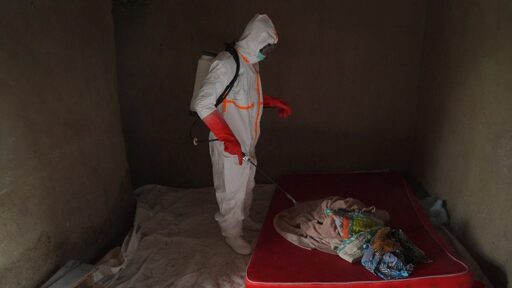

Maternal deaths have nearly doubled in Ituri province, epicenter of the fastest-spreading Ebola outbreak ever recorded, ravaging the northeastern region of the Democratic Republic of Congo (DRC).
About six women are “dying each week from childbirth-related complications,” Farhan Haq, deputy spokesperson for the UN secretary-general, said in a press conference on August 7.
Fear of catching the disease in healthcare facilities, “combined with disruptions to services,” is keeping people from seeking medical care, said John Agbor, the UN Children’s Fund (UNICEF) Representative in the DRC.
“Ebola infection during pregnancy remains associated with almost universal fetal loss,” added Haq.
However, as women avoid healthcare facilities fearing infection, childbirth without medical supervision is on the rise, as indicated by a 13% fall in deliveries at healthcare facilities across the province since the outbreak was declared on May 15.
According to UNICEF, the percentage drop is far higher in the hotspots within Ituri: 30% in Rwampara, 38% in Bunia, and a steep 70% in Nizi. This drop in facility-assisted deliveries correlates with the near doubling of maternal mortality.
Children are also at high risk, as the routine administration of vaccine shots has halved in the hotspots. This compounds the dangers the “children already face directly from Ebola itself,” UNICEF said in a statement, adding that although less than a quarter of the confirmed cases have been detected in children, they account for a third of all the deaths. The case fatality rate is almost double that of adults in children below the age of five. Over 60% of the infected children in this age group have died.
In less than three months since the outbreak was declared on May 15, the disease has killed at least 1,850 and infected more than 4,000 people as of August 5, in what has become the largest ever Ebola outbreak recorded in DRC. The speed of its spread is outpacing the West Africa outbreak in 2014, which killed 11,325 and infected 28,600 across many countries.
However, in the first three months since the outbreak was declared, it had infected 759 and killed 467 – a fraction of the number of confirmed cases and deaths in the current outbreak, which had spread over 51 health zones across five provinces.
All of them are located in the conflict-ridden northeast of the country, including the provinces of North Kivu and South Kivu, large portions of which are occupied by the Rwandan military and its proxy, the M23 armed group. This has imposed additional difficulty in tracing and responding to the health emergency.
From BT News via This RSS Feed.