

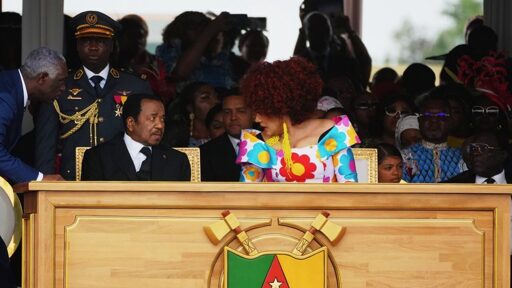

Cameroon’s 93-year-old President Paul Biya is facing scrutiny over his prolonged absence from the country, with growing questions about his whereabouts, health, and the continuity of government.
Biya has not been publicly seen in Cameroon since June 7, when he left the country for what authorities described as a short private stay in Europe. More than two months later, he remains abroad, with his prolonged absence fueling speculation among opposition figures and sections of the public about the state of his health and the extent to which he is directing the government from outside the country.
Read more: At 92, Paul Biya declares eighth presidential bid to lead Cameroon
The government has rejected suggestions that the country is facing a leadership vacuum. In an interview with RFI, communications minister and government spokesperson René Emmanuel Sadi said Biya was alive, had not resigned and would return to Cameroon soon. He also dismissed reports that the president was hospitalized in Geneva, saying there were no grounds to speak of a vacancy at the head of state. The government has not, however, provided a specific date for Biya’s return.
The latest concern is not unprecedented. Biya has frequently spent extended periods outside Cameroon, particularly in Switzerland and France, and his long stays abroad have previously generated questions about his health and the way the country is governed. In 2024, similar speculation intensified after he was absent from public view for several weeks. Government officials at the time also moved to reassure the public that he was alive and working from Geneva. What makes the current absence particularly concerning is the timing. Biya has just begun another seven-year presidential term after being sworn in for an eighth term in November 2025. He has ruled Cameroon since 1982 and is the world’s oldest serving head of state.
Military reshuffle from abroad
While concerns over his absence have grown, presidential powers continue to be exercised.
In early August, presidential decrees announced a major reshuffle of Cameroon’s military leadership. The measures included the promotion of some of the colonels to brigadier general, as well as changes to commanders in four of the country’s five joint military regions.
The reshuffle has attracted particular attention because of the central role of the security forces in maintaining political stability in Cameroon.
The decrees have not been accompanied by an official explanation linking the military changes to Biya’s absence. Analysts have nevertheless interpreted the timing as evidence that the president remains focused on maintaining control over the country’s core political and security structures even while abroad.
Read more: Is Cameroon’s presidency headed for a dynastic succession?
Biya has also continued to sign government decisions from outside the country, including financial and administrative measures, reinforcing the government’s position that the president remains actively engaged in state affairs.
Opposition demands clarity
Due to the long absence, opposition parties have intensified calls for greater transparency over the president’s condition and the functioning of the state.
The debate became particularly pronounced in July, when opposition figures questioned whether Cameroon could continue to operate normally without the president being physically present in the country. The Social Democratic Front described the country as being on “autopilot,” while the Union for Democracy in Cameroon called for institutional mechanisms to deal with prolonged presidential absences and establish procedures for determining whether a president is temporarily or permanently unable to govern.
The opposition has also questioned the implications of the constitutional changes adopted earlier this year.
In April, Cameroon’s parliament approved an amendment reintroducing the position of vice president. The amendment was presented by the government as a mechanism to ensure continuity if the president dies, resigns or becomes incapacitated. The vice president would automatically assume the presidency in such circumstances.
But no vice president has been appointed, leaving the newly created position vacant as Biya remains outside the country. Further the succession process of the vice president is appointed and can be dismissed by the head of state.
At 93, Biya’s age has inevitably made questions about succession more prominent. His government has sought to counter those concerns by demonstrating that decisions continue to be issued in his name, while many argue that the public deserves greater clarity about who is exercising executive authority when the president is away for such an extended period.
For now, the government insists that he remains in charge and will return. But as his absence stretches into its third month, questions persist.
From BT News via This RSS Feed.