

Zohran Mamdani and the Democratic Socialists of America’s (DSA) sweep in New York and its successes across the country are raising the hackles of the Democratic Party’s leadership and its establishment wing. This summer’s primaries marked a leap in DSA’s influence as an electoral machine, setting the organization up to expand its presence in government at every level. New wins, including those of Abdul El-Sayed and Donavan McKinney in Michigan and Melat Kiros in Colorado, have only further solidified this trend.
Many of these candidates are winning in deep-blue states and districts, making it all but certain that they will prevail against Republican challengers in November. Others have triumphed over establishment candidates in purple or red districts, raising the question whether left populism will be better equipped to counter MAGA at a moment when Trump’s popularity has plummeted.
After the midterms, there will likely be seven DSA members in the House: Rashida Tlaib (Michigan) and Alexandria Ocasio-Cortez (New York) will be joined by newcomers Claire Valdez (New York), Darializa Avila Chevalier (New York), Melat Kiros (Colorado), Chris Rabb (Pennsylvania), and Donavan McKinney (Michigan). Others could follow as DSA runs candidates across the country in competitive races. By the fall, self-described democratic socialists could hold mayorships in four cities, including the country’s financial capital and its capital city. After decisive primary wins across New York State, 16 DSA candidates will form a bloc in the New York State Assembly. In all, 150 DSA candidates are running for local, state, and national seats across the country. So far, they have won nearly as many races as they’ve lost.
These figures are joined by a slew of other progressive and pro-labor candidates who are not directly affiliated with DSA but are endorsed by Bernie Sanders and AOC. Many of them are running in Republican-controlled states or have defeated Democratic incumbents in the primaries, such as El-Sayed in Michigan and Sam Forstag in Montana.
Vocal about Palestine, ICE, the war against Iran, big money in politics, and rebuilding the social safety net by taxing the rich, these candidates aim to capture sectors of the population that are alienated by the two major parties of capital and are fed up with the system. The candidates’ aim, as Mamdani recently articulated it, is not just to elect “more Democrats” but “better Democrats.”
Their success has accelerated the crisis of the Democratic Party, which is being forced to reckon with an insurgent wing challenging it from the left to recapture sectors of the working class, vowing to reshape the party. This puts the establishment between a rock and a hard place: it has no real program to counter the progressive wing, but it has limited space to embrace it.
Predictably, the establishment is freaking out.
The Establishment Strikes Back
Things came to a head with the undeniable success of DSA-backed candidates in New York City’s June 23 primaries. It was a test of whether the country’s most prominent democratic-socialist mayor would continue to align with the Democratic Party’s center and right wing or use his political capital — and, more importantly, the popularity generated by his program and campaign — to challenge them.
While Mamdani initially pledged to support candidates on the Working Families Party line, including Democrats who were not endorsed by DSA, at the 11th hour he switched course to advocate for three insurgent candidates who won their primaries by large margins, undermining the designs of his party’s leadership. Mamdani made the political calculation that if he supported DSA’s candidates, he would gain more favor from his base and from the DSA rank and file (after facing backlash for his coziness with the police and his endorsement of Kathy Hochul for governor).
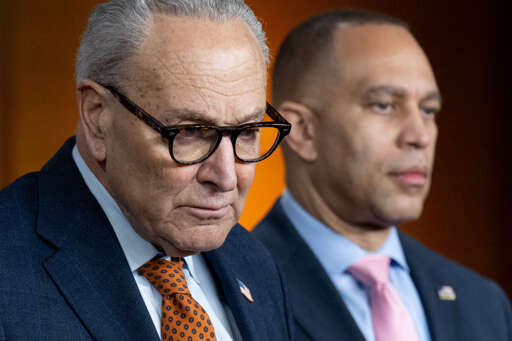
House Minority Leader Hakeem Jeffries’s response was telling in its passive-aggressive restraint. When asked whether Mamdani’s endorsements had made him enemies in Washington, Jeffries confirmed that the two had “strongly” disagreed over his picks and warned that the mayor “has got work to do in terms of the conversations that he’s going to have with members of Congress moving forward.” It was the sound of a party leader trying to manage an insurgency rather than one confidently setting terms for it.
Other establishment figures were less diplomatic, dismissing progressive wins as acceptable for deep-blue districts but not a viable national strategy, since it gives Republicans more ammunition to paint the party as “radical.” Matt Bennett of the centrist think tank Third Way called the notion that DSA offers a winning formula “bonkers,” warning that the party would not “stand by as our party contemplates riding this road to ruin when so much is at stake for our country.” Indeed, the Democratic Party faces a new scenario come 2027, one in which containing progressive dissent becomes more difficult. Left populism will have a more decisive presence in a narrowly divided chamber, ostensibly giving it “leverage” over the party. The party has already taken measures to ensure that progressive candidates will fail in the 2028 presidential election, changing the order of the primaries to favor the establishment.
But this is not just a question of electability or how best to fend off the GOP in Congress — it’s a struggle for the party’s identity and, ultimately, its viability in a new political moment. Representative Josh Gottheimer (D-NJ) said as much: “The socialists had a big win. The question is, are we going to let them take over the party? Or are we going to stand up and fight back?”
That anxiety crystallized into organization just two days after the primaries, when 15 centrist House Democrats — led by Representatives Tom Suozzi of New York and Adam Gray of California — unveiled the “Promise to America” pledge. Its opening line was engineered as a direct rebuttal: “We are capitalist, not socialist.” The rest of the document reads like a checklist of anti-left signaling — “mainstream, not extreme,” “safety, not lawlessness,” “proud, not ashamed of America,” borrowing Trump’s own fearmongering about “communists” coming to destroy the “traditional American way of life.”
Democratic Party figures who form part of the think tank Third Way have also launched a $15 million effort to combat the rise of DSA and insurgent candidates. As Shane Goldmacher reports, this effort would include opposition research into DSA, polling, social media programs, and educating Democratic activists and leaders. It would target both proud democratic socialists and those such as Dr. El-Sayed, whom he derided as performing the “DSA dodge”: flirting with democratic socialists enough to get their organizing power and support while remaining distant enough to avoid the explicit label.
The primaries have shown that Mamdani’s victory was not just a fluke — left populism has emerged as a political force in the American political landscape, one that is appealing to the very same voters who have lost faith in the Democratic Party and a sector of those attracted to the GOP. A recent CNN poll found that one-third of Democratic voters identify as democratic socialists, a majority of whom are young people and working-class voters — a slice of the same voting bloc that has broken with the Democratic Party over the years.
The success of progressive candidates reflects voters’ clear rejection of the establishment. The midterms will be a test of whether that rejection has staying power. That the Democratic Party’s leadership and establishment wing is begrudgingly aware of this is one thing. How it will deal with it is another problem entirely. As an anonymous centrist lawmaker put it, “There’s going to be a war.” The lawmaker further dismissed the incoming left flank as “bomb-throwers, not problem solvers.”
The backlash is directed at candidates who have vocally criticized the party’s old guard. But the establishment sector of the Democratic Party that leads the party fears not just a progressive insurgency that it cannot control but the shifts from below that the left wing’s ascent represents.
There was a similar freakout after the 2018 midterms that brought “the Squad” to Congress. But the political landscape is different in 2026, and the divide between the progressive newcomers and the party’s leadership is wider than it was in 2018. A major fault line is the massive rejection of the United States’ role in the genocide of the Palestinian people and its relationship with Israel.
The Gaza Problem
Defending the brutal massacre, starvation, and forced displacement of hundreds of thousands of Gazans, the Democratic Party lost what little moral authority it still possessed to make any compelling case for the lesser evil. “Genocide Joe’s” defense of Israeli prime minister Benjamin Netanyahu’s genocidal ambitions across Palestine and the region sunk any hope Kamala Harris had of beating Donald Trump in 2024. She was no match for a massive international movement against the genocide that reignited the student movement in the United States and even touched sectors of the labor movement.
As we know, Palestine was a top issue for Democratic voters in the presidential election, accelerating the disillusionment of working-class and young voters with the party. A Quinnipiac poll found nearly 80 percent of Democratic voters today believe Israel has committed genocidal acts in Gaza. A New York Times/Siena poll this spring found that 60 percent of Democratic supporters said they were more sympathetic to Palestinians than Israelis. Forty-four percent of Jews in the United States have a favorable view of New York mayor Zohran Mamdani, compared to just 32 percent who support Netanyahu.
This trend has only solidified in the midterm primaries, from Manhattan to Michigan to the Rockies. In New York, both Democrats ousted by Mamdani-backed challengers — Adriano Espaillat and Dan Goldman — were targeted in part for their support of military aid to Israel. Every attempt to make Darializa Avila Chevalier seem “fringe” for her participation in the pro-Palestine movement made her more popular. In Colorado, Melat Kiros unseated 15-term Rep. Diana DeGette on a platform built around an arms embargo on Israel and an end to military subsidies, telling supporters her campaign would “reject corporate PACs like AIPAC.” And in Michigan, Abdul El-Sayed — an outspoken Israel critic backed by Bernie Sanders and endorsed by AOC — is running to succeed retiring Sen. Gary Peters on a similar platform, with challengers lining up in Wisconsin and Florida behind the same script. In a recent Pod Save America episode, political commentator Dan Pfeiffer went so far as to say that any presidential candidate who hopes to have a chance in 2028 cannot take money from AIPAC.
The problem is that the massive sea change expressed by these results is out of step with the political perspective of the Democratic Party and its dominant wing, but it is forced to respond. A growing sector of the establishment is facing the political reality that it will need to find a nominal middle ground in order to make support for Israel in the long term viable, to the extent that this is possible. Longtime Democratic Party stalwart and Obama-era official Rahm Emanuel is testing out this familiar stance as he prepares for a run for president in 2028 — combining tougher rhetoric against Israel’s Far Right and calls for an end to Netanyahu’s reign with a renewed posture of the two-state solution as the only way to guarantee Israel’s “safety.” He said that the United States has “done [Israel] no favors by averting our eyes” from its atrocities, advocating the need for aggressive sanctions on settler violence in the West Bank.
The biggest shift has come from within Congress itself. In July, 103 Democrats in the House voted to withhold aid to Israel in the most recent budget proposal. The vote was almost evenly split; 98 voted against the measure, and 10 abstained, which killed the amendment, which would have revoked defense spending set aside for Israel’s military and other programs. Once again, the party’s leaders, including Jeffries, intervened against such a limit on U.S. support for Israel, saying there are “more decisive ways to achieve the urgent change necessary when it comes to the far-right Netanyahu government.” But a vote on support for Israel has never been so close, a sign that the Democratic Party can no longer proceed as it did before regarding Israel. But there is a limit.
Disputing the United States’ relationship with Israel is a red line for the Democratic Party. Longtime Democratic strategist James Carville put it in the starkest terms. Reacting to the New York sweep on his podcast, the veteran strategist declared it “time for Democrats to talk the S-word: schism,” rejecting decades of “big tent” rhetoric: “There’s just some shit I can’t be in the same tent with. I’m done. And I’m not in that fucking political party.” Tellingly, Carville was explicit about where he drew the line — not on economics but on Israel: “I don’t want to be in a political party that denies the right of the state of Israel to exist.”
Carville’s comments represent not just the dominant view within the Democratic Party but a key component of its function as a party that serves the interests of U.S. imperialism — something that cannot be washed away with a change of leadership. The questioning of the United States’ relationship with Israel is nothing other than a challenge to an ideological tenet of liberalism. In that way, ultimately, the relationship to Israel is nonnegotiable, as it creates better conditions for U.S. markets and access to crucial resources and trade routes under the guise of importing “democracy” to the Middle East. For decades, the consensus around U.S. support for Israel allowed the Democratic Party to quietly accept massive sums from AIPAC in exchange for financial, political, military, and moral/ideological support for Israel, but those times are long gone. Similarly, the establishment’s refusal to fully oppose the war on Iran (beyond procedural questions) has further alienated voters and endeared them to populist candidates who openly oppose the war machine.
Democrats are betting that rejecting Trump’s “Board of Peace” plan and recycling Biden’s weak pushback on Israel might be enough to win back those outraged by Democrats’ defense of Israel during the genocide and the criminalization of those who fought against it. That Hillary Clinton voiced support for Emanuel’s rebrand of the U.S.’s stance toward Israel should be a red flag for anyone who opposes Israel’s genocide. Of course, simply a “softer” imperialist stance, one that tries to repackage U.S. support for Israel in the language of a two-state solution, which means nothing other than the continued bloody enforcement of the occupation of Palestine and military support to defend its imperialist enclave in the Middle East.
Carville said the quiet part out loud: this is as far as the Democratic Party can go. Any real challenge to U.S. support for Israel is impossible, even if it places some political limits in the short term. Meanwhile, Israel continues its rampage across Gaza and the West Bank. There is no holding an anti-imperialist stance in an imperialist party. What is more likely is that the progressive wing will concede to a more restrained support for Israel in order to pass other parts of its agenda that are more palatable to the establishment of the party (as in the case of AOC and Jamaal Bowman) or that the Democratic Party will move to censure and isolate candidates whose criticisms of Israel go “too far” (as in the case of Rashida Tlaib). That road cannot lead to Palestinian liberation.
Divisions within the Progressive Wing and a Possible New Direction for the Democrats
Democrats are pushing back hard against an insurgent progressive wing, but the problem is that they do not have a compelling vision to offer in return.
With every attack from the Trump administration, the party has shown that it cannot effectively fight back, nor are its hollow promises to oppose Trump enough on their own. The primaries have demonstrated this, with insurgent candidates criticizing Democrats’ timidity and putting forward economic populist policies. Being “anti-Trump” isn’t enough now, just as it was not enough to rebuild the “Obama coalition,” which was not the beginning of a new era of political hegemony but the last gasp of its neoliberal project.
If the primaries and the establishment’s panic tell us anything, it’s that the Democratic Party can be pushed to embrace more elements of the progressives’ economic populist agenda. As we wrote in June last year:
There are those who believe that the Democrats can no longer afford to simply reproduce the neoliberal status quo and that the party needs to put together a “new” program oriented toward meaningfully mitigating the worst effects of neoliberalism on the working class. This involves reconstructing the Democratic Party’s New Deal identity for the twenty-first century. … Democrats need to stay quiet on systemic racism, homophobia, transphobia, and immigrants rights. Instead they need to focus on developing ambitious policy proposals — leaning on a strengthened relationship with the union bureaucracy — in favor of working people, even if this means alienating sectors of the middle and upper classes. In the long term, this will contribute to the important task — similar to FDR with the New Deal — of getting the working class on board to confront the challenges of a post-neoliberal era, of remaking U.S. hegemony in a new scenario.
Chuck Schumer sees this in some way, refusing to disavow the progressive candidates winning across the country: “We’re seeing tremendous energy from all different areas of our party.” Political consultant and former interim DNC chair Donna Brazile argued in a recent op-ed that Democrats should move away from infighting and focus on addressing “affordability” — the rallying cry of insurgent candidates across the country.
Still unclear, however, is the extent to which the establishment can channel these differences into a coherent politics capable of getting it out of the crisis it faces. It has already attempted to cultivate a new center-left wing within the party that tails MAGA on questions of immigration and trans rights. The rapid rise and spectacular fall of John Fetterman in Pennsylvania — from a progressive fresh face to a right-wing, Zionist centrist spitting in the faces of those who voted for him (who would have thought?) — showed that this experiment failed. Centrist politics with a populist rhetoric that borrows from MAGA’s “anti-woke” screed cannot save the Democratic Party.
Of course, the newly energized progressive wing of the Democratic Party is not a monolith. There are distinct differences between the candidates put forward by the DSA itself and the looser group of progressive-populist candidates that have gained traction across the country — these range from differences over Medicare for All to support for capitalism as an economic system. As the Democratic Party struggles to find a compelling vision to usher working-class people back into the party, it will no doubt exploit those differences to check its progressive wing. This will mean both checking progressive candidates where possible — exemplified by the immediacy with which Democratic leaders stepped in to bolster calls for Graham Platner to resign from the race — and also moderation from the left. For example, Brad Lander in New York City — a candidate who is close to Mamdani but not himself a DSA member — said he hopes the party will “spend more time building a unified Democratic message” than on “factional infighting,” suggesting he supports party unity despite painting himself as part of a left insurgency.
Even the focus on “socialism” on Capitol Hill and across the bourgeois media in recent weeks is an attempt to divide the progressive wing between so-called extremists and a more moderate version of economic populism that can be more easily integrated into the party’s line. One example is the party’s shifting perspectives on how to deal with artificial intelligence, with more of the party — and even sectors of capital — being forced to slow down AI’s growth, from moratoriums on data centers to federal oversight. It is still unclear where this road leads, because even such changes face plenty of opposition from big business and its representatives in Congress, even if certain sectors of the capitalist class see the need for some alleviation of the political and social crises in the nation to achieve some level of stability in the medium term.
In some ways, Biden’s presidency foreshadowed such an establishment overture to left populism. Now there is Ro Khanna with his “New Economic Patriotism,” a “Marshall Plan for America.” Meanwhile, Gavin Newsom has made a contradictory proposal to tax the rich nationally while rejecting it in his own state in order to appease capitalists — another sign that the Democrats are, sometimes clumsily, trying to integrate this new populism into something that can mediate class divisions rather than inflame them. Democrats are trying to set a tricky course of clinging to as much of the status quo as possible in an increasingly volatile situation in which the capitalist class has declared war on workers. But in a political situation in which newly energized sectors of the Democratic Party’s base are to its left (and even to the left of the left wing of the party), Democrats might yet be forced to embrace elements of this program quicker than they would like; the discussion of a possible run for president by AOC is one indication of this path. But the establishment will not go down without a fight.
A Party at War with Itself
The establishment freakout at the success of progressive insurgent candidates is not so much a full-scale attack on the Left (though it could certainly go more in this direction) as it is an attempt by the Democratic Party to set better terms for the integration of the progressive wing into its ranks and manage the shifts within a party drowning in the depths of its own crisis. The midterms will determine whether this goes more toward integration, as with the Left before this moment, or toward more open conflict within the party. And this will, of course, be determined by class struggle and the reaction from below to the Trump administration.
But the Democratic Party is not united in its response to the progressive wing, especially the rise of DSA. The perception that this left wing seeks to push the party further than it is willing to go at this moment is an expression of this. That is why political figures like Carville believe the time has come to draw a dividing line in the party. His comments are echoed by former DNC chair Jaime Harrison, who said, “If you hate the Democratic Party, then please don’t run for our nomination. Don’t use our resources. Don’t rely on our volunteers. Don’t use our infrastructure. Focus on building the party you actually support.”
Jamie Metzl, a veteran of the Clinton National Security Council and State Department, posed it in more existential terms: “The DSA poses a fundamental threat to the Democratic Party and to the nation as a whole. Based on their own platform, they are working to undermine our society, our economy, and our form of government organization, including our Constitution.”
Whether or not those calls are more of a threat than an offensive stance, the establishment is increasingly talking about a split to prove that it is indeed a liberal imperialist party of capital and will not be quietly “taken over” by a left wing. Indeed, it has the entire illiberal machinery of the state standing behind it in this task. Integrating the demands of the progressive wing will likely mean finding a careful balance between a recharged liberalism and market-friendly versions of social-democratic demands.
But in a post-neoliberal moment, when the United States and its institutions are further weakened by Trump’s failure in Iran and discontent at home, making the case for the liberal world order is an ever more challenging task. As it fails in the political sphere, is it possible to make the ideological case for liberalism?
Countless op-eds across the mainstream media are trying to do so; Fareed Zakaria and Thomas B. Edsall, for example, argue that liberalism can survive if it can capture the fighting spirit of new progressive challengers by revitalizing the legacy of the Democratic Party in the years after the civil rights movement. But this case is hard to make when the party’s failures to protect democratic rights clash so violently with the desire for change expressed in recent years through class struggle from below in the United States.
Rather than fighting for space within a capitalist party, it is time to lean on our rejection of liberalism’s failures and build the kind of party we want and need to take on capitalism. The Democratic Party establishment has already signaled that it’s not going down without a fight — for now, it prefers to cautiously play nice, but this could shift quickly, as we’ve seen with the limited experience of the Squad over the last 10 years. This does not mean giving space to the red-baiting that has become commonplace in Congress and the pages of major newspapers; we must defend left political figures from these kinds of attacks.
As socialists, our responsibility is not to rebuild a capitalist party but to openly fight for the organization of our class in its own interests, including the creation of a party that has as its only aim the liberation of our class. DSA has a particular responsibility in this endeavor, with its resources and scores of people who are open to socialism and ready to fight against the Far Right and all attacks on the working class. As DSA gains momentum at the electoral level, this will mean challenges not only from above but also from below — from a base that has new aspirations. Attempting to fulfill those demands and fend off attacks from the bipartisan regime will require more than a bloc in Congress. The decisive factors are organization and mobilization from below — not just on Election Day but every day as we build on our struggles in the streets.
There’s no avoiding the fact that the establishment of the Democratic Party will attack the Left if it becomes too ambitious. The question is: Are we going to fight those attacks while pretending they are our friends, or are we going to confront them head-on? We have an opportunity to define socialism on our own terms, not to save liberalism from itself.
The post The Democratic Party Establishment Punches Back appeared first on Left Voice.
From Left Voice via This RSS Feed.
You must log in or # to comment.
this is stupid. Dont equate the “left” with democrats. The dems are centrist garbage spewers. We need a new left
